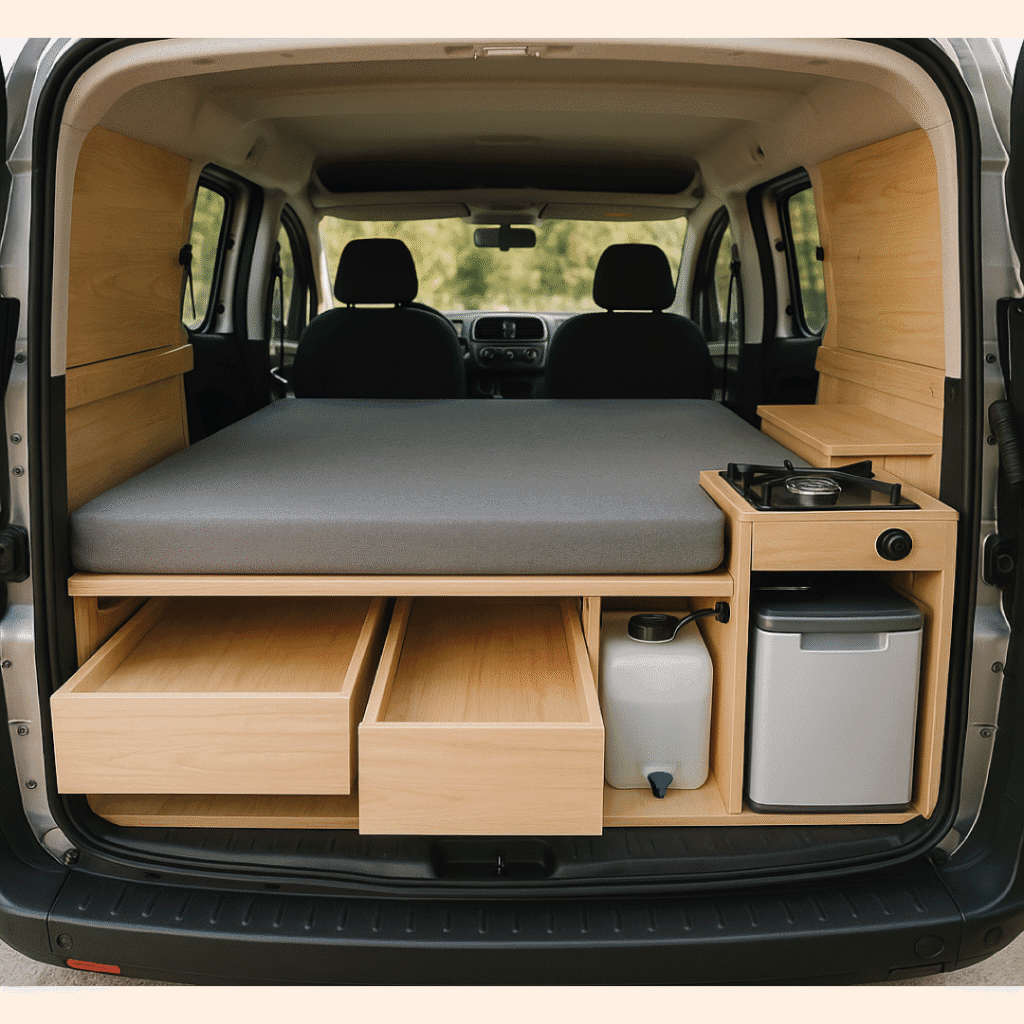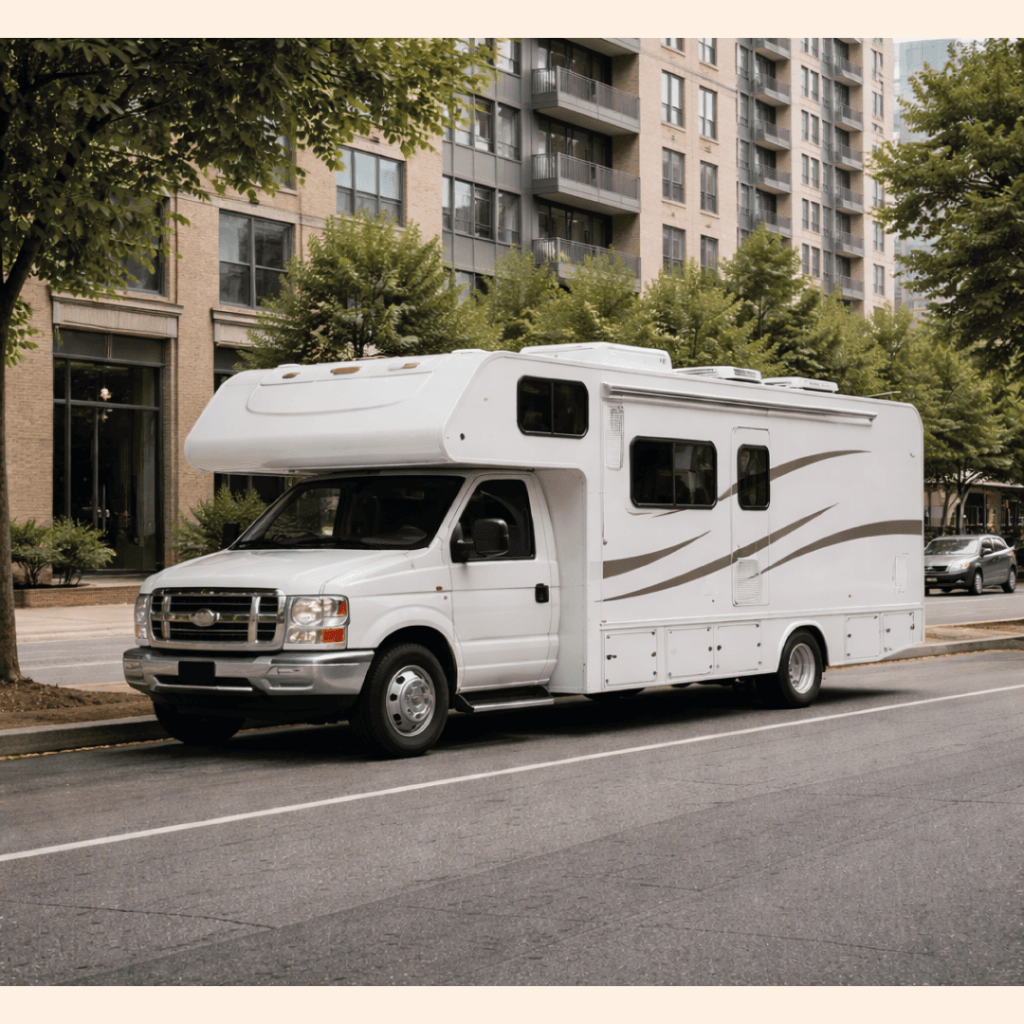

When you enter the world of caravans, the first big question is: “What will show on this vehicle’s registration, and legally, how far can I go?” Because in Turkey, caravans aren’t a single type — a motorhome (with its own engine) and a towed caravan (a trailer) are subject to different regulations. On top of that, in recent years registration and license-plate rules for O1-class trailers (under 750 kg) in particular have become a hot topic. In this article, I’ve brought together, in one place and in plain language, caravan registration types, vehicle classes (like M1/N1/O1/O2), speed and usage limits, and the basic logic behind the inspection and modification (conversion) process.
Note: This content is for informational purposes; before any official process, it’s always safest to confirm current practice through the Traffic Police, notary, TSE, or TÜVTÜRK channels.
1) The Basic Distinction Among Caravans: Motorhome or Towed Caravan?
In practice, caravans in Turkey fall into two main groups:
- Motorhome (motorized caravan): A vehicle with its own engine, usually a passenger or light commercial vehicle (e.g., a panel van) converted into a “special-purpose vehicle” with caravan fittings. The definition of “motorized caravan” is addressed under “special-purpose” vehicles in the Highway Traffic Regulation.
- Towed caravan (trailer caravan): A non-motorized vehicle without its own engine, towed by another vehicle. This group is mostly classified under O1 and O2.
This distinction directly affects the registration type, plate/registration, inspection, speed limits, and certain usage details.
2) Vehicle Classes on the Registration: What Do M1, N1, O1, O2 Mean?
The codes most commonly encountered in caravan procedures are:
M class (M1, M2, M3): Motor vehicles designed to carry passengers
M1 generally refers to the passenger-car class. Motorhomes are most often assessed under the logic of an “M-class special-purpose vehicle”; the registration may contain terms like “special purpose” / “motorized caravan.” The definition of “special-purpose vehicle” appears in the Highway Traffic Regulation.
N class (N1, N2, N3): Motor vehicles designed to carry goods
N1 typically evokes light commercial classes such as “pickup/panel van.” Caravan conversions are most often carried out on N1-based vehicles (like panel vans). After conversion, changes to the vehicle class/type on the registration can come up.
O class (O1, O2, O3, O4): Non-motorized trailers/semi-trailers
Most towed caravans fall into this class:
- O1: Non-motorized vehicles with a maximum weight not exceeding 0.75 tonnes (750 kg).
- O2: Non-motorized vehicles with a maximum weight exceeding 0.75 tonnes, but not exceeding 3.5 tonnes.
In practice, the question “how many kg is a towed caravan?” often becomes critical for registration and for choosing a tow vehicle, because the 750 kg threshold (O1/O2) frequently comes up as a “breaking point” both in regulation and in practice.
3) A New Era for Towed Caravans: Registration and Plates for O1 (Under 750 kg)
For a long time in Turkey, there were differing interpretations in practice regarding “towed caravans under 750 kg.” However, with recent regulatory changes, rules and transition provisions regarding the registration of O1-certified (750 kg and under) trailers/caravans have come into effect. These changes were announced in the Official Gazette dated December 4, 2024.
According to information published by the General Directorate of Security (EGM), trailers manufactured before July 1, 2025 can, under certain conditions, be used without registration until January 1, 2035, as part of a transition approach.
This topic matters a great deal, because practice on the ground can vary depending on the caravan’s manufacture date, documentation status (type approval/conformity), declared weight, and inspection approach. For this reason, when buying a towed caravan, always clarify these three things:
- The caravan’s class: O1 or O2? (maximum weight information)
- Documentation status: Is there a type approval/conformity certificate, and who issued it?
- Manufacture date and transition conditions: Does it fall under the transition provisions in EGM announcements?
4) Motorhome Registration Types: The “Special-Purpose Vehicle / Motorized Caravan” Logic
In regulatory language, motorhomes are most often assessed within the framework of a “special-purpose vehicle.” The Highway Traffic Regulation defines a “special-purpose vehicle” as an M-, N-, or O-class vehicle fitted with a special body/equipment to perform a specific function, rather than primarily to carry passengers or cargo.
In practice, the following scenarios are seen on a motorhome’s registration:
- A factory-built motorhome: The vehicle already comes with type approval as a “motorized caravan”; the registration process is more straightforward.
- A converted motorhome (from a panel van, etc.): Changing the vehicle type/class on the registration, a modification project, conformity approval, and inspection steps come into play. TSE’s conformity certificates for “modifications” under the AİTM (Manufacture, Modification, and Assembly of Vehicles) framework provide the structure for this process.
5) The “Modification” Process in Caravan Conversion: Project, Conformity, Inspection Chain
This is the part that trips up most people who want to convert a panel van (or another vehicle) into a motorhome. Because the work isn’t just building furniture — the changes made must be legally recorded on the vehicle. In Turkey, this type of work is handled under the “Manufacture, Modification, and Assembly of Vehicles” (AİTM) framework. TSE defines the individual modification-conformity certificate service under AİTM and specifies which modifications are assessed under the regulation.
The general logic (the technical details vary by vehicle and conversion):
- Modification project/engineering: Producing a project for the changes made.
- Conformity/approval: Obtaining the relevant conformity certificate under AİTM (individual or series modification, etc.).
- Inspection: Having the vehicle’s new condition pass inspection.
- Registration (recording on the license): Having the vehicle type/class correctly recorded on the registration through notary/registration procedures.
The purpose of this chain is to keep caravan fittings from turning into a safety risk (seat mounts, weight distribution, gas/electrical installations, ventilation, etc.). For this reason, the “I’ll just use it without registering it” approach can create a serious risk, especially during inspections and in the event of an accident.
6) Legal Limits: Speed Limits, Towing Rules, and What to Watch for in Practice
6.1 Speed Limits (the most commonly fined issue)
Speed limits in Turkey vary by vehicle type. In the speed limit table published by KGM (General Directorate of Highways), for example:
- Passenger car (M1): Limits such as 90 outside settlements, 110 on divided roads, and 130 km/h on motorways (may vary based on road/signage).
- Pickup/panel van (N1): Lower limits than a passenger car (e.g., 80 outside settlements, 85 on divided roads, 95 km/h on motorways).
A caravan showing as “pickup/panel van (N1)” on its registration can, in practice, affect its speed limits. For this reason, the question “my vehicle is a motorhome, but what does the registration say?” isn’t just a formality — it’s directly a matter of fines and safety. (Road signage always takes priority.)
6.2 Weight and Compatibility Limits for Towed Caravans
For towed caravans, the heart of the “legal limit” is weight. The O1/O2 distinction (the 750 kg threshold) is explicitly stated in the regulatory definitions. In practice, this affects three things:
- Registration and plate processes (especially with recent changes on the O1 side).
- Tow-vehicle compatibility: The towing capacity of the vehicle and the suitability of the tow hitch.
- Weighing risk during inspection: Even if the label says “under 750 kg,” actual loading that exceeds this can create problems.
The safest approach: consider the values stated in the caravan’s technical documents together with your actual usage load (water, gas cylinder, belongings, bike rack, etc.), and don’t run right up to the limit.
7) Inspection and Emissions: How Often Are Motorhomes Inspected?
Inspection intervals vary by vehicle class and type of use. One of the clearest references in the field for motorhomes is information shared by TÜVTÜRK: since motorized caravans fall under the special-purpose vehicle class, an annual inspection requirement is emphasized.
On the emissions side, the Ministry of Environment, Urbanization and Climate Change’s “motorized caravan” page describes the interval logic within a general framework such as “private cars every two years, other motor vehicles annually.” For this reason, the vehicle’s class and type of use on the registration can, in practice, affect both the inspection and emissions interval.
Towed-caravan inspection is assessed separately (due to its status as a trailer), and with recent regulatory changes, registration and inspection topics have become more prominent.
8) Quick Checklist: Avoiding Registration and Legal-Limit Pitfalls
- What does the registration say? (Vehicle class M1/N1, special-purpose designation, vehicle type)
- Complete motorhome-conversion modification procedures through the official chain: AİTM scope, TSE conformity, inspection, registration.
- Clarify O1/O2 for towed caravans: The 750 kg threshold, documentation status, registration/plate transition provisions.
- Read speed limits based on vehicle type: M1 and N1 aren’t the same; plan according to the KGM table.
- Consider inspection and insurance risk: A conversion not recorded on the registration can cause serious headaches in the event of an accident.
9) FAQ: The Most Commonly Asked Questions
Is it hard to get a motorhome registered?
Factory-built motorhomes are generally easier. With conversions, the work is concentrated on “documenting the modification in compliance with regulation.” TSE’s conformity process under AİTM and the subsequent inspection/registration steps are the main framework.
Do O1 (under 750 kg) towed caravans now need a plate/registration?
Recent regulatory changes announced rules and transition provisions regarding the registration of O1-certified trailers/caravans. For official information, refer to EGM announcements and the relevant regulations; the transition approach based on manufacture date is particularly emphasized.
What’s the speed limit for a caravan on the motorway?
This can vary depending on the type of caravan and the vehicle type on the registration. The KGM speed-limit table shows different limits for a passenger car (M1) and a pickup/panel van (N1). Road signage always takes priority.
Is a motorhome inspection required once a year?
According to TÜVTÜRK’s guidance, an annual inspection requirement is stated for motorized caravans due to their special-purpose vehicle class.
Final Word
Caravan registration types and legal limits aren’t a “one-sentence” topic — it becomes clear once you combine vehicle class, weight, documentation status, and registration type. Think of this article as a “master guide” page; building an internal-link network with follow-up articles like “Motorhome conversion steps,” “Towed caravan registration/plate guide,” and “Caravan speed limits” adds real strength for SEO.
Related Articles
- Caravan Rental Guide in Turkey: Prices, Requirements, and What to Watch For (2026)
- Legal Requirements for LPG Installations in Caravans
- Are Gas Leak Sensors Mandatory in a Caravan?
- Seat Count and Seatbelt Regulations in Motorhomes
- What’s Excluded From Caravan Insurance
- What Does “Special-Purpose Vehicle” Mean on a Motorhome Insurance Policy?
- Current 2026 Motor Vehicle Tax, Inspection, and Insurance Fees for Caravans