Gas leak sensors in caravans are equipment directly tied to life safety. LPG-powered stoves, heaters, and hot water systems carry a leak risk if installed incorrectly or as they wear over time. Carbon monoxide (CO), which can form as a byproduct of combustion, is also a hard-to-detect and extremely dangerous gas. For this reason, gas sensors are considered one of the fundamental elements of caravan safety.
This article covers, for both motorhomes and towed caravans, the legal status of gas leak sensors, which sensors are mandatory and which are not, how they are assessed during inspection and insurance processes, and how to choose the right sensor.
What Is a Caravan Gas Sensor and What Does It Do?
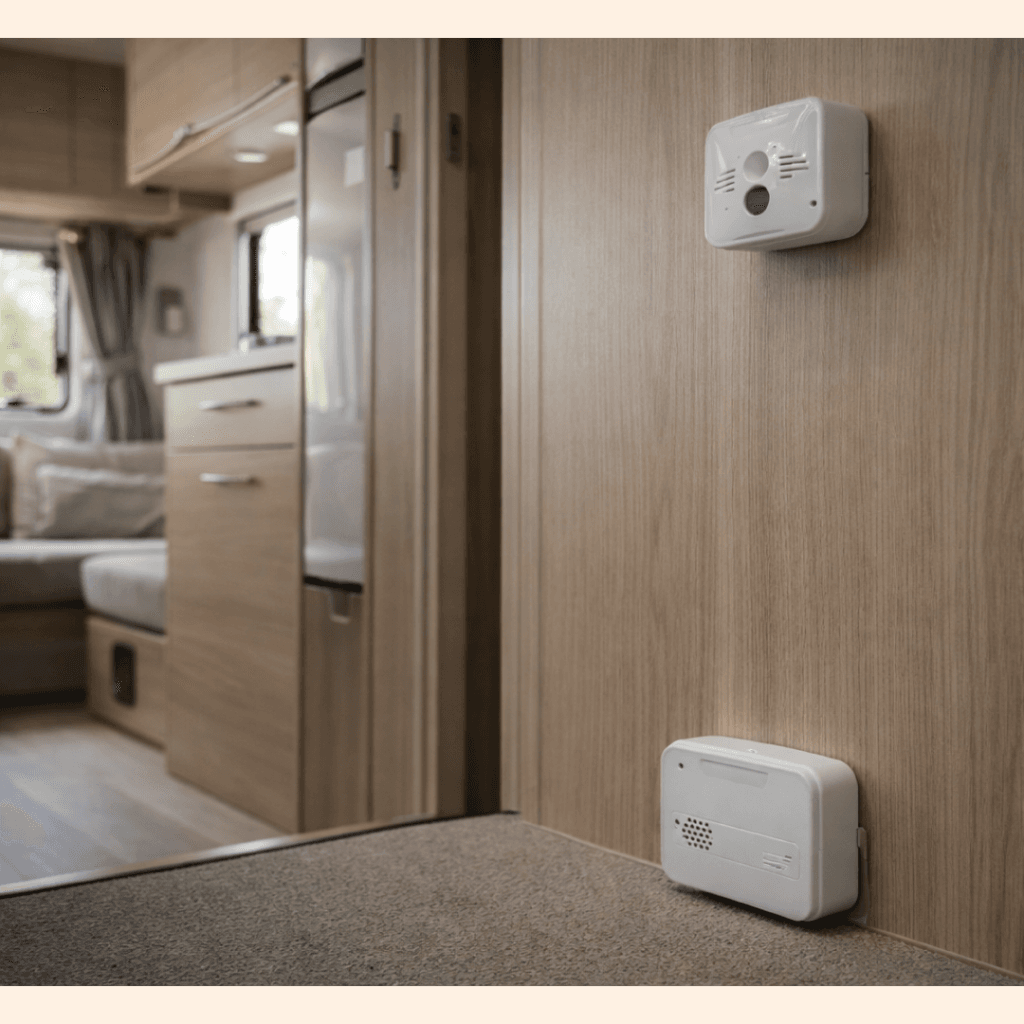
Gas sensors detect dangerous gases in the ambient air. LPG sensors detect the leaking gas itself, while carbon monoxide sensors detect the colorless, odorless CO produced by combustion. Smoke sensors, meanwhile, detect the smoke that appears at the start of a fire. Each of these sensors protects against a different risk and they are not substitutes for one another.
Are Gas Leak Sensors Legally Mandatory?
In Turkey, there is no single, clear general regulation that explicitly makes gas leak sensors “mandatory” for motorhomes and towed caravans. In other words, the absence of a sensor in a given caravan is not, by itself, a direct cause for a fine or a failed inspection.
However, this does not mean sensors are legally unimportant. Even where not explicitly required by regulation, gas sensors are treated as safety equipment and have an indirect effect in many assessments, including:
- Safety assessment during inspection
- Insurance damage review
- Fire and explosion risk analysis
How Gas Sensors Are Assessed in Motorhomes
The lack of a sensor in motorhomes, which are enclosed spaces with heavy gas use, can be noted as a risk factor.
Especially in motorhomes using an LPG-powered heater or refrigerator, having a sensor is strongly recommended for both technical and safety reasons.
Gas Sensors in Towed Caravans
Towed caravans are vehicles used in fixed locations for extended periods and are often actively used as living spaces. For this reason, gas sensors play an even more critical practical role in towed caravans.
Since the LPG cylinder and appliances in towed caravans are usually located closer to the living area, early detection of a leak is vital. As a result, many campsites and operators may effectively require a sensor to be present.
Why Are Carbon Monoxide (CO) Sensors Assessed Separately?
Unlike an LPG leak, carbon monoxide forms as a result of combustion. It detects the colorless and odorless carbon monoxide produced by combustion. Smoke sensors, in turn, detect the smoke produced at the onset of a fire. These sensors each guard against different risks and are not interchangeable, which can lead to gaps in an overall risk assessment if one is left out.
Gas Sensors from an Insurance Perspective
Gas sensors may not appear directly as a coverage condition in insurance processes. However, in fire, explosion, or gas-related damage claims, the question of “were the necessary precautions taken?” comes up during the damage review.
At this point, having a sensor in place can help by:
- Reducing the appearance of user negligence
- Demonstrating that risk management was carried out
- Having a positive effect on how compensation is interpreted
The absence of a sensor does not by itself reduce coverage; however, it may be considered alongside other elements of negligence.
How to Choose the Right Sensor
The following criteria should be considered when choosing a sensor for a caravan:
- 12V-compatible operation
- Separate detection for LPG and CO
- Audible alarm feature
- Low power consumption
- Mounting suited to the caravan environment
Mounting the sensors in the correct location matters just as much as the sensor itself. Since LPG is heavier than air, it should be detected near the floor, while CO should be detected near breathing height.
Most Common Mistakes in Practice
- Using only an LPG sensor and neglecting the CO sensor
- Mounting the sensor at the wrong height
- Continuing to use a faulty sensor without noticing
- Treating portable sensors as a permanent solution
Conclusion
Gas leak sensors are not a legal requirement in every case for motorhomes and towed caravans, but they are critically important for safety, inspection, and insurance. LPG, carbon monoxide, and smoke risks are all different from one another, and separate precautions should be taken for each. Using sensors is essential not only for regulatory alignment but also for life safety.
Official Sources
- TUVTURK — Post-Modification Inspection
- TUVTURK — LPG Frequently Asked Questions
- Highway Traffic Regulation (Karayollari Trafik Yonetmeligi)
This article was prepared by the CampExpert Editorial Team. Regulatory texts can change over time; we recommend checking the current regulations and guidance from the relevant authorities before taking action. Last checked: July 20, 2026.
Related Articles
- Legal Requirements for LPG Installations in Caravans
- Caravan Registration Types and Legal Limits (Turkey 2026 Guide)
- Seat Count and Seatbelt Regulations in Motorhomes
- What’s Excluded From Caravan Insurance
- What Does “Special-Purpose Vehicle” Mean on a Motorhome Insurance Policy?
- Current 2026 Motor Vehicle Tax, Inspection, and Insurance Fees for Caravans