One of the most common questions caravan owners face is whether it’s legal to park in the city. Motorhome and travel trailer owners in particular often deal with real uncertainty around parking bans, fines, towing and municipal enforcement. The core reason for this uncertainty is that caravans serve a different purpose than ordinary passenger vehicles, and there’s no single sentence in the regulations that covers every situation.
This article covers city parking for motorhomes and travel trailers clearly and informatively, based on the Highway Traffic Law, municipal authority and how things actually work in practice. The goal is to move past the “banned or allowed?” framing and explain under which conditions parking is legal, and under which it can result in a fine.
What Is Parking Regulation Based On?
Parking rules in Turkey are mainly governed by the Highway Traffic Law and its related regulations. This legislation doesn’t evaluate vehicles based on their purpose, but from the standpoint of traffic order and safety. In other words, the law asks: does the vehicle obstruct traffic, does it endanger safety, is it in a restricted area?
Because of this, simply being a motorhome or travel trailer is not by itself grounds for a parking ban. However, the vehicle’s size, weight, whether it’s hitched, and the nature of the parking area all directly affect the assessment.
Parking a Motorhome in the City
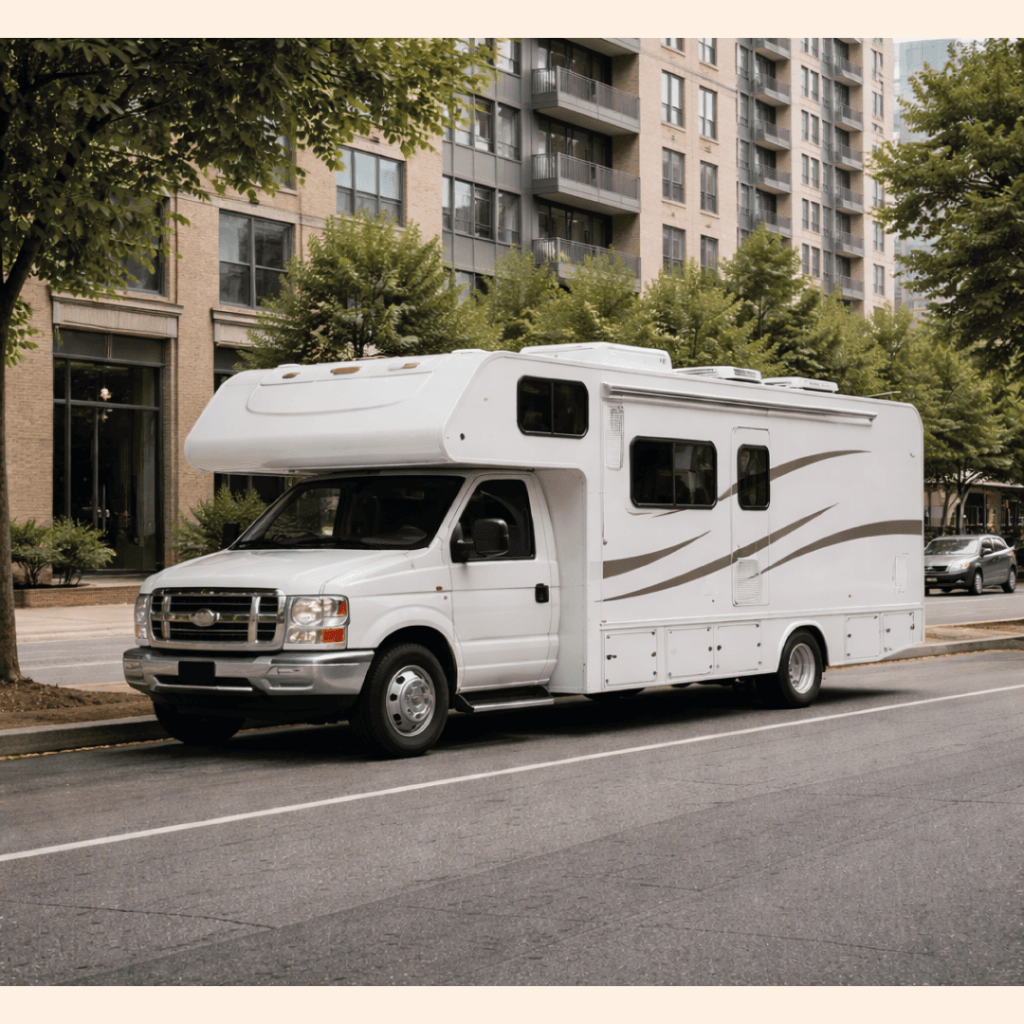
Motorhomes may be registered as “special-purpose vehicles,” but in traffic terms they are motor vehicles. Because of this, the same basic parking rules that apply to passenger cars also apply to motorhomes when parked in the city.
There is an important distinction here, though: parking a motorhome is not the same thing as using it for overnight stays.
- Short-term parking: Generally allowed if it follows traffic rules
- Long-term parking: Varies according to municipal regulations
- Overnight stay (setting up a table, chairs, awning): No longer counts as parking, counts as use
If a motorhome parked in the city has equipment extending outward (an awning, table, chairs, steps), this is treated as “overnight stay” rather than “parking” and can be subject to enforcement.
Parking a Travel Trailer in the City
Unlike motorhomes, travel trailers are not motor vehicles and are classified as trailers under the regulations. This distinction leads to stricter enforcement around city parking.
The basic rule for travel trailers is as follows:
- Parked while hitched: Subject to the same parking rules as the towing vehicle
- Parked unhitched: Banned or restricted in most municipalities
- Left in place long-term: High risk of being towed
Many municipalities treat an unhitched travel trailer left parked in the city as an “abandoned vehicle.” This can escalate as far as the trailer being hitched and towed to an impound lot.
Where Does Municipal Authority Begin?
Municipalities have the authority to regulate, restrict and ban parking areas in order to maintain order within the city. Even though this authority isn’t specifically defined for caravans, it’s applied through general parking regulations.
In practice, municipalities generally step in for the following reasons:
- Parking in the same spot for an extended period
- Effectively occupying public space
- Visual clutter complaints
- Impact on traffic and pedestrian safety
These interventions are usually made not because “it’s a caravan,” but because of the nature of the parking itself. A passenger car left in the same spot for a long time can face similar treatment.
Do No-Parking Signs Apply to Caravans?
No-parking signs apply regardless of vehicle type. However, some areas have specific bans targeting heavy vehicles like “trucks, buses, tractor units.” Motorhomes generally don’t fall into this class, but due to their size and weight they can in practice be treated the same way.
Travel trailers, being classified as trailers, are in practice covered by many no-parking signs as well.
The Difference Between Overnight Parking and Staying
Overnight parking in the city is often confused with staying/camping. From a regulatory standpoint, what matters is whether the vehicle remains passive while parked, or is being used as a living space.
- Parking only: Generally not enforced against
- Setting up an awning, putting out a table: Counts as staying
- Dumping waste, filling water: Can be grounds for enforcement
This distinction applies to both motorhomes and travel trailers.
Fines, Towing and Insurance
Improper parking in the city can result in an administrative fine and the vehicle being towed. Travel trailers left unhitched in particular can be towed quickly.
From an insurance standpoint, whether the parking was legal matters for damage that occurs while parked. Parking that’s banned or against regulations can create disputes in how coverage is interpreted.
The Most Common Mistakes in Practice
- Using a motorhome as a place to stay overnight in the city
- Leaving a travel trailer unhitched
- Ignoring municipal regulations
- Confusing the concepts of parking and camping
Conclusion
Parking motorhomes and travel trailers in the city can’t be defined with a single word as “banned” or “allowed.” The duration and manner of parking, the vehicle’s state and municipal regulations are all determining factors. Knowing the difference between parking and staying, in particular, is the most fundamental way to avoid fines and issues.
Related Guides
- Setting up a caravan office for remote workers — practical setup tips for those parked long-term
- Caravan ventilation: roof fans, vents, condensation and odor control — preventing moisture and odor issues while parked in an enclosed space
- Water leaks and moisture problems in caravans — an early-detection guide for caravans left parked for extended periods
Related Articles
- Motorhome Driving Techniques: Parking, Narrow Roads, and Driving in Windy Weather