
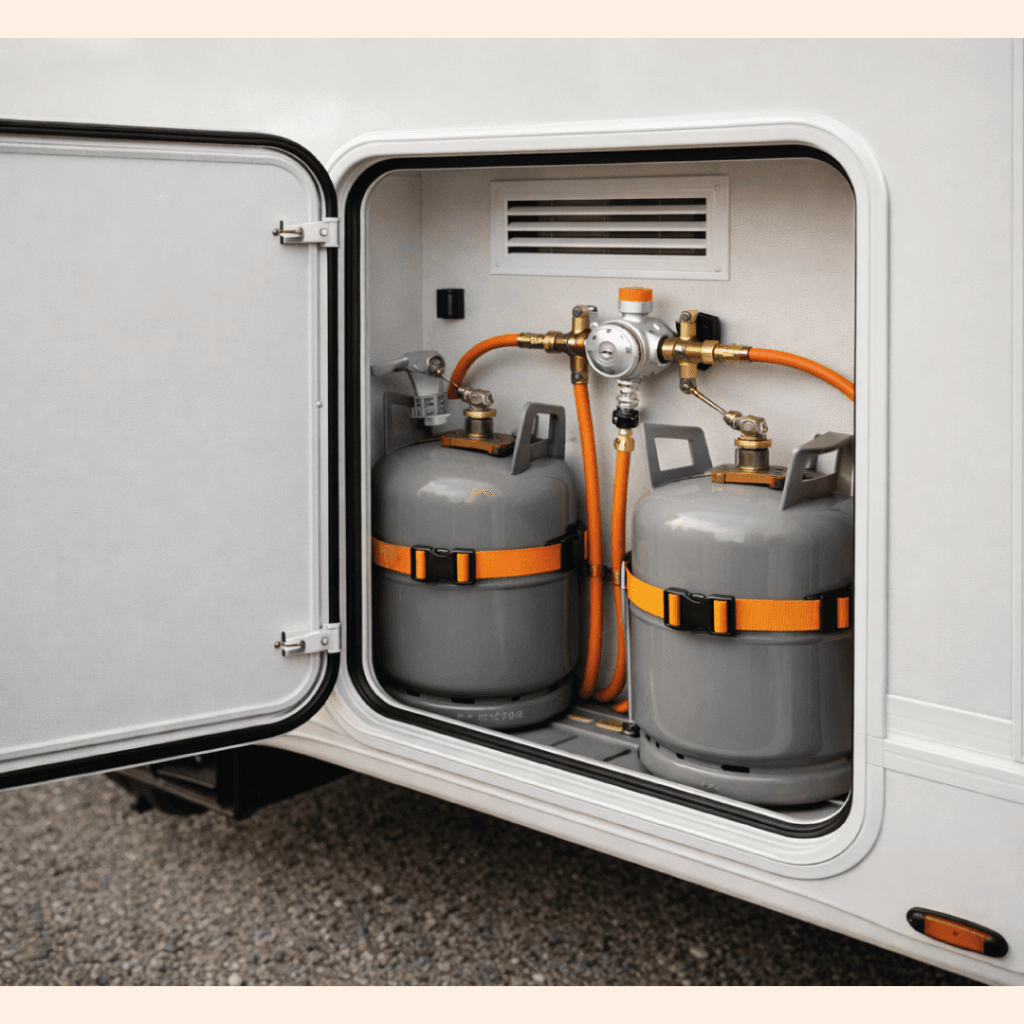
LPG installations in caravans directly affect both comfort and safety. In most caravans, the stove, heater, refrigerator, and hot water system mostly run on LPG. But because LPG is flammable and explosive, these systems are subject to strict rules. The most common user concerns are whether the installation is legal, whether it will pass inspection, and how insurance will assess this system in the event of damage.
This article covers, in an informational and regulation-focused way, under what conditions LPG installations are legally accepted in motorhomes and towed caravans, which situations count as major inspection defects, what insurance risks exist, and the most common practical mistakes.
The Basic Legal Basis for LPG Installation Regulation in Caravans
LPG installations in caravans are subject to the same regulation as LPG conversion systems in passenger vehicles: the tank must be fixed in the vehicle and meet certain safety conditions. LPG use in motorhomes is generally preferred for the stove, heater, refrigerator, and hot water systems.
For an LPG installation to be legally accepted, the following conditions must be met:
- The LPG tank must be in a fixed compartment
- The tank compartment must be ventilated to the outside
- The gas shutoff valve must be easily accessible
- Gas hoses must meet standards and be sound and undamaged
- The installation must be positioned so that it will not take impact from inside the vehicle
An LPG tank sitting exposed inside the vehicle is one of the most common issues flagged during inspection and audits.
LPG Installation in Towed Caravans
Towed caravans face stricter scrutiny than motorhomes, because they are not motor vehicles and can be used in fixed locations for extended periods.
For a legally accepted LPG installation in towed caravans:
- The tank must be in an externally accessible, ventilated cabinet
- The gas shutoff valve must be closable from outside the caravan
- The installation must be fixed and vibration-resistant
- The tank must not move during transport
Temporary solutions using portable tanks, especially when used while traveling, pose a serious safety risk and are, in most cases, not legally accepted.
The Most Common Problems Found During LPG Installation Inspections
Vehicle inspections specifically check caravan LPG installations. The following situations can count as major defects or reasons for failing inspection:
- The tank sitting exposed inside the vehicle
- An unventilated tank compartment
- Non-standard hoses and connections
- Detection of a gas leak
- An unfixed tank or regulator
An LPG installation being found “safe” during inspection does not necessarily mean the installation required a formal project; however, installations carrying obvious risk are not accepted.
Is a Gas Alarm or Detector Mandatory?
Although the use of a gas alarm and detector is not explicitly defined as mandatory for every caravan under current regulation, it is strongly recommended as safety equipment. Especially in enclosed spaces, an LPG leak can go unnoticed and lead to serious consequences.
In many insurance and inspection assessments, having a gas alarm is viewed as a positive factor. The absence of a detector is not, by itself, a reason to fail inspection, but in the event of a damage investigation it can support an interpretation that “no precaution was taken.”
LPG Installation from an Insurance Perspective
LPG installations are a sensitive topic from an insurance standpoint. In the event of a fire or explosion, if the damage is traced back to the LPG installation, the insurer typically evaluates:
- Whether the installation was standard-compliant
- Whether there was user negligence
- Whether maintenance and inspection had been carried out
Non-standard or unsafe installations can lead to reduced coverage or the damage being excluded altogether. This risk can be significantly reduced by installing the LPG system in accordance with legal requirements.
Does It Need to Be Registered on the Vehicle License?
LPG installations in caravans are generally not registered on the vehicle license, as long as the system is not used as motor fuel. However, if the installation alters the structure of the vehicle or involves major modification, it may need to be registered.
The critical point here is this: does the LPG installation remain “living-space equipment,” or does it become an element that changes the structure of the vehicle? This distinction is determinative in registration procedures.
The Most Common Mistakes Made in Practice
- Carrying the LPG tank exposed inside the vehicle
- Using an unventilated tank cabinet
- Non-standard hoses and connections
- Not using a gas alarm
- Traveling without fixing the installation in place
Conclusion
When correctly installed, an LPG installation in motorhomes and towed caravans is a safe and legal solution. However, temporary, unfixed, and non-standard practices can lead to failed inspections, penalties, and problems with insurance coverage. Installing an LPG system in accordance with legal requirements is necessary not only for regulatory compliance but also for personal safety.
Official Sources
- TÜVTÜRK — Post-Modification Inspection (Fuel System Installation Certificate and modification conditions)
- TÜVTÜRK — Frequently Asked Questions About LPG
- Highway Traffic Regulation (Karayolları Trafik Yönetmeliği)
This article was prepared by the CampExpert Editorial Team. Modification and inspection requirements may change over time; we recommend checking current regulations and TÜVTÜRK guidance before proceeding. Last checked: July 20, 2026.
Related Articles
- Are Gas Leak Sensors Mandatory in a Caravan?
- Caravan Registration Types and Legal Limits (Turkey 2026 Guide)
- Seat Count and Seatbelt Regulations in Motorhomes
- What’s Excluded From Caravan Insurance
- What Does “Special-Purpose Vehicle” Mean on a Motorhome Insurance Policy?
- Current 2026 Motor Vehicle Tax, Inspection, and Insurance Fees for Caravans