A growing crowd of travelers wants a camping experience that starts where the pavement ends, and the overlanding camper van market is responding fast. In 2026, the off-road camper segment is going through a real transformation — from AWD Sprinter-based builds to fold-out cabins that fit in a standard garage, from modular roof rack systems to high-capacity 48V electrical setups. Here’s where the overlanding and off-road camper van trend stands worldwide in 2026.
Chassis of Choice: The Rise of the AWD Sprinter
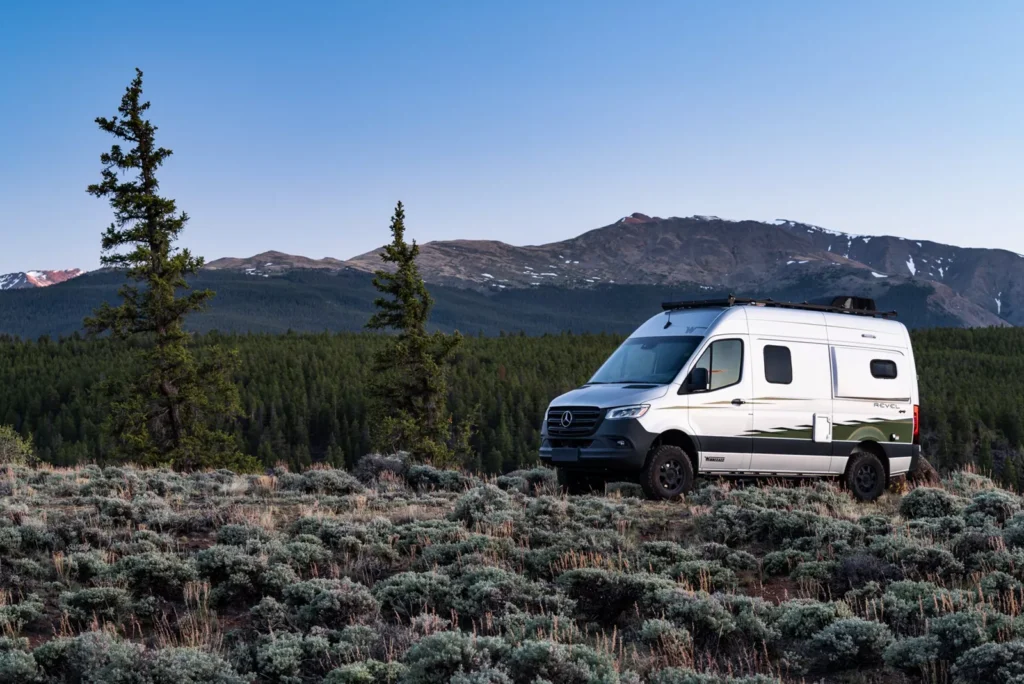
For most buyers in 2026, the “best 4×4 camper van” isn’t a classic low-range 4×4 at all — it’s an AWD (all-wheel-drive) Mercedes Sprinter, the same platform underpinning well-known models like the Winnebago Revel and Storyteller Overland MODE, as well as most custom builds. Mercedes replaced the low-range 4×4 Sprinter with a full-time AWD system starting with the 2023 model year; on 2026 model Sprinters, AWD is offered as an option costing roughly $6,800. The shift has sparked debate over what counts as a “true 4×4,” but it delivers a more balanced trade-off between everyday drivability and off-road capability.
This chassis preference reflects a broader shift: overlanding camper vans are moving away from a niche “expedition vehicle” image and toward a more practical product category — one that combines daily city use with weekend off-road adventure in the same vehicle.
Market Growth: From Niche to Mainstream
Demand for off-road capable RVs has spiked noticeably in recent years, driven by growing interest in overlanding and off-grid camping. Across the country, new manufacturers are springing up fast, trying to meet the needs of a more demanding crowd — travelers who want to go further afield and stay in the wild longer. That shift shows overlanding is no longer confined to a handful of boutique builders; it’s now a segment major chassis manufacturers and established RV brands are taking seriously too.
One of 2026’s more notable innovations is the “garageable 4×4 camper” category: vehicles sized to fit into a standard 7-foot residential garage but able to expand into a full living space once at the campsite. That’s a practical answer for anyone who wants a rig with no parking headaches in the city but still ready for off-grid adventure on the weekend.
Gear Trends: Smarter, Not Just More
The real story behind 2026’s overlanding gear trends isn’t piling on more accessories — it’s smarter gear, tighter packaging, lower weight, and equipment that actually earns its place on the vehicle. One of the clearest shifts is away from permanent, overbuilt roof setups: drivers are increasingly moving toward modular crossbar systems, half racks, bed-rack hybrids, and low-profile platforms. That change cuts fuel consumption and wind resistance while making the vehicle more practical for daily use.
Electrical infrastructure is maturing in a similar direction: in 2026, many manufacturers are moving toward 48V electrical systems, which allow for more efficient power distribution and let owners run high-draw appliances — like induction cooktops and AC units — without needing a noisy generator. That’s a major step toward bringing overlanding camper vans’ off-grid comfort standard closer to that of traditional RVs.
What It Means for Turkey and the Region
Turkey’s varied geography — from the mountainous terrain of the Black Sea coast to the Taurus range, from the Aegean coastline to the high plateaus of eastern Anatolia — offers natural terrain for overlanding-style camping. The global trends toward “lighter, more modular gear” and “everyday-usable 4×4 platforms” apply directly to off-road and nature-camping enthusiasts in Turkey as well. Interest in modular rooftop tents and lightweight rack systems in particular is growing steadily in the local market too.
Off-Grid Power: What a Real Solar Setup Costs in 2026
Solar power has moved from an overlanding novelty to the default expectation, and the market has grown to match: the solar RV market was valued at $1.3 billion in 2024 and is projected to reach $5 billion by 2035, a 13.1% compound annual growth rate. The 600W-to-1,200W solar segment is the most competitive part of that market in 2026, driven directly by the growth of the van life and overlanding communities. For a full-time van dweller, the typical daily power need works out to roughly 60-100Ah, or about 720-1,200Wh — which has made an 800W panel array paired with a 2kWh lithium battery the de facto standard configuration for a serious overlanding build.
The cost of getting there has been falling steadily: off-grid solar kit prices dropped an average of 18% between 2022 and 2026, with a complete 3kW off-grid kit now starting around $4,500 before incentives, down from nearly $7,000 three years earlier. Portable power stations remain a popular complement or alternative to a hardwired system — the Jackery Explorer 1000 Pro, for example, costs $999 and delivers roughly 65% of the capacity of a Goal Zero Yeti 1500X at about 50% of the price, illustrating how quickly the price-to-capacity ratio has been improving across the category.
A Growing Community, Not Just a Gear List
Overlanding’s growth isn’t just a story about vehicles and electronics — it’s also a community story. Overland Expo West, held annually in the Arizona desert, has become the premier gathering point for the overlanding world, drawing a community built around self-reliant travel, off-road vehicles, and expedition-ready gear. That community-driven demand has real supply-side effects: the Solar Energy Industries Association reported a 34% increase in mobile solar installations in 2024, driven almost entirely by van and RV conversions, showing how a hobbyist and enthusiast culture can move an entire manufacturing segment.
For newcomers, that community is also where a lot of practical, build-specific knowledge lives — which solar controller pairs well with which battery chemistry, how to route wiring through a specific van model, which roof rack actually holds up on washboard roads. As overlanding shifts from a niche pursuit to a mainstream one, that knowledge base is becoming more accessible through online forums, YouTube build series, and events, lowering the barrier to entry for anyone building their first rig.
Cost of Entry: Budget Build vs. Premium Rig
One of the most common misconceptions about overlanding is that it requires a six-figure expedition vehicle from day one. In practice, the segment now spans an enormous price range, and 2026’s trend toward smarter, lighter gear has actually pushed the entry point down rather than up. A budget-conscious build on a used AWD Sprinter or similar mid-size van, paired with a portable power station instead of a hardwired electrical system and a simple rooftop tent instead of a custom pop-top conversion, can get a first-time overlander onto forest roads and dispersed campsites for a fraction of what a fully outfitted expedition rig costs. The modular gear trend described earlier — crossbar systems, half racks, and bolt-on power solutions — exists precisely because it lets owners upgrade incrementally rather than committing to a complete build before ever testing whether the lifestyle suits them.
At the premium end, a fully custom build on a new AWD Sprinter with a 48V electrical system, a large-capacity solar array, and integrated off-road suspension can run well into six figures once labor and custom fabrication are factored in — and buyers at this end are typically not weekend campers but people planning months-long, remote-region travel where redundancy and self-sufficiency genuinely matter. Between these two extremes sits the fastest-growing part of the market: mid-range builds that combine a handful of serious upgrades (solar, all-terrain tires, a quality suspension) with off-the-shelf components rather than full custom fabrication, delivering most of the capability at a meaningfully lower price than a bespoke rig.
Community Events and Where Overlanders Actually Go
Just as important to overlanding’s growth as the gear itself are the physical and digital gathering points where the community connects. Beyond Overland Expo West in the Arizona desert, smaller regional “overland rally” events are multiplying quickly, offering not just gear displays but hands-on workshops on recovery techniques, route planning, and vehicle maintenance. For newcomers, these events tend to deliver a far faster learning curve than reading through forum threads alone.
Route preferences are shifting in a similar direction: rather than a single long “big trip,” more overlanders are opting for shorter-to-medium routes they can repeat regularly — a pattern that lines up directly with the broader trend toward keeping the vehicle usable for daily driving. A similar pattern is emerging in Turkey, where the Black Sea highlands, forest tracks through the Taurus Mountains, and dirt roads in the Aegean interior are increasingly chosen as weekend overlanding routes — the local expression of the same global shift toward more frequent, shorter, and more accessible trips.
Conclusion: Overlanding Is Now a Lifestyle Category
As of 2026, the overlanding and off-road camper van segment has moved from a niche “expedition gear” category into a genuinely everyday-usable lifestyle category — outfitted with AWD chassis, garageable compact designs, modular lightweight equipment, and 48V electrical systems. The common thread behind this shift is clear: for campers who want to go further, off-road capability and daily-drive practicality are no longer mutually exclusive choices — they’re becoming two sides of the same vehicle.
Sources: Storyteller Overland, The Vansmith, Offroad Trading Company, Pedal Commander, 4WDTalk, RV.com and various industry sources, July 2026.