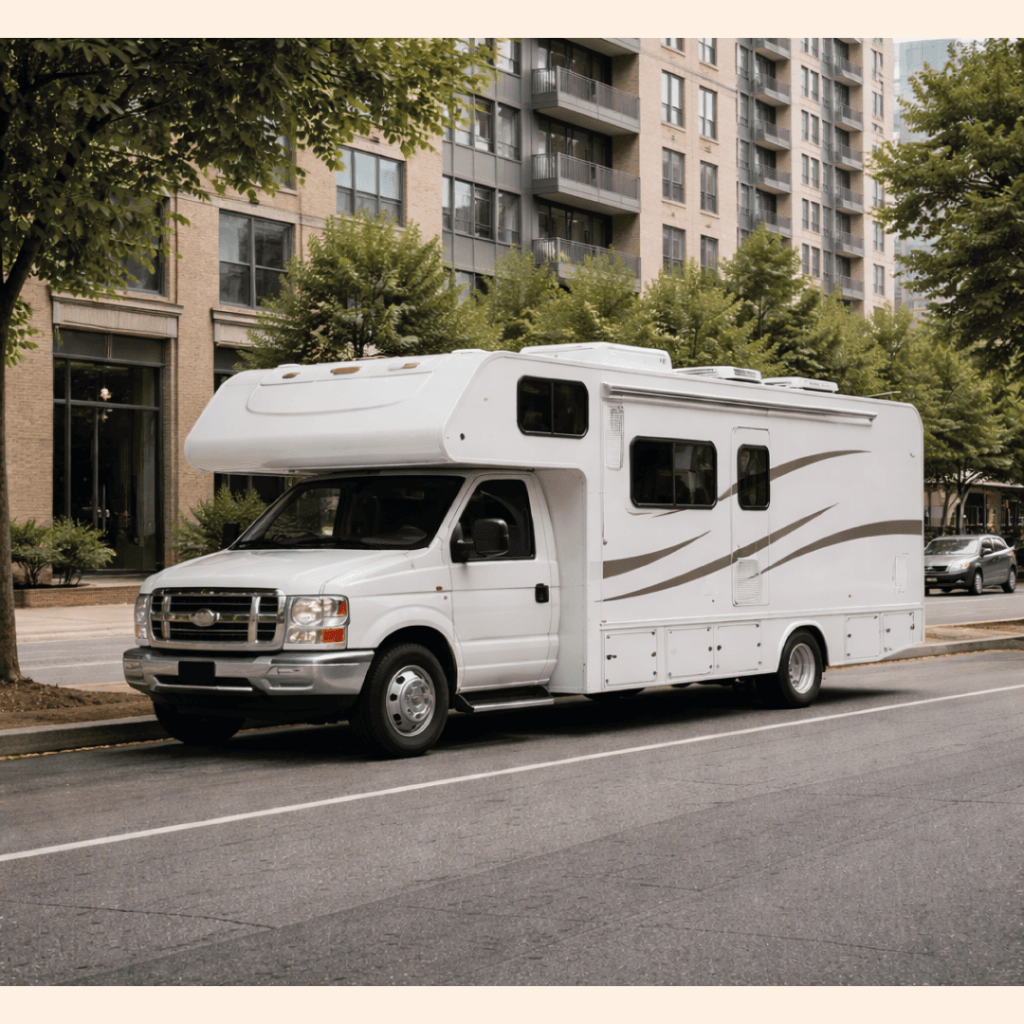
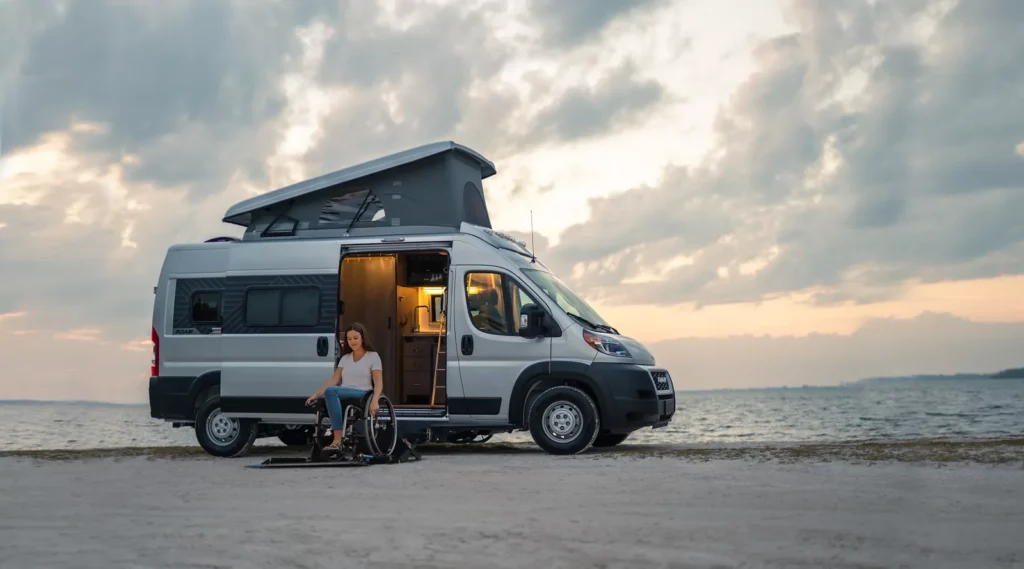
Autonomous driving technology for RVs is no longer science fiction. In 2026 model motorhomes, lane-keeping assist, adaptive cruise control, 360-degree cameras and automatic emergency braking are becoming standard equipment, while new “Highway Pilot” systems that let drivers take their hands off the wheel on the highway represent the next rung on the ladder. A fully driverless RV doesn’t exist yet, but every year the industry inches a little closer. Here’s where autonomous RV technology stands as of 2026.
The Driver-Assist Systems That Are Already Standard
On the majority of 2026 model motorhomes, adaptive cruise control and lane-keeping assist are no longer an optional luxury — they’re baseline equipment on manufacturer chassis. Motorhome chassis makers like Ford and Mercedes-Benz have rolled blind-spot monitoring, active lane-keeping assist and adaptive cruise control into series production across more platforms. Toyota’s latest driver-assist suite combines adaptive cruise control, lane tracing assist, blind-spot detection and a 360-degree camera system that makes maneuvering a large vehicle noticeably easier.
What these systems have in common isn’t replacing the driver — it’s reducing fatigue-driven mistakes on long highway stretches. Holding an RV at a constant speed and in its lane for hours, especially in wind or rain, is a real burden on the driver; adaptive cruise control and lane-keeping assist take a substantial share of that load off their hands.
Highway Pilot: A Step Closer to Semi-Autonomous Driving
2026 marks a genuine leap toward semi-autonomous driving in RV technology. New “Highway Pilot” systems combine hands-free highway driving, automatic lane changes, traffic-jam assistance, and an emergency pullover capability that can bring the vehicle safely to the shoulder in an emergency. That’s a considerably broader capability set than the classic adaptive-cruise-plus-lane-keeping combination.
For drivers towing a trailer, another practical addition is a “Backtrack” feature: the system automatically reverses the truck or tow vehicle along the exact path it just drove, preventing the trailer from jackknifing — a solution for one of the moments drivers struggle with most, whether in a tight campground or during a parking maneuver.
How Far Are We From Fully Autonomous RVs?
Industry experts largely agree: a truly driverless RV that goes from point A to point B on its own is probably still 10 to 15 years away. The main reasons are that RVs are far larger and heavier than standard passenger cars, trailer-towing dynamics are inherently complex, and RVs must maneuver in unstructured, unmapped environments like campgrounds. Autonomous driving algorithms handle city traffic or highways reasonably well by now, but backing into a dirt campsite is an entirely different engineering problem.
Still, the pace at which semi-autonomous features are trickling down is notable. Adaptive cruise control and lane-keeping assist, features that only a few years ago were reserved for luxury-segment motorhomes, are now standard in the mid-range as well. The industry appears to be following a staged path: full automation on the highway first, semi-automation for campground maneuvers later.
Where Electric Chassis and Autonomous Tech Intersect
The advance of autonomous driving technology happens to coincide with the spread of electric and hybrid chassis platforms — and that’s not a coincidence. The centralized computing architecture, sensor integration and over-the-air software update capability of electric vehicles make it considerably easier to develop and roll out driver-assist systems faster. New-generation hybrid motorhome chassis, for example, now come with drop-in electric drivetrain motors that bolt onto existing truck and motorhome platforms — meaning hybrid power and more advanced driving software can reach today’s vehicles without waiting for an entirely new generation.
Another advantage of this software-first approach is upgradability. Systems like Highway Pilot can be improved over time by the manufacturer through software updates — much like a smartphone’s operating system. That means an RV purchased today could end up with a more capable driver-assist system a few years down the road than the one it shipped with.
Conclusion: Gradual but Steady Progress
As of 2026, fully autonomous driving doesn’t exist yet in the RV world, but the direction is unmistakable: baseline systems like adaptive cruise control and lane-keeping have become standard, more advanced systems like Highway Pilot are trickling down into the mid-to-upper segment, and electric/hybrid chassis are accelerating the whole trend. In the near term, what an RV owner will notice isn’t a “vehicle that drives itself” but less fatigue on long highway stretches and safer maneuvering. In the longer term, the full autonomy the industry is discussing on a 10-to-15-year horizon will be built gradually on top of today’s semi-autonomous systems.
Sources: CampgroundViews, RV.com, RV Depot, Explorer RV Club, iRV2 Forums, Southeast Financial and various industry sources, July 2026.