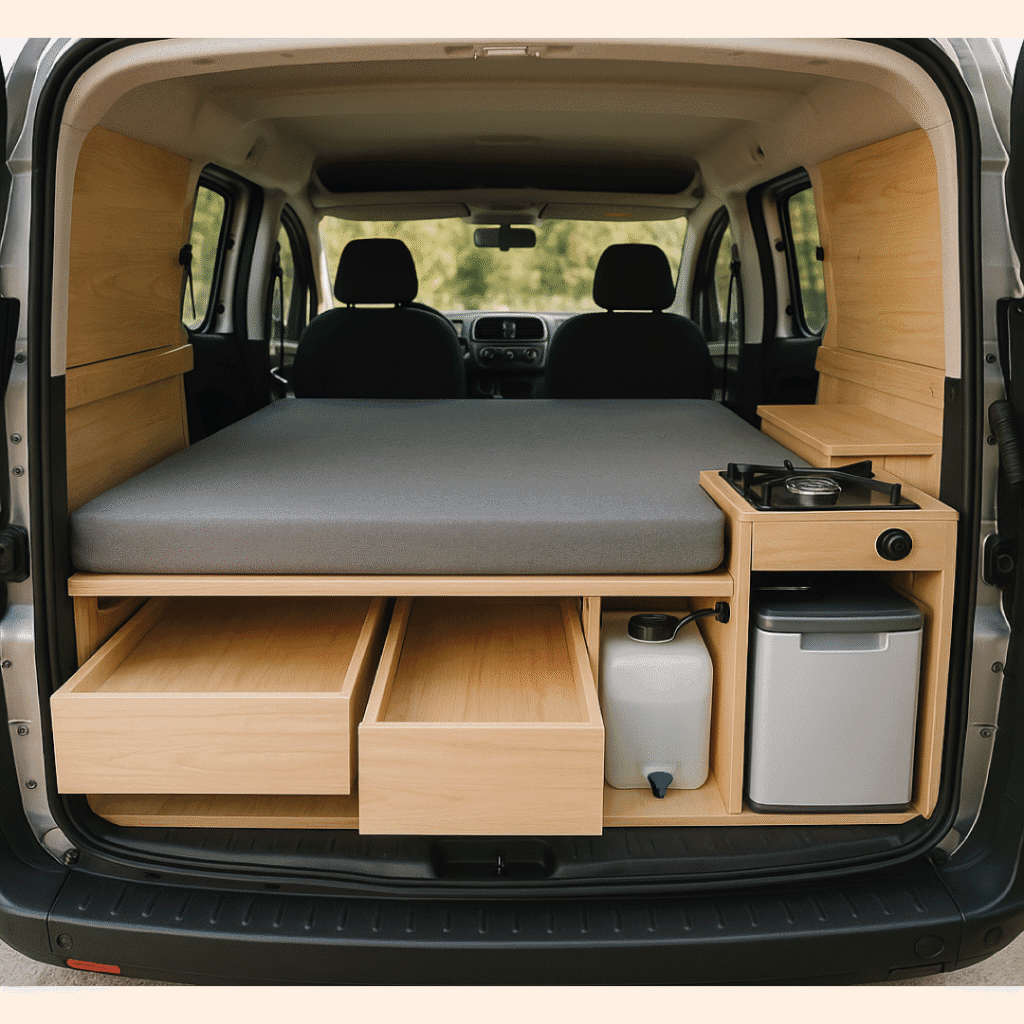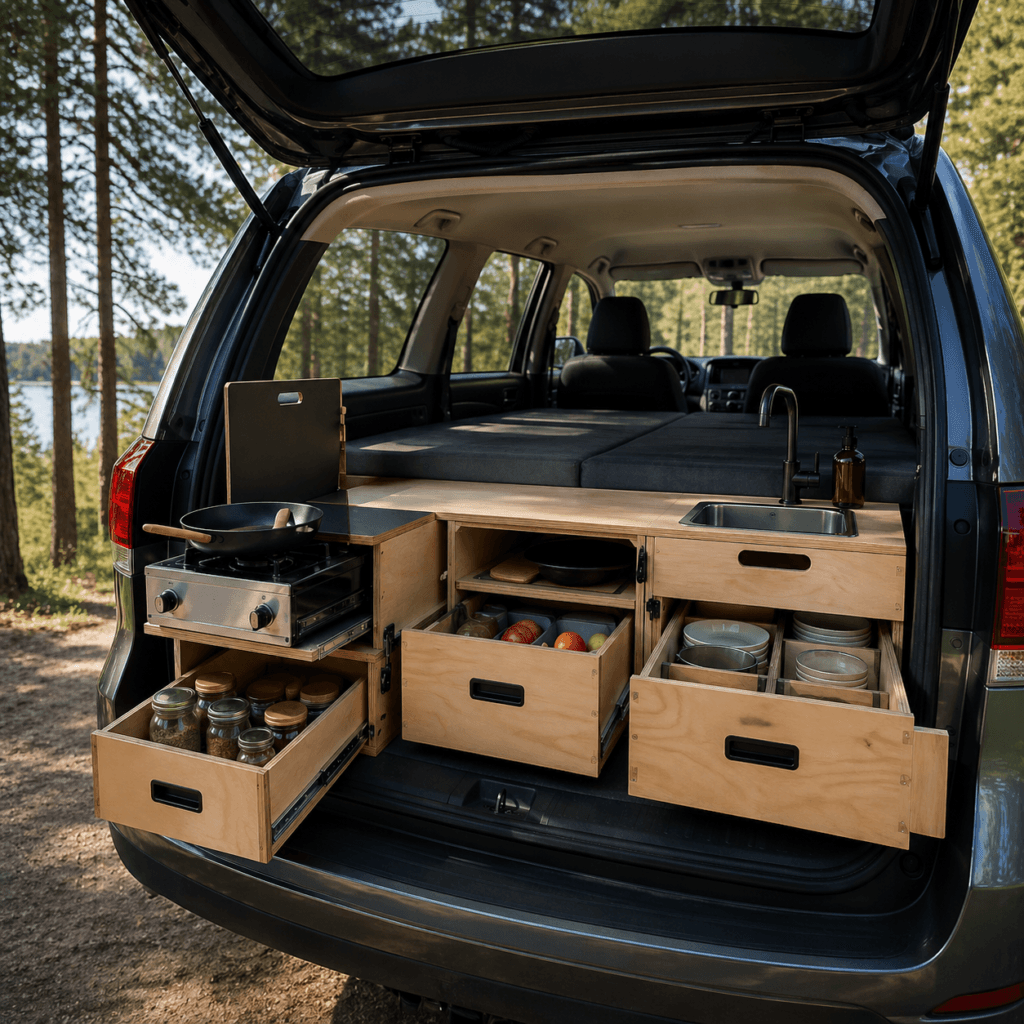
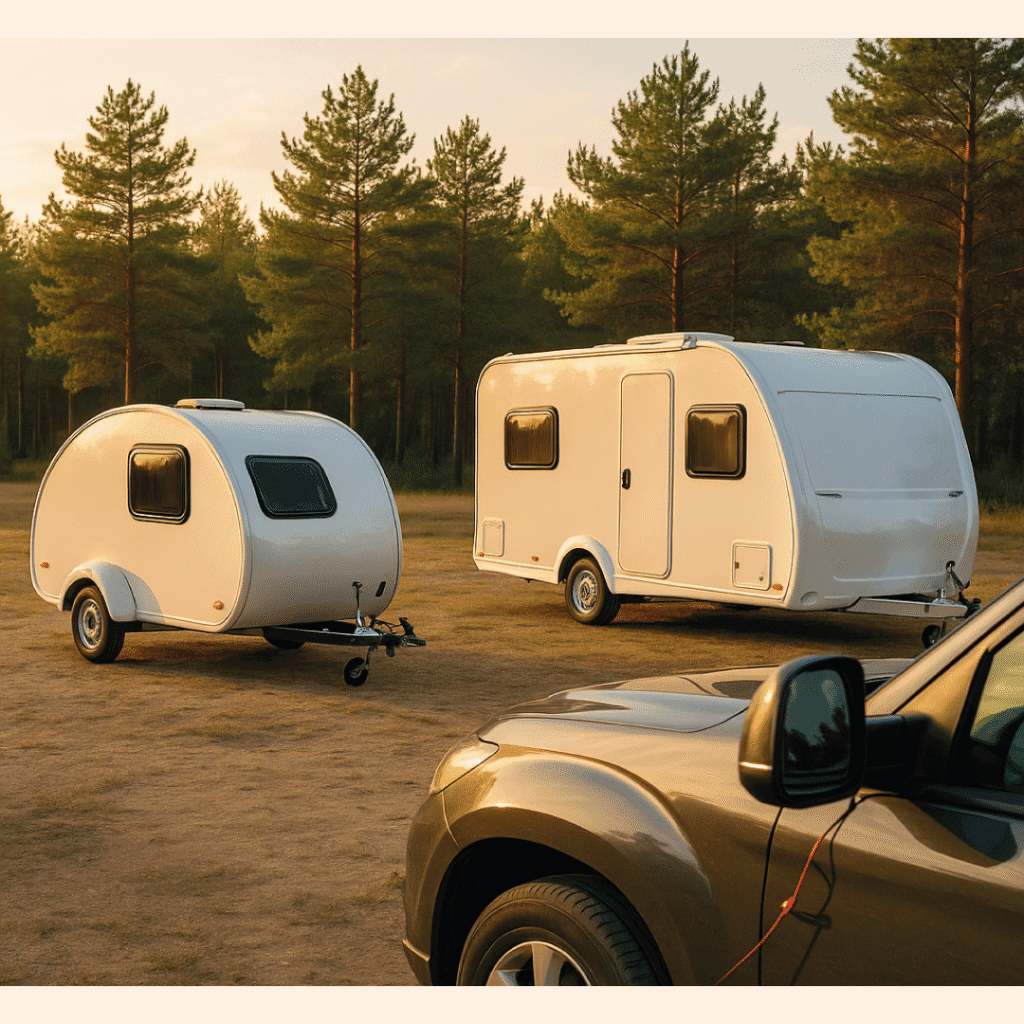
This guide brings together O1-O2 travel trailer classes, who they suit, minimum recommended living equipment (fridge, stove, roof vent(s), cassette toilet, etc.), safe towing, license-speed-dimension limits, registration-inspection, and taxes and costs on a single page. Our goal: helping the reader make the right decision quickly.
1) Travel Trailer Classes: O1 vs O2
| Class | Technical Definition | Typical Use | Pros | Watch Out For |
|---|---|---|---|---|
| O1 (≤750 kg) | Light trailer/caravan | Couple/solo, 2-5 days | Lightweight, easy to maneuver/park, B license | Limited volume; bathroom/toilet mostly portable |
| O2 (750-3500 kg) | Braked (overrun) construction is common | Family, 7-14+ days, 4 seasons | Built-in bathroom/toilet, ample storage, stability | May require a BE license; harder to park |
2) Who Is It Suitable For?
- Minimalist, quick getaways (couple/solo): O1. Lightweight and free with an outdoor kitchen + portable toilet + a single roof vent.
- Family, long stays: O2 (1400-1700 kg range) is balanced with a bathroom layout.
- 4 seasons, long tours: O2 twin-axle + stabilizer coupling + (if needed) a mover.
3) 2025 Registration-Plate, Inspection and Speed Summary
- Registration-plate: As of July 1, 2025, all travel trailers including ≤750 kg fall under registration and plate requirements. O1 trailers already on the road before July 1, 2025 have a transition period until January 1, 2035.
- Inspection: For private use, generally at the end of the first 3 years, then every 2 years (varies by registration type). Check TÜVTÜRK for fees and appointments.
- Speed: With a trailer attached, the speed applied is 10 km/h lower than your vehicle class’s unladen speed limit; road signs must be followed.
4) License-Weight-Towing Limits
| License | Coverage | Note |
|---|---|---|
| B | Trailer ≤750 kg (O1) | Ideal for beginners. |
| B (Code 96) | With extra training, combined (tow vehicle+caravan) ≤4250 kg | Can be a solution for lighter O2s. |
| BE | Trailer ≤3500 kg (most O2s) | Practical for family and twin-axle setups. |
5) Essential Safety Equipment
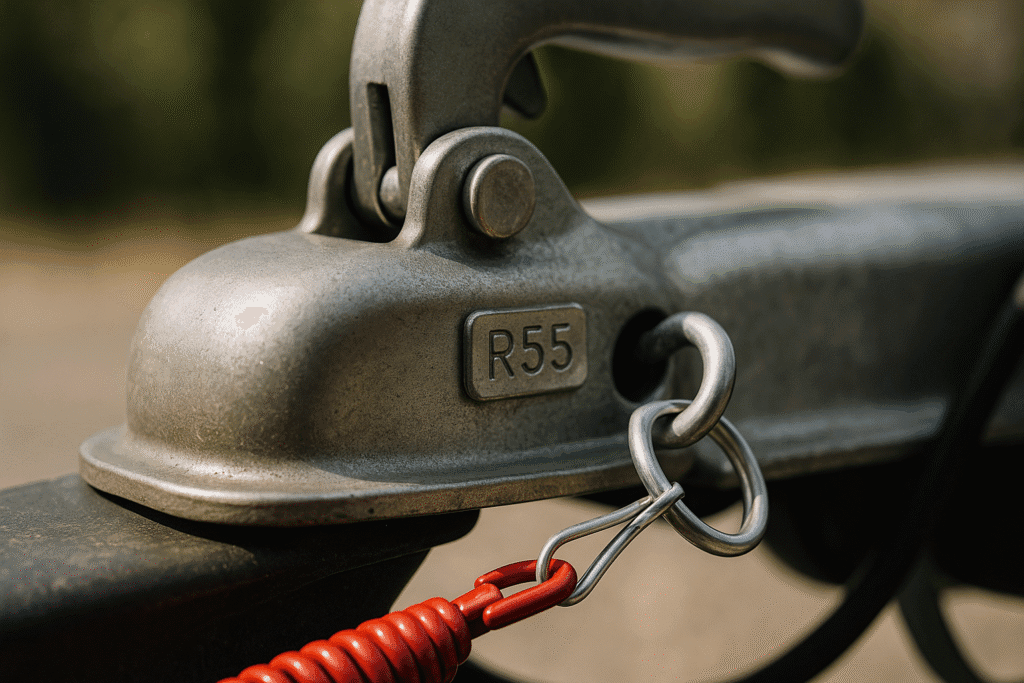
- ECE R55-approved tow bar (vehicle-compatible mount; recorded on the title).
- 13-pin (ISO 11446) socket (preferred for reverse light, rear fog light, and fridge power supply).
- Breakaway cable – O2; safety rope – O1.
- Extendable side mirrors (mandatory if the caravan is wider than the tow vehicle).
- Fire extinguisher (min. 2 kg ABC), first-aid kit, warning triangle.
- CO & gas alarm, keeping mandatory vents open.
- Tires: Correct load/speed rating; replace those over 5-7 years old; correct pressure.
- Overrun brake-coupling maintenance (O2); a stabilizer coupling is recommended.
6) Minimum Recommended Living Equipment
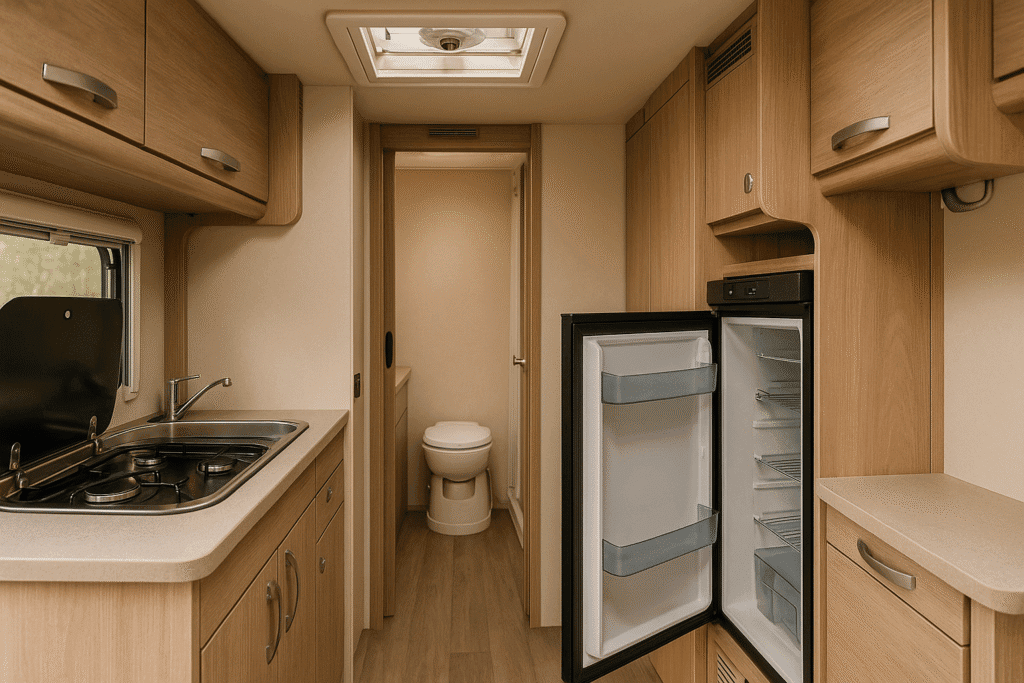
The tables below target a minimum comfort standard (for 2-4 people under Turkish conditions). Capacities were chosen with summer camping and shoulder-season scenarios in mind. For winter camping, the heating and insulation line items must definitely be scaled up.
6.1 O1 (≤750 kg) – Couple/Solo (2-5 Days)
| Module | Minimum Recommendation | Note |
|---|---|---|
| Fridge | 12V compressor 40-60 L or a well-insulated passive cooler + gel packs | Sufficient for short camps; a 12V fridge is energy-efficient. |
| Stove | 2-burner LPG (portable/exterior drawer) | Reduces indoor odor/grease buildup; use a windshield in wind. |
| Roof vent | ≥1 unit, 40×40 cm (with fly screen) | Sleep comfort and condensation control. |
| Toilet | Portable chemical | Lightweight, doesn’t take up space; easy to empty. |
| Water | 40-60 L fresh / 20-40 L grey | Sufficient for 2-4 days of independence. |
| Electrical | 100-120 Ah LiFePO₄ + 20 A DC-DC + 150-200 W solar + MPPT | 12V fridge + lighting + phone/small devices. |
| Heating | Electric heater (at a campsite) or a small LPG catalytic heater | Sufficient for spring-summer nights; limited for winter. |
| Accessories | Awning, camp table and chairs | Extends the living space outdoors. |
6.2 O2 (750-3500 kg) – Family (7-14+ Days)
| Module | Minimum Recommendation | Note |
|---|---|---|
| Fridge | 12V compressor 80-110 L (with freezer) | Covers a family’s daily fresh food/ice needs. |
| Stove & ventilation | 2-3 burner LPG, glass lid + range hood/vent | The lid provides extra counter space. |
| Roof vent(s) | At least 2× 40×40 cm (one over the bathroom, preferably with a fan) | Condensation and odor control, summer coolness. |
| Toilet | Cassette toilet + separate shower | Hygiene/comfort for long stays. |
| Water | 80-120 L fresh / 60-100 L grey (+ frost protection) | 3-7 days of independence for a family. |
| Electrical | 150-200 Ah LiFePO₄ + 30-40 A DC-DC + 300-400 W solar + MPPT + 600-1000 W inverter | Fridge, lighting, charging, and small 220V devices. |
| Heating | LPG/diesel heater 3-4 kW + optional hot water | Critical for 4-season use. |
| Chassis/axle | Overrun brake, adequate axle capacity, stabilizer coupling; a mover for twin-axle setups | Stability and ease of parking. |
7) Safe Towing Checklist
- Weight ratio: Caravan MTPLM ≈ 85% of the tow vehicle’s weight (for beginners).
- Nose (tongue) weight: 5-7% of the loaded caravan; don’t exceed the S (vertical load) limit.
- Load distribution: Heavy items over the axle, low down; don’t pile weight at the rear.
- Connection: Coupling lock and breakaway cable/safety rope attached at the correct point.
- Lighting test: Turn signals-brake lights-plate light-rear fog light.
- Tire pressure/age: Correct pressure; replace tires over 5-7 years old.
- Speed: -10 km/h from the legal unladen limit.
- Driving: Gentle throttle/braking, wide turns, increase braking distance; slow down in crosswinds.
8) Taxes, Costs, Insurance
- MTV/OTV: Since a travel trailer is unpowered, MTV/OTV don’t apply. VAT (standard rate) applies on commercial sales.
- Registration-plate-notary: Under a Turkish Official Gazette regulation dated 4 December 2024 (amending the Regulation on Vehicle Sales, Transfer and Registration Services), registration and plates became mandatory for all trailers, including O1-class units ≤750 kg; the rule took full effect on 1 July 2025. Caravans produced/acquired before 1 January 2025 have until 1 January 2035 to register. The process runs through a notary.
- Inspection: Under the same regulation, O1-class travel trailers (≤750 kg) must be inspected annually starting from year 1 (the “end of year 3, then every 2 years” rule applies to motor vehicles, not trailers). Check TÜVTÜRK for current fees and appointments.
- Insurance: Mandatory traffic insurance applies to the tow vehicle; additional liability/comprehensive products exist for the caravan (policy terms may vary).
Source: T.C. Official Gazette (Resmi Gazete) — amendment to the Regulation on Vehicle Sales, Transfer and Registration Services (4 December 2024). Check TÜVTÜRK for current inspection fees. Last checked: 18 July 2026. Regulations can change; verify with the official source before acting.
9) Common Mistakes
- Choosing without checking the tow vehicle’s authorized towing capacity (braked/unbraked), and its D and S values.
- Setting off without attaching the breakaway cable.
- Neglecting tire age and pressure.
- Forgetting the -10 km/h rule; sudden maneuvers and hard braking.
10) Quick Decision Table
| Profile | Recommended class | Why? |
|---|---|---|
| Couple/solo, 2-5 days | O1 | Lightweight, easy to park, B license |
| Family, 7-14+ days | O2 (1400-1700 kg) | Built-in toilet/shower, ample storage |
| 4 seasons, long tour | O2 twin-axle | Stability, weight distribution; easier parking with a mover |
11) FAQ – Quick Answers
Will an O1 caravan (≤750 kg) need to be registered in 2025?
What should the highway speed be with a trailer?
Which license is required?
Cassette toilet or portable?
Is a 12V compressor fridge mandatory?
12) Move Forward Step by Step
- Needs analysis: Number of people, length of stay, season, route.
- Class decision: O1 (light/quick getaway) vs O2 (family/4 seasons).
- License & tow vehicle: B-B96-BE; check the tow vehicle’s authorized towing capacity and its D and S values.
- Safety setup: ECE R55 tow bar, 13-pin, breakaway, mirrors, fire extinguisher-first aid.
- Living modules: Fridge, stove, roof vent(s), toilet, water, electrical, heating.
- Registration-plate-insurance: Plan out the paperwork-notary-inspection process.
- First drive: Maneuvering/braking tests in an empty area; speed/discipline.
Note: Regulations and fees can be updated over time. We recommend verifying speed-dimension-license and registration provisions from official sources before setting off.