Semi-Integrated, Fully Integrated, and Alcove Motorhomes: Differences, Pros/Cons, and Who They Suit
The most critical decision you’ll make when buying a motorhome is choosing the body type. Even sharing the same chassis, alcove, semi-integrated, and fully integrated motorhomes offer very different experiences – from aerodynamics to winter performance, from interior volume to driving comfort. In this guide, we explain the three architectures in plain but professional language, lay their strengths and weaknesses side by side, and give clear recommendations based on use-case scenarios.
Quick summary: An alcove is ideal for families and rentals thanks to its practical fixed upper bed; a semi-integrated gives the most balanced driving and fuel consumption; a fully integrated offers panoramic views, top-tier insulation, and quietness.
1) Basic definitions (clear and short)
Alcove
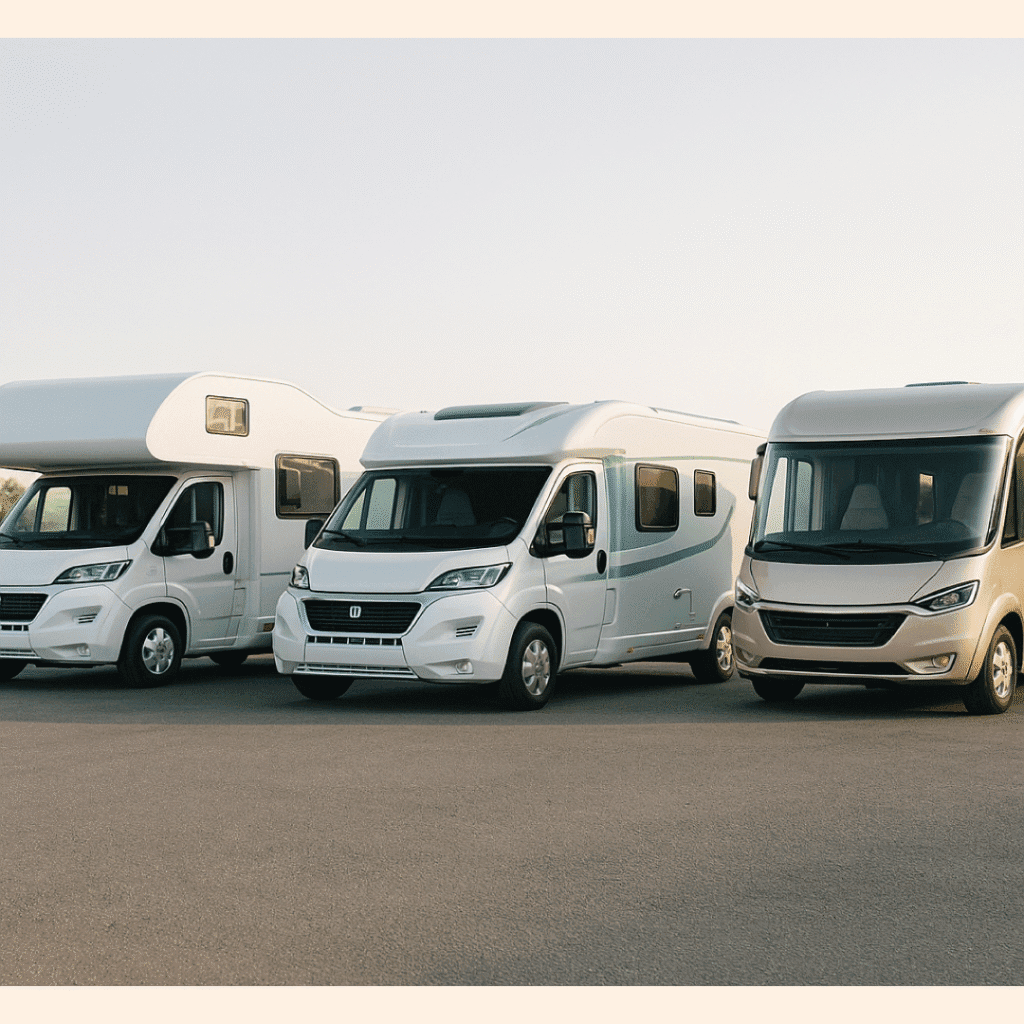
There’s a roof overhang extending forward above the driver’s cab, and this area usually contains a two-person fixed bed. The bed is always ready; the separation between the cab and living area is distinct.
Semi-Integrated
The original cab is retained, and the living area is seamlessly integrated with the cab. There’s no large alcove overhang on the roof; many models offer a drop-down bed option hidden in the ceiling. The silhouette is lower and more aerodynamic.
Fully Integrated
The body is designed end to end as a single monocoque shell; the original cab isn’t visible from outside. A panoramic windshield, a quiet cabin, top-tier insulation, and a sense of prestige are the standout aspects of this type.
2) Aerodynamics, wind, and driving feel
The alcove has the tallest silhouette; steering corrections in crosswinds may increase and consumption can rise on long trips. The semi-integrated is the sweet spot for most users with its balanced profile and lower height. The fully integrated, despite its large frontal area, controls vibration and noise well thanks to its one-piece body, offering a refined drive.
3) Visibility, maneuvering, and size management
The alcove‘s roof overhang can limit upward visibility. The semi-integrated provides a cab feel close to a passenger car and clean sightlines. The fully integrated offers bus-like panoramic visibility and wide side mirrors that don’t tire you on long trips, but it requires size planning for parking/routing.
4) Weight, payload, and license limits
All three types come on the same chassis with different bodies; unladen weight and equipment load are the deciding factors. The semi-integrated, being relatively lighter, generally offers better payload. The alcove can gain weight from its extra roof structure; the fully integrated gains weight from its double floor and luxury equipment. Before buying, always weigh the actual fully laden weight and check license/regulatory requirements against the 3,500 kg threshold.
5) Thermal insulation and four-season performance
The alcove may be more prone to thermal bridging due to its roof overhang. The semi-integrated performs well across four seasons with a well-executed body-cab junction and correctly routed heating ducts. The fully integrated leads in winter camping thanks to its double floor, insulated tanks, and uniform airflow.
6) Interior layout: beds, ceiling height, and garage
The alcove requires no setup thanks to its fixed upper bed, but summer-winter temperature differences may be felt up there. The semi-integrated, in drop-down bed layouts, gives a spacious daytime feel and sleeping arrangements for up to 4 people at night. The fully integrated, with its spacious lounge and large garage, is suited to long stays.
7) Electrical, water, and storage capacities
While it varies by manufacturer, the alcove prioritizes bed count, the semi-integrated is balanced, and the fully integrated offers high capacities geared toward long stays and winter use. Plan your space/cooling layout upfront for upgrades like solar panels and inverters.
8) Price, repairs, and resale
The alcove is generally in the entry-to-mid price band; family and rental demand keeps its resale market strong. The semi-integrated is priced across a wide range and, being the best-selling segment, has an active resale market. The fully integrated costs a premium; but well-maintained examples hold their value well.
9) Buying checklist
- Actual weight/payload: What capacity remains after options?
- Heating & water lines: Are the pipe routing and tanks insulated?
- Sealing: Have the alcove and service hatches been tested?
- Electrical infrastructure: Is the battery type/capacity and inverter/panel plan ready?
- Garage & transport: Is there enough room for bikes/skis/a table, etc.?
- Service network: Is there competent service for glass/bodywork/furniture?
- Test drive: Try out crosswind behavior, braking, visibility, and seat ergonomics.
- Regulations/license: Check the maximum laden weight and classification.
10) Which type suits whom? (Quick decision tree)
- Family/4-5 beds, don’t want to set up beds → Alcove or semi-integrated with a drop-down bed
- Couple/city driving + long-trip balance → Semi-integrated (short-medium body)
- Winter camping/maximum comfort → Fully integrated (double floor)
- Long stays/need for a big garage → Fully integrated or semi-integrated with a large garage
FAQ (Frequently Asked Questions)
Which uses less fuel, semi-integrated or alcove?
In most scenarios, the semi-integrated is more efficient because it’s more aerodynamic; but load, speed, and wind conditions change the outcome.
Is the windshield on fully integrated models expensive?
Yes, it’s a special, large part; replacement cost is high depending on the model. In return, you gain panoramic visibility and cabin quietness.
Does an alcove get too hot in summer or too cold in winter?
Insulation and ventilation are critical. Comfort is improved with the right model choice and supplementary insulation/curtain solutions.
Which type makes the most sense for two people?
Generally, semi-integrated is the sweet spot balancing versatility, economy, and comfort. For winter-heavy use, fully integrated is also a strong candidate.