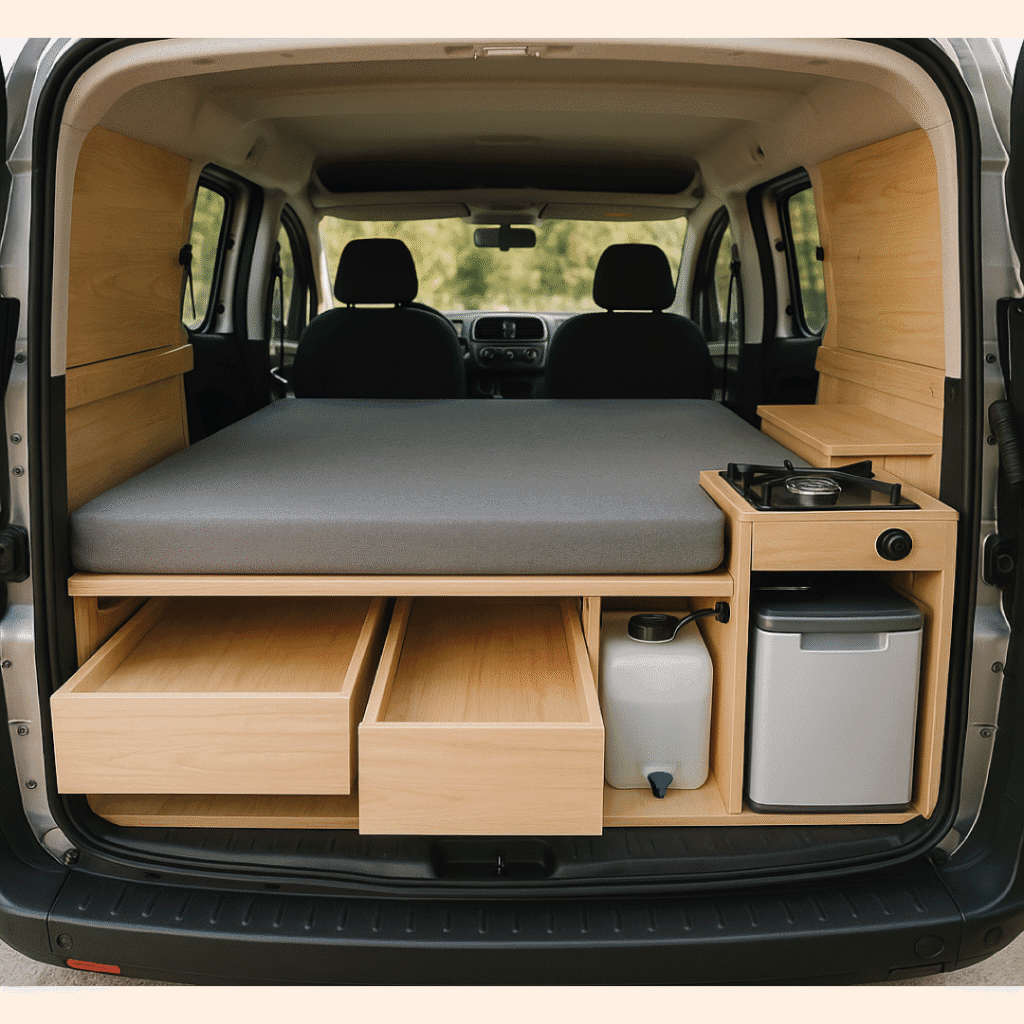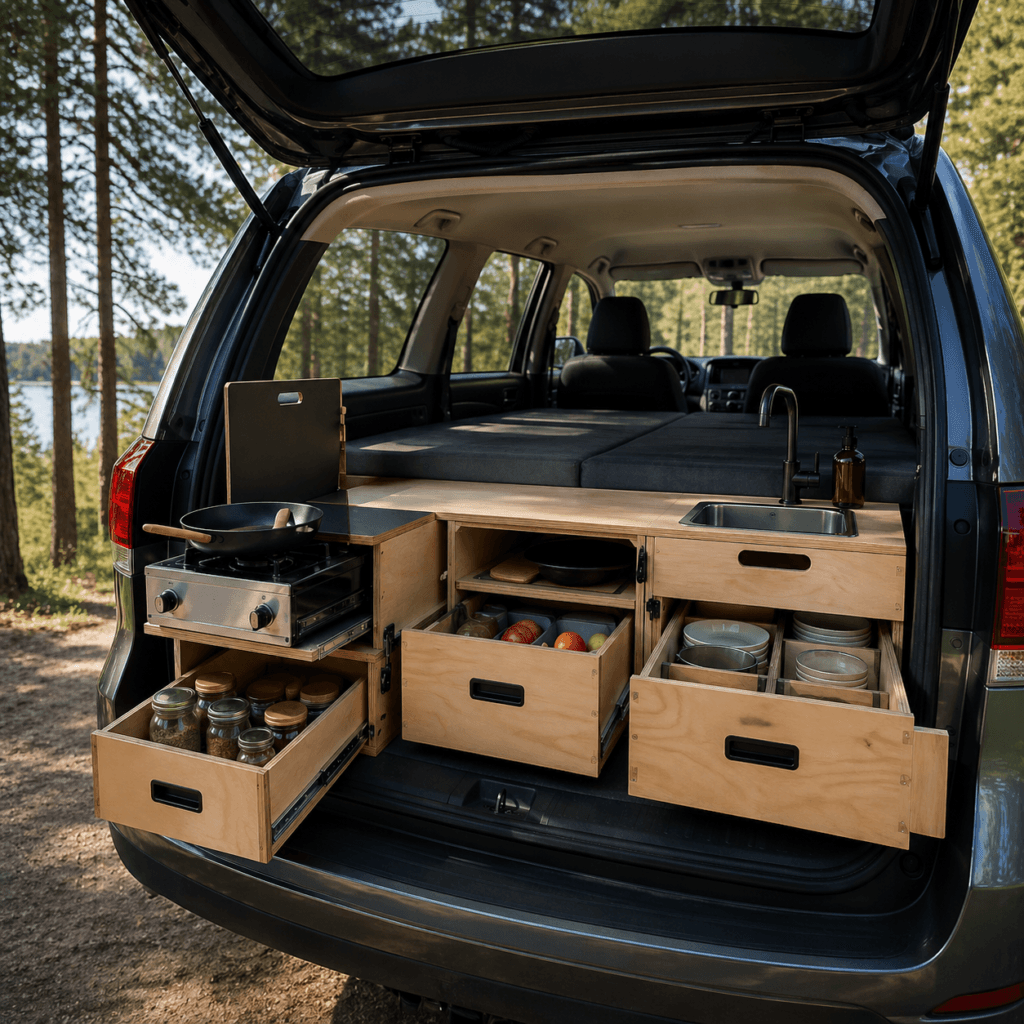
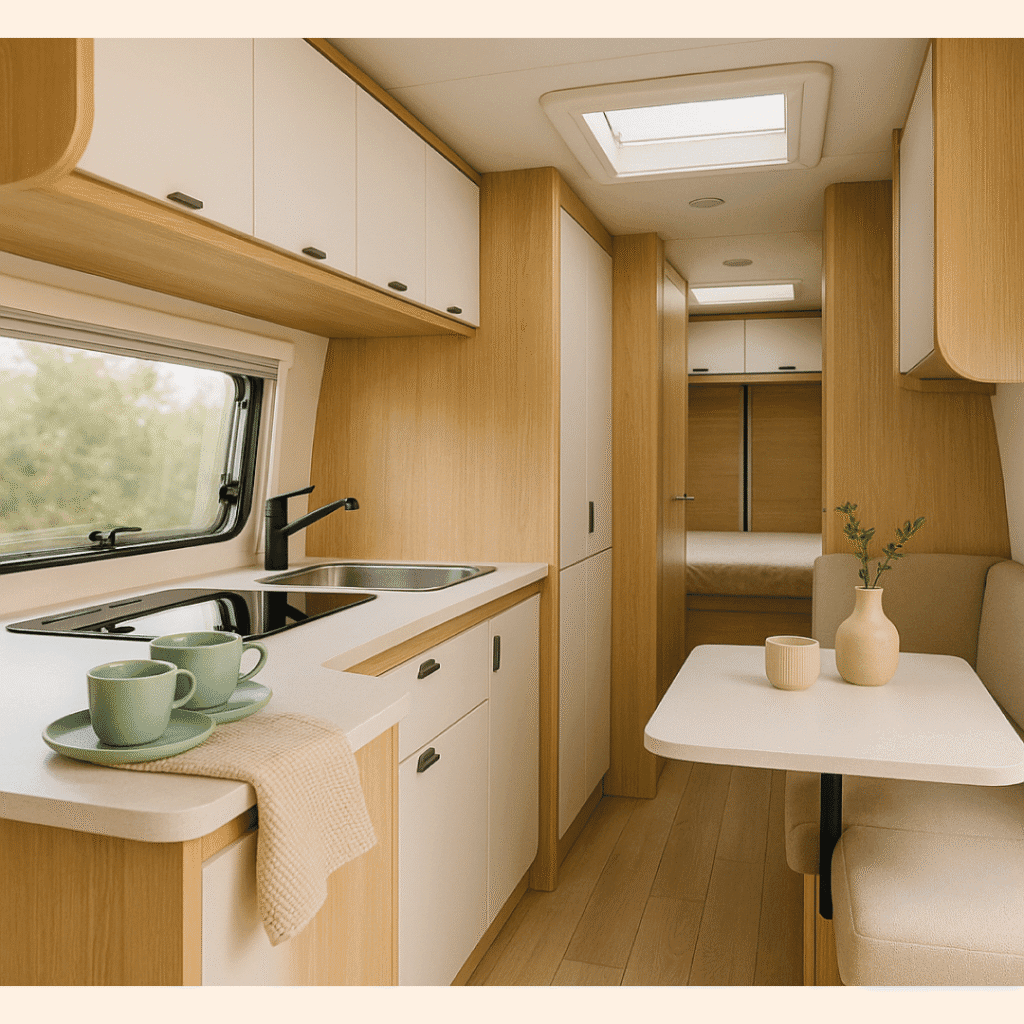
In a caravan conversion, furniture sits at the center of the balance between safety, comfort, and weight. In this guide, we’ve compiled the pros and cons of plywood, MDF, solid wood, aluminum, and composite panels, along with surface finishing, fasteners, design, and budget tips.
1) Design Principles: Why Caravan Furniture Isn’t “Home Furniture”
- Weight: Total mass affects driving, fuel consumption, and legal load limits.
- Durability: Resistance to vibration, temperature swings, and moisture is required.
- Functionality: Folding, sliding, modular, and hidden storage solutions gain you space.
Tip: Aim for the “light + sturdy + functional” trio at the same time; aesthetics should be built on top of that balance.
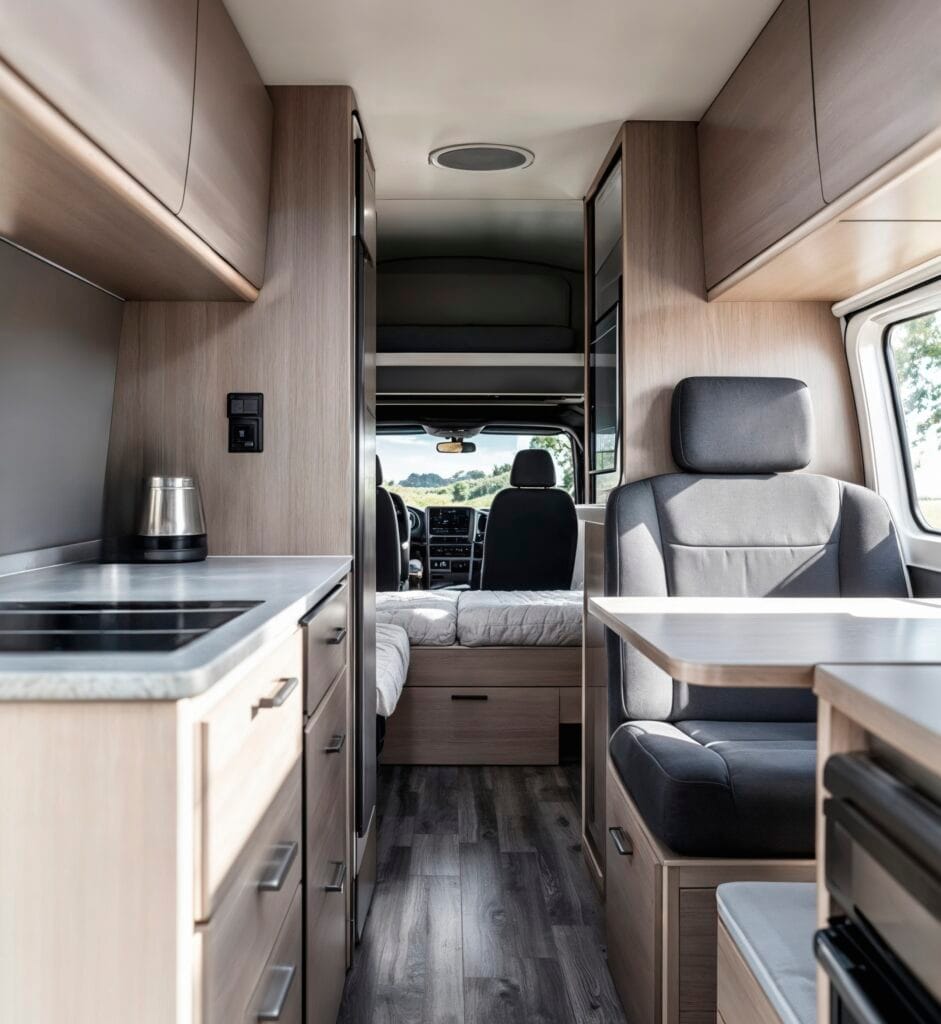
2) Material Guide: Pros, Cons, and Where to Use Them
2.1 Marine Plywood
Pros: Because the grain runs in cross-laminated layers, strength/warp resistance is high; quality marine grades resist moisture well. Cons: Quality (beech/birch) marine plywood can be expensive. Use: Body boxes, bed frames, floor raisers, hatches (at thin gauges).
2.2 MDF / Laminated MDF
Pros: Flat surface; easy to paint/foil-wrap. Cons: Heavy; risk of swelling in areas exposed to water/moisture. Use: Decorative surfaces, curtain panels. Look for an alternative in structural elements where possible.
2.3 Solid Wood (Massif)
Thanks to its natural look and the ability to repair and re-sand it, solid panels are especially appealing in a caravan for countertops, table tops, decorative shelves, and non-load-bearing hatches. However, if not chosen and processed correctly, seasonal movement (expansion-contraction) can cause cracking/warping.
- Wood species selection: Spruce/pine are light and economical; oak/beech are harder and more durable but heavier. Tropical species (iroko/teak) handle water well.
- Panels: Finger-jointed or laminated panels reduce movement and increase dimensional stability.
- Thickness: 18-26 mm is a good balance for a counter/table; 18-20 mm is enough for most applications to avoid adding weight.
- Surface treatment: Natural oils/varnishes improve water/humidity resistance and ease of cleaning; edge sealing around the stove/sink is essential.
- Movement allowance: On long edges, leave room for movement with hidden Z-clips, locking hinges, or elongated-hole fixings.
2.4 Aluminum Profile Frame
Pros: Very lightweight, corrosion-free; when combined with thin plywood/composite cladding, it forms long-lasting modules. Cons: Fitting/connector costs can increase at junction points. Use: The load-bearing frame of the kitchen, drawer-slide frames, corner framing.
2.5 Composite (Sandwich) Panels
Pros: Very lightweight, moisture-resistant, and a modern surface finish; some variants are impact-resistant. Cons: Sourcing and price can be more challenging than classic boards. Use: Hatches, table/shelf surfaces, wall panels.
3) The Weight-vs-Durability Balance
Using thick, heavy panels with a house-furniture mindset quickly turns into a weight crisis in a caravan. Strategy: Build the load-bearing main body with marine plywood or an aluminum frame, and use thin cladding/composite and solid-wood details on visible surfaces.
- 15 mm marine plywood + thin laminate = a good weight/strength ratio.
- Aluminum frame + 6-9 mm plywood cladding = maximum weight savings.
- Keep a solid-wood counter to 18-20 mm, and place heavy appliances over the axle wherever possible.

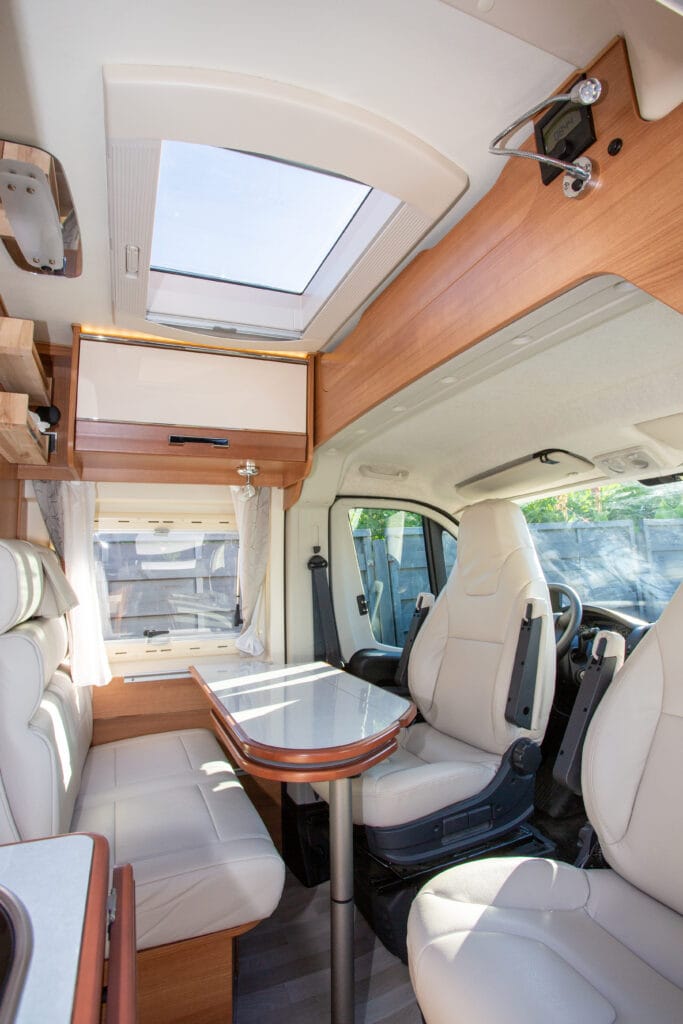
4) Functional Design: Doing a Lot with a Little Space
- Folding tables (drop-leaf) and rail-based conversion mechanisms: dinette-to-bed conversion.
- Under-bed drawers and in-floor compartments: keep heavy items low, lowering the center of gravity.
- Locking hatches/latches: prevent them from opening while driving.
5) Surface Finishing, Edge Banding, and Fasteners
- Laminate/HPL: Scratch and heat resistance, easy to clean.
- Vinyl/foil: Lightweight and economical; edge sealing is essential in areas exposed to water vapor.
- Natural oil/varnish: A warm texture and repairability on solid-wood surfaces.
- Edge banding (ABS/PVC): A 2 mm band and quality adhesive to prevent lifting under vibration.
- Fasteners: Anti-loosening washers, thread lockers; heavy-duty slides/hinges on moving parts.
6) Safety
- Rounded corners: Reduce the risk of impact in tight spaces.
- Fire safety: Non-combustible/flame-retardant panels around the stove; mind the range-hood clearance.
- Ventilation: Upper/lower vents and proper air circulation around appliances for moisture and gas safety.
7) Budget Planning (2025 Update)
The ranges below are given as an approximate figure for a typical panel-van conversion, covering the kitchen + bed + cabinet body + hatches and surfaces, assuming standard labor:
- Economical (mostly MDF/chipboard): 35,000-55,000 TL
- Mid-range (marine plywood + laminate, select solid-wood details): 60,000-95,000 TL
- Advanced (aluminum frame + composite + solid-wood counter): 100,000 TL and up
Material quality, sourcing, and exchange-rate swings affect these figures; compare sheet/unit counts and dimensions before purchasing.
8) Conclusion: The Right Combination, a Long Service Life
Building on a lightweight, resilient frame like marine plywood/aluminum, and adding the warmth of solid wood with the right thickness and surface finishing, gives a caravan both aesthetics and durability. With composite/laminate on hatches and surfaces, strong edge banding, and anti-loosening measures on fasteners, you get a quiet, solid interior for the long haul.