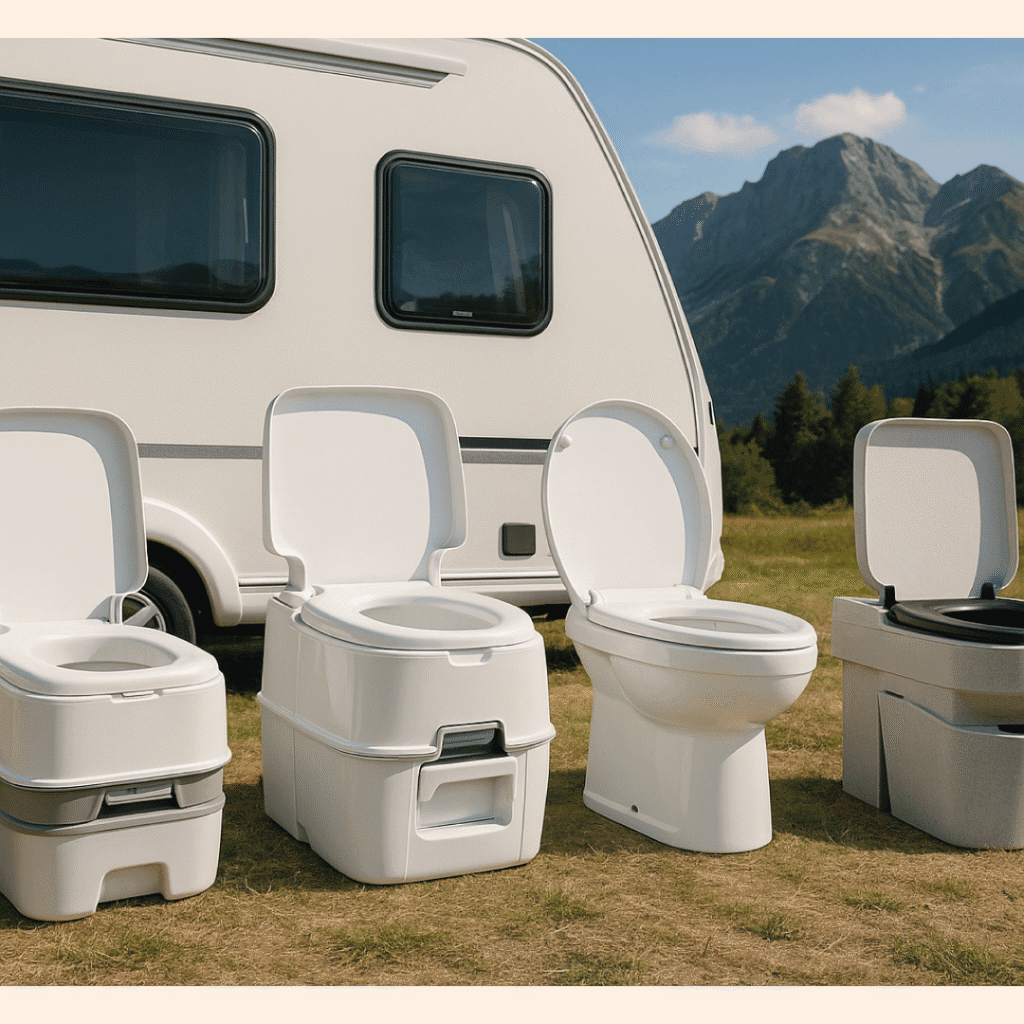
One of the most critical topics in caravan life is choosing a toilet. Making the right choice for a comfortable, practical, eco-friendly and sustainable setup makes a big difference in the long run, both for hygiene and maintenance cost. So which toilet type suits you better: macerator, portable, cassette, or composting? Here are all the pros, cons and tips to make your decision easier…
Instead of focusing on a single criterion (e.g. price), you should weigh things like infrastructure suitability (fresh/waste water tanks, electrical capacity), use profile (weekend getaways vs. full-time living), travel geography (access to dump stations), odor management, and winterizing together. Also, the performance of every system dramatically improves with correct use and maintenance; the wrong chemical, poor ventilation or improper dumping habits can make even the most comfortable system problematic.
Remember: waste management is part of the shared culture at campsites. Following dumping rules, leaving stations clean, choosing appropriate chemicals and acting environmentally responsible are essential for both nature and the caravan community. In the sections below you’ll find how each system works, its strengths and weaknesses, practical usage tips, and odor/cleaning advice.
1) Macerator Toilet
What is it? A motorized grinder breaks up waste, mixes it with water and moves it away through thin pipes. It’s often preferred on yachts, luxury caravans and vehicles with fixed plumbing. Some systems send waste directly to a black water tank, others can pump it over long distances or to a slightly higher level (a gentle upward slope). It typically runs on 12/24V, and it’s worth noting the pump-grinder unit requires regular maintenance.
When does it make sense? Macerator systems stand out when you want an experience close to home comfort, when you want flexibility in where the toilet is positioned in the vehicle, when the thin plumbing lets you route waste through complex paths, and when your power/water infrastructure supports it.
Pros
- Comfort: The experience closest to a home toilet.
- Flexible plumbing: Transfer over long distances through thin pipe.
- Hygiene: Grinding reduces the risk of odor/buildup.
- Placement freedom: Thin pipe allows flexible positioning of the toilet.
- Smoother drainage: Ground-up waste is less prone to clogging pipes.
Cons
- Electrical dependency: Doesn’t work without motor power.
- Maintenance: Risk of grinder failure and clogging.
- Cost: Installation and servicing costs are high.
- Noise: Can produce noise during operation; insulation may be needed.
- Water need: Requires sufficient water for grinding/transport.
Use & Maintenance Tips: Never flush objects unsuitable for the grinder, like wet wipes, feminine hygiene products, or cat litter. Occasionally run clean water through the system so no residue is left, and do periodic maintenance with descaler/measured disinfectant. Before long-term storage, run clean water through the pipes and let them dry; keeping spare seals/impellers on hand can be a lifesaver in a pinch.
2) Portable Toilet
What is it? A compact toilet with a small, self-contained tank, usually operating with chemical liquids. Ideal for small caravans, tent camping, and short-term use. It’s typically a two-part structure — an upper tank (fresh water) and a lower tank (waste); assembling, carrying and emptying is easily managed by the user.
When does it make sense? Portable solutions are quite functional for simple minivan conversions, occasional travelers/solo travelers, and when a low budget and quick setup are the goal. They offer flexibility since they can also be used outside the campsite, on day trips, and alongside a tent.
Pros
- Portable: Can be used outside the caravan too.
- Economical: The lowest upfront cost.
- No installation: No water/electrical connection needed.
- Compact: Saves space in small vehicles.
- Easy maintenance: Few parts, spare parts and seals are readily available.
Cons
- Chemical: Requires regular liquid top-up and emptying.
- Capacity: A small tank means frequent emptying.
- Comfort: Lower than a home-style unit.
- Odor management: Leaks/odor can increase if seals wear out.
- Ergonomics: Seat height may feel low to some users.
Use & Maintenance Tips: Choose eco-friendly/biodegradable chemicals; don’t exceed the manufacturer’s recommended dosage. Renew lid and valve seals over time, rinse the lower tank with clean water after every emptying. Make sure tank locks are closed while the vehicle is moving; use a thin lubricant to keep seals from drying out during long storage.
3) Cassette Toilet
What is it? A removable cassette (waste tank) sits beneath a toilet fixed in the caravan. The cassette is pulled out from outside and emptied at appropriate points. This is the most common solution among caravanners. The toilet is usually integrated into the bathroom cubicle; the service hatch is on the outside, and wheeled/trolley versions of the cassette make carrying easier.
When does it make sense? If you regularly use campsites/caravan parks, have access to dump stations on intercity routes, and want the balance of “practicality + acceptable comfort,” cassette systems are the right choice in most scenarios.
Pros
- Practical: Integrated structure and an established usage routine.
- Easy emptying: The cassette empties quickly at stations.
- Balance: An ideal middle ground between comfort and practicality.
- Spare parts/accessories: Maintenance products and seals are easy to find on the market.
- Predictability: Fill-level indicators and standard components make it easy to use.
Cons
- Emptying frequency: Usually every 2-3 days.
- Odor risk: Odor can occur if maintenance is neglected.
- Fixed structure: Not as flexible/portable as a portable unit.
- Chemical sensitivity: Unsuitable chemicals can wear down seals.
- Hygiene discipline: The blade/lid mechanism and ventilation require regular cleaning.
Use & Maintenance Tips: After completely emptying the cassette at a dump station, rinse it a few times with clean water; never insert a dish brush into the blade mechanism, use a soft brush instead. Periodically feed the seals with a silicone-based lubricant. Proper ventilation is essential for odor; check the seals around the service hatch. Don’t leave water in the cassette against the risk of freezing in winter, and follow proper winterizing procedure.
4) Composting Toilet
What is it? An eco-friendly system that breaks down waste through natural processes into compost, without using water or chemicals. Most models separate liquid and solid waste. A bulking material like sawdust or coconut coir is added to the solid compartment; this balances moisture and makes odor control and decomposition easier. A small 12V fan venting outside notably reduces odor indoors.
When does it make sense? Composting toilets are a strong candidate if you want to reduce dependency on dump stations, keep water consumption to a minimum, and operate with a chemical-free system. They offer freedom for off-grid use and long-term stays in nature.
Pros
- Eco-friendly: No chemicals required.
- Water savings: Zero water consumption.
- Long-lasting use: Less frequent emptying.
- Freedom: Reduces dependency on dump stations.
- Odor control: Can operate odor-free with proper ventilation and a dry mix.
Cons
- Routine: Requires regular mixing and adding sawdust/compost material.
- Odor management: Can smell if used incorrectly.
- Cost: Can be pricier than a portable/cassette unit.
- Space: Can take up relatively more room.
- Ventilation requirement: Needs a good outward air outlet to work efficiently.
Use & Maintenance Tips: Success lies in moisture balance. If the mix gets too wet, odor increases; add dry bulking material and mix thoroughly. Keep the fan filter clean, and empty the liquid tank separately from the solid one, more often. Follow local regulations for waste management; before long-term storage, fully empty the solid compartment and leave it dry.
Which Toilet Suits You?
When choosing, weigh these: your caravan’s size, electrical & water infrastructure, trip duration/frequency, access to dump stations, budget, sustainability, and your personal comfort expectations.
- Long trips + high comfort → Macerator or cassette
- Small vehicle + low budget → Portable
- Medium budget + practicality → Cassette
- I don’t want to use chemicals + water savings → Composting
A quick scenario-based guide: If you’re a solo/couple weekend traveler, portable solutions are enough. For families with children who camp often, a cassette toilet is a balanced choice. For long-term, off-grid plans, a composting toilet; for caravans seeking luxury comfort with strong infrastructure, macerator systems stand out. In cold climates, follow winterizing procedures against freezing risk for water-based systems, and for composting, make sure the fan/vent installation vents outward and is sealed.
Golden rules for odor & hygiene: (1) Whatever system you use, ensure proper ventilation. (2) Never send objects that shouldn’t be flushed (wet wipes, pads, etc.) into the tank. (3) If using chemicals, follow dosage instructions and prefer eco-friendly products. (4) After every emptying, rinse the tanks with clean water and check the seals. (5) Before long-term storage/winterizing, run clean water through the system and let it dry.
Quick Decision Test
Answer the questions, and see the result at the bottom. You can change your answers at any time.
Conclusion
Macerator toilets provide home comfort in vehicles with strong infrastructure. Portable toilets are budget-friendly and flexible. Cassette toilets balance practicality and comfort. Composting toilets are a chemical-free, water-saving, sustainable solution.
Whichever system you choose, the secret to performance lies in correct installation, regular maintenance and disciplined use. Don’t neglect ventilation, protect the seals, and follow waste management rules. This way you’ll keep a fresh environment inside your vehicle and show respect for nature and other campers’ experience. The “Quick Decision Test” above will point you in the right direction; you can shape the details according to your own route, budget and habits.
SEO Keywords: caravan toilet choice, macerator toilet, portable toilet, cassette toilet, composting toilet, caravan toilet systems, caravan living