Choosing the right awning for your caravan is directly tied to how long you’ll be staying, your vehicle type (travel trailer, panel van, motorhome), climate conditions, and your setup/practicality expectations. This guide summarizes the main awning types and selection criteria from an objective, technical perspective.
Main Awning Types
1) Cassette (Roll-Out/Wind-Out) Awning
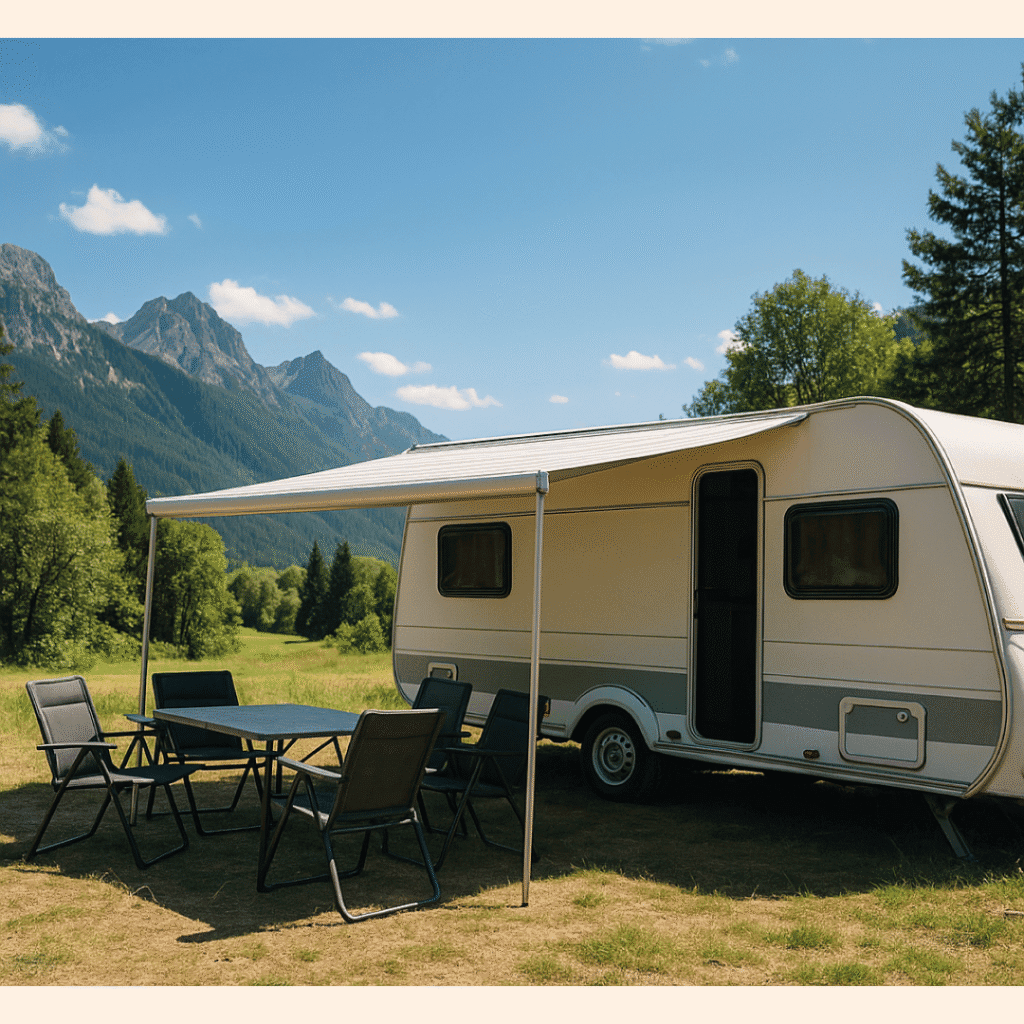
Stored rolled up inside an aluminum cassette, these awnings are mounted to the wall or roof. Manual or motorized open/close options are available. Their short setup time and the fact they don’t require storage space are a significant advantage for frequent movers. It’s recommended to close them in strong wind conditions.
2) Bag Awning
A lightweight solution that slides into the awning rail and is stored in a fabric carry bag. Being economical and compatible with a wide range of vehicles is a plus, but setup and pack-down take longer than with a cassette awning.
3) Porch and Full Caravan Awnings (Full Awning)
These systems slide into the awning rail and come in half (porch) or full (full awning) form, wrapping around the caravan’s rail. They provide an enclosed space along with wind and rain protection. Due to weight and setup time, they’re not recommended for short stays.
4) Inflatable (Air) Awning/Tent
Uses air beams instead of traditional metal poles. Fast setup and a flexible structure that reduces vibration in wind stand out. Surface preparation against puncture risk and regular checks are important.
5) Drive-Away Tunnel Awning
Particularly preferred for panel vans and motorhomes. While you take day trips with the vehicle, the awning stays set up at the campsite. Tunnel height and width should be chosen to match the vehicle’s dimensions.
6) Shade Tarps and 270° Wing Awnings
Offer quick shade for short stops. 270° awnings spread out from one corner of the vehicle to cover a wide area. Rain and side-wind protection are limited.
7) Tailgate/Side Door Awnings
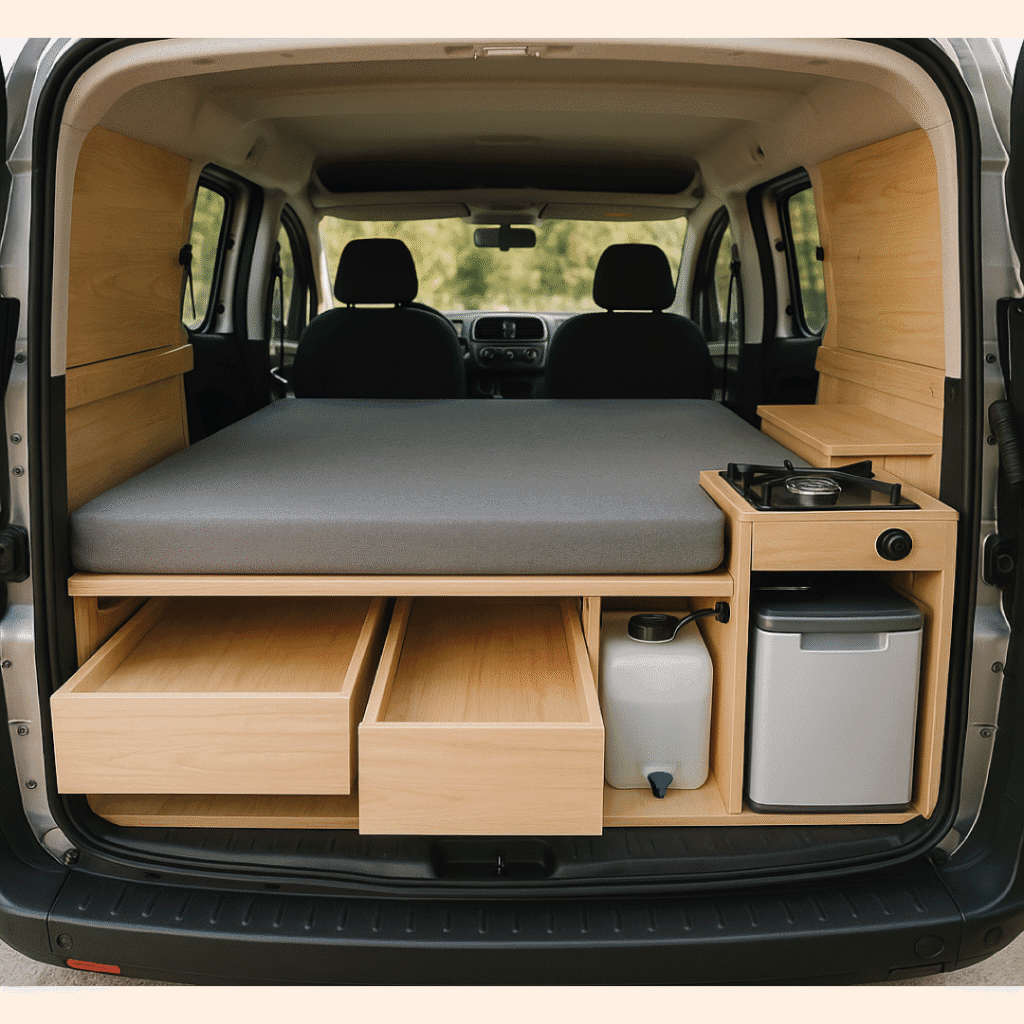
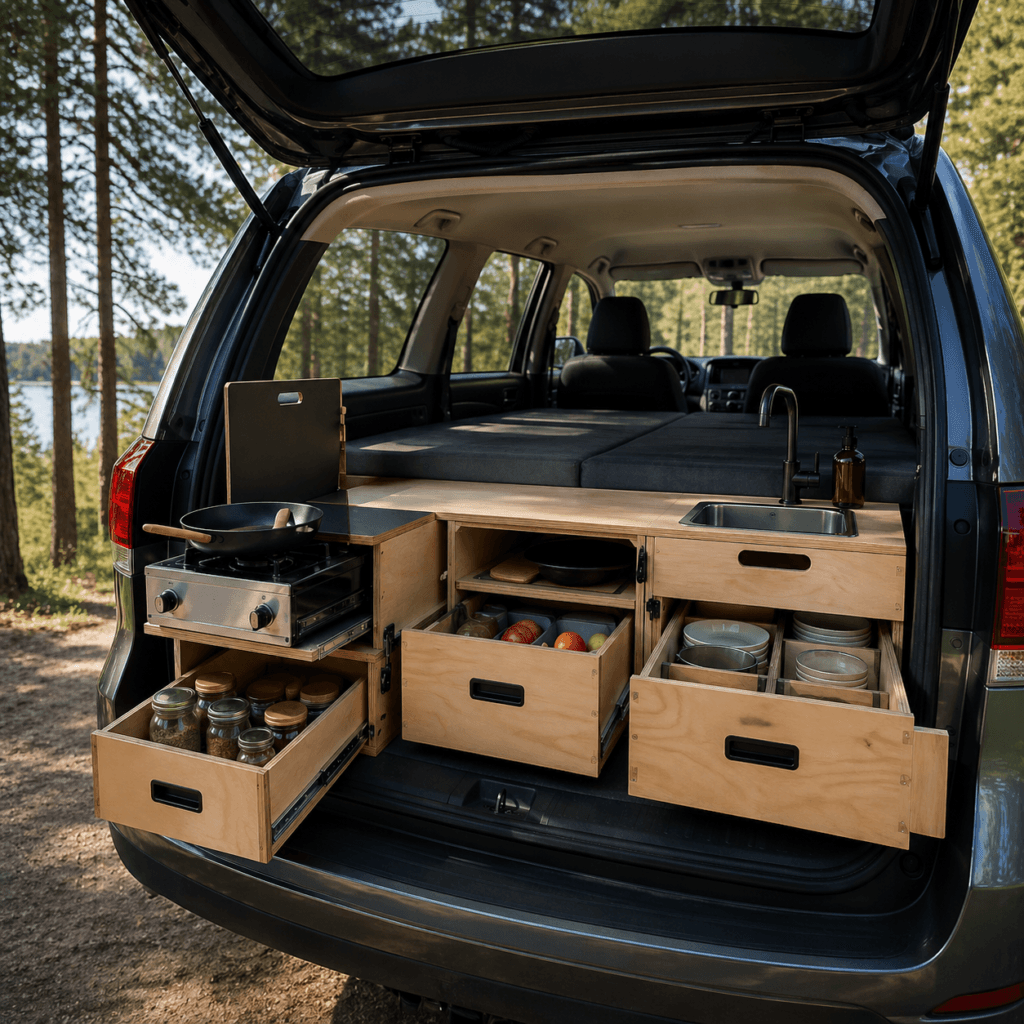
Integrated into a panel van’s rear or side door, these solutions create extra living and utility space in compact vehicles. Keep in mind they depend on the door’s movement.
Materials and Technical Criteria
- Fabric: Acrylic (UV resistance, breathability), Vinyl/PVC (fully waterproof, easy to clean), Polyester/Oxford (lightweight, durability depends on coating quality).
- Hydrostatic head: A range of 3,000–8,000 mm is common; higher values are preferred in areas with heavy rainfall.
- UPF/UV protection: Slows color fading and fabric wear, increasing user comfort.
- Frame: Aluminum (lightweight/rust-free), steel (sturdy/heavy), air beam (speed/comfort; surface cleanliness matters).
- Connection: Matching the keder size (6/7/8 mm) to the caravan’s rail is critically important.
Mounting and Compatibility
Roof mounting interferes less with door, window or sliding door movement and improves shade distribution on tall vehicles. Wall mounting can positively affect driving behavior by lowering the center of gravity. The choice should be based on the vehicle’s body, existing equipment layout, and usage priorities.
Sizing Guide
- Cassette/Bag Awning: Measure the mounting area together with doors, windows and sliding door openings.
- Porch/Full Awning: Take the A-measurement according to manufacturer charts for full awnings; for porch awnings, check rail height and openings.
- Drive-Away: Low/Mid/High variants based on vehicle height; tunnel width and connection length compatibility should be confirmed.
- Keder Diameter: Match the diameter in the product manual to the caravan’s rail size.
Use and Maintenance Principles
- Wind Management: Closing the awning when wind picks up is the safest approach. Proper tensioning and anchoring are essential when using it open.
- Rain Slope: Leave one corner lower to prevent water pooling.
- Cleaning: Use lukewarm water and neutral detergent; don’t apply high-pressure water directly to seams and weld points.
- Mold Prevention: Avoid packing away while damp; store only after it’s fully dry.
- Seasonal Check: Inspect seams, keder and connection points at the start of the season.
Quick Comparison Table
| Awning Type | Setup Speed | Protection Level | Best For |
|---|---|---|---|
| Cassette | Very fast | Medium | Frequent travelers |
| Bag | Medium | Medium | Those seeking an economical, lightweight solution |
| Porch/Full | Longer | High | Families staying at one site long-term |
| Inflatable | Fast | Medium-High | Those who value comfort and easy setup |
| Drive-Away | Medium | Medium-High | Users who take day trips with the vehicle and return |
| Tarp/270° | Very fast | Low-Medium | Short breaks and summer use |
| Tailgate/Side Door | Fast | Medium | Campervan/compact vehicle owners |
Frequently Asked Questions (FAQ)
Which awning type suits travelers who move frequently?
Cassette or lightweight bag awnings stand out thanks to short setup-and-pack-down times.
What’s recommended if I’ll be staying at one site for a long time?
Porch or full awning offers an enclosed living space that’s more wind-resistant.
Who does a drive-away awning make sense for?
Ideal for panel van/motorhome users who want to explore the area by vehicle and return to camp.
Are inflatable awnings reliable?
They’re reliable with proper setup and surface cleaning. Regular checks and an appropriate repair procedure are needed against puncture risk.
Under what conditions are tarp and 270° awnings sufficient?
Suitable for shade needs in low wind and short stays; limited in heavy rain and side wind.
How do I take the A-measurement for a full awning?
Starting from the front lower corner, go around the top rail to the other lower corner to get the perimeter measurement, then match it to manufacturer charts.
Why is the keder diameter critical?
A mismatch between the keder (6/7/8 mm) and the caravan’s rail size causes setup problems.
Wall mount or roof mount?
Roof mounting doesn’t block equipment and balances shade on tall vehicles; wall mounting gives a lower center of gravity.
How do I choose a hydrostatic head value?
Higher hydrostatic head is valuable in areas with heavy rainfall; a 3,000–8,000 mm range is common.
Is UPF/UV protection necessary?
Yes. It extends fabric life, slows color fading, and increases user comfort.
What determines fabric choice?
Climate, duration of use, and maintenance expectations. Acrylic breathes and is UV-resistant; vinyl is superior in waterproofing; polyester is lightweight.
How should I act in windy conditions?
When in doubt, closing the awning is the safest method. Proper tensioning and anchoring should be done when using it open.
How do I prevent water pooling in the rain?
Give one corner more slope to ensure controlled water runoff.
How do I reduce condensation issues?
Choose breathable fabric and adequate ventilation; avoid packing away wet surfaces without drying them.
What do campsites require regarding groundsheets?
Many facilities prefer solutions that let the ground breathe; confirm the rules at check-in.
What should I do if an inflatable awning gets punctured?
Repair it according to manufacturer instructions with compatible repair materials; check for leaks before setting it up again.
What products should I use for cleaning?
Lukewarm water and neutral detergent; avoid abrasive or chlorine-based chemicals.
What’s the advice for snow and winter conditions?
Clear snow buildup regularly; closing the awning is safe during heavy snow and storms.
Will it conflict with a panel van’s sliding door?
Plan the mounting position so it doesn’t block door movement; choose drive-away tunnel dimensions to match your vehicle.
Does installation damage the vehicle?
Risk is minimized with proper brackets and methods installed competently.
What are the proper storage conditions?
A fully dried awning should be stored rolled up in a cool, dry, shaded place.
What should I watch for regarding warranty and insurance?
Exceeding usage limits and improper installation can affect warranty coverage; check your policy’s specific terms.
What’s the rule while driving with the awning?
The awning must be closed while driving. Follow dimension and overhang restrictions.
Note: This guide provides a technical framework for product selection and use. Follow manufacturer instructions and local campsite/travel rules for the final decision and installation.