Caravan tires operate under much heavier loads than an ordinary car tire, often sit stationary for long periods, and spend much of the year exposed to sunlight. These different usage conditions mean caravan tire maintenance and replacement timing follow different rules than cars. Driving with incorrect pressure or an aged tire can lead to serious safety risks, up to and including a blowout at high speed. This guide explains how to determine the correct pressure, perform regular maintenance, and know when to replace your caravan tires.
Why Is Correct Pressure Critical for Caravan Tires?
Caravans and motorhomes carry significant weight even when empty, and that weight increases rapidly once water/gas tanks are filled and belongings are loaded. Manufacturer-specified pressure values are usually calculated for a “loaded” rather than “empty” state, yet many caravan owners set tire pressure by estimation without weighing their vehicle to learn the actual per-axle weight — and this is a serious mistake. Underinflation causes excessive sidewall flexing and heat buildup, increasing blowout risk; overinflation reduces road grip and causes premature wear in the center of the tread.
The most reliable way to determine correct pressure is to weigh your caravan per-axle on a scale while fully loaded (water, gas, belongings, passengers) and then look up the corresponding pressure on the load/pressure chart published by your tire manufacturer. For more detail on this, see our Caravan Weight Distribution and Weighing Guide.
How Often Should You Check?
- Check pressure before every trip while the tires are cold (the vehicle has been stationary for at least 3 hours).
- On long trips, do a visual check (bulges, cracks, foreign objects) every 2-3 hours during stops.
- If the vehicle is parked for extended periods in winter, check pressure once a month; pressure drops as temperature falls (roughly 0.1-0.2 bar per 10°C).
Replacement Time: Tread Depth Alone Isn’t Enough
While tread depth (legal minimum 1.6 mm in Turkey) is the main criterion for cars, age is at least as important for caravan tires. Because caravans typically only cover a few thousand kilometers a year, tires can become unsafe due to chemical aging of the rubber (ozone cracking, hardening) before the tread depth wears down. The industry-wide recommendation is to replace caravan tires within 5-7 years of their manufacture date, even if tread depth is still adequate. With premium tires and regular maintenance this can be extended to 7-10 years, but tires older than 10 years should be replaced regardless of tread depth.
To find a tire’s manufacture date, check the last 4 digits of the DOT code on the sidewall: the first 2 digits show the production week, the last 2 show the year (for example, code “2419” means the tire was made in week 24 of 2019).
Signs of Wear and Damage
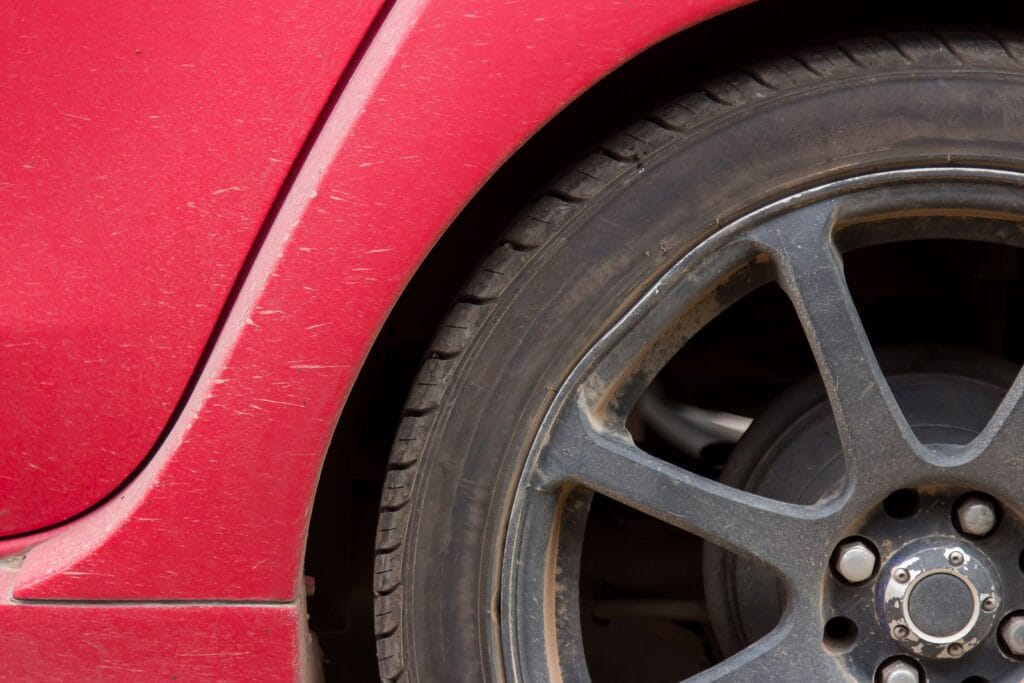
- Sidewall cracking (ozone cracking): Fine lines caused by prolonged UV and ozone exposure to the rubber; if severe, replace immediately.
- Uneven wear: Usually caused by incorrect pressure, misalignment, or a suspension issue; replacing the tire without addressing the cause will just repeat the problem.
- Bulges/blistering: A sign of internal structural damage — stop using the vehicle immediately and replace the tire.
- Overheating marks: Discoloration or a burnt smell on the sidewall can indicate the tire was driven for a long time at low pressure.
Tire Care During Storage
If your caravan sits parked for long periods (winter or off-season), sustained load on one contact point can cause flat-spotting. To prevent this:
- Keep pressure close to the manufacturer’s recommended maximum (storage pressure can be slightly higher than driving pressure).
- If possible, use jack stands to lift the tires slightly off the ground.
- Use tire covers to protect against direct sunlight; UV light is rubber’s biggest enemy.
- If possible, move the vehicle a few meters once a month to change the tire’s contact point.
Spare Tires and Roadside Assistance
Most large motorhomes don’t carry a spare tire as standard, or if they do, changing it is difficult due to weight and special rim sizes. In this case, getting a roadside assistance package that includes a “wheel change” service significantly reduces the risk of being stranded. Installing a tire pressure monitoring system (TPMS) also lets you catch pressure drops early while driving, preventing tire damage before it happens.
Frequently Asked Questions
What’s the difference between a caravan tire and a car tire?
Caravan tires (usually marked “C” or “CP”) have reinforced sidewalls and a different rubber compound for higher load capacity; fitting car tires significantly reduces load capacity and safety.
Why replace tires when tread depth is still adequate?
Rubber chemically ages over time and loses its flexibility, which increases blowout risk regardless of tread depth.
Should I change tire pressure when storing the caravan for winter?
Yes, keeping pressure close to the manufacturer’s upper limit during long-term storage reduces flat-spotting.
Conclusion
Caravan tires are one of the most critical safety components of your vehicle and require a different maintenance mindset than cars. Setting the correct pressure based on loaded weight, performing regular visual inspections, and tracking tire age prevents one of the most dangerous surprises you can encounter on the road.
Related Articles
- Caravan Weight Distribution and Weighing Guide
- Caravan Theft Prevention: Alarms, GPS Tracking, and Security Systems Guide (2026)
This article was prepared by the CampExpert Editorial Team. Tire pressure and replacement recommendations are general in nature; refer to your tire manufacturer’s official charts and service recommendations for values specific to your vehicle. Last checked: July 21, 2026.