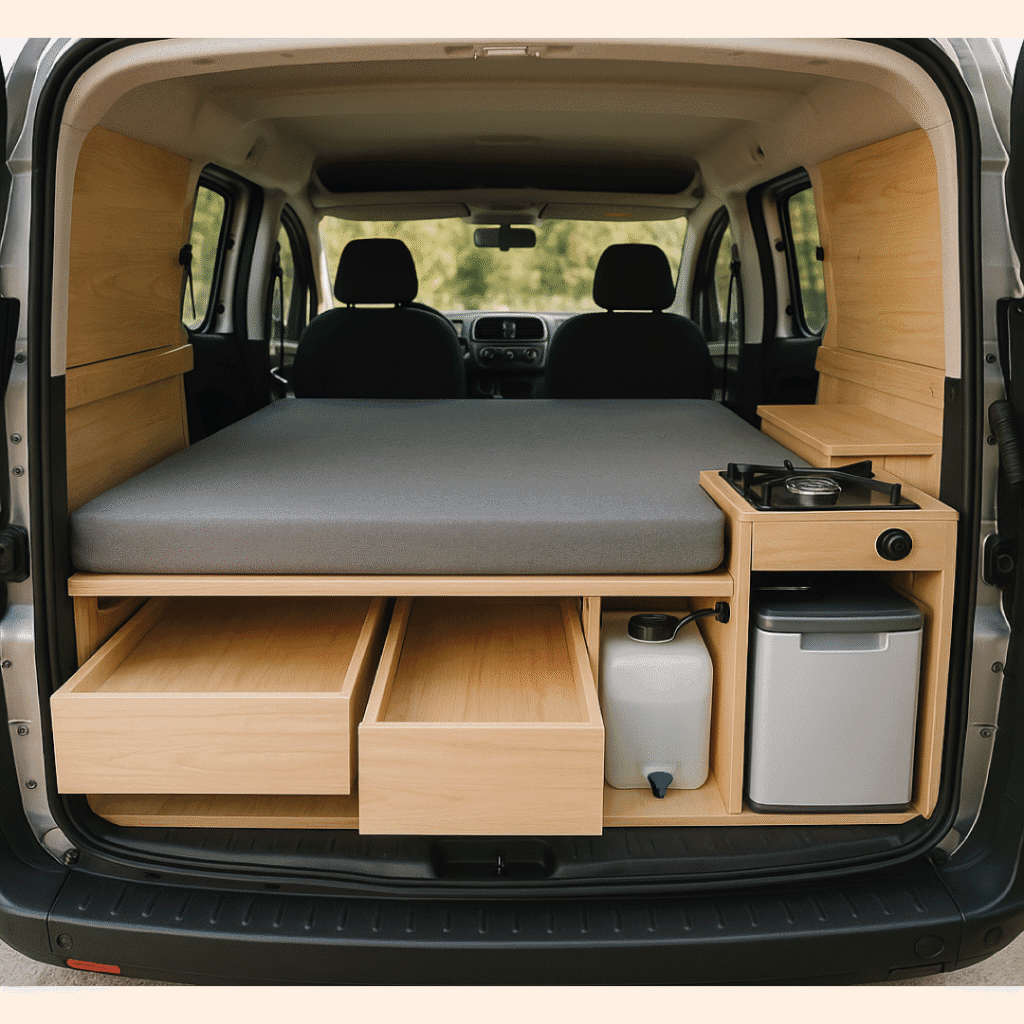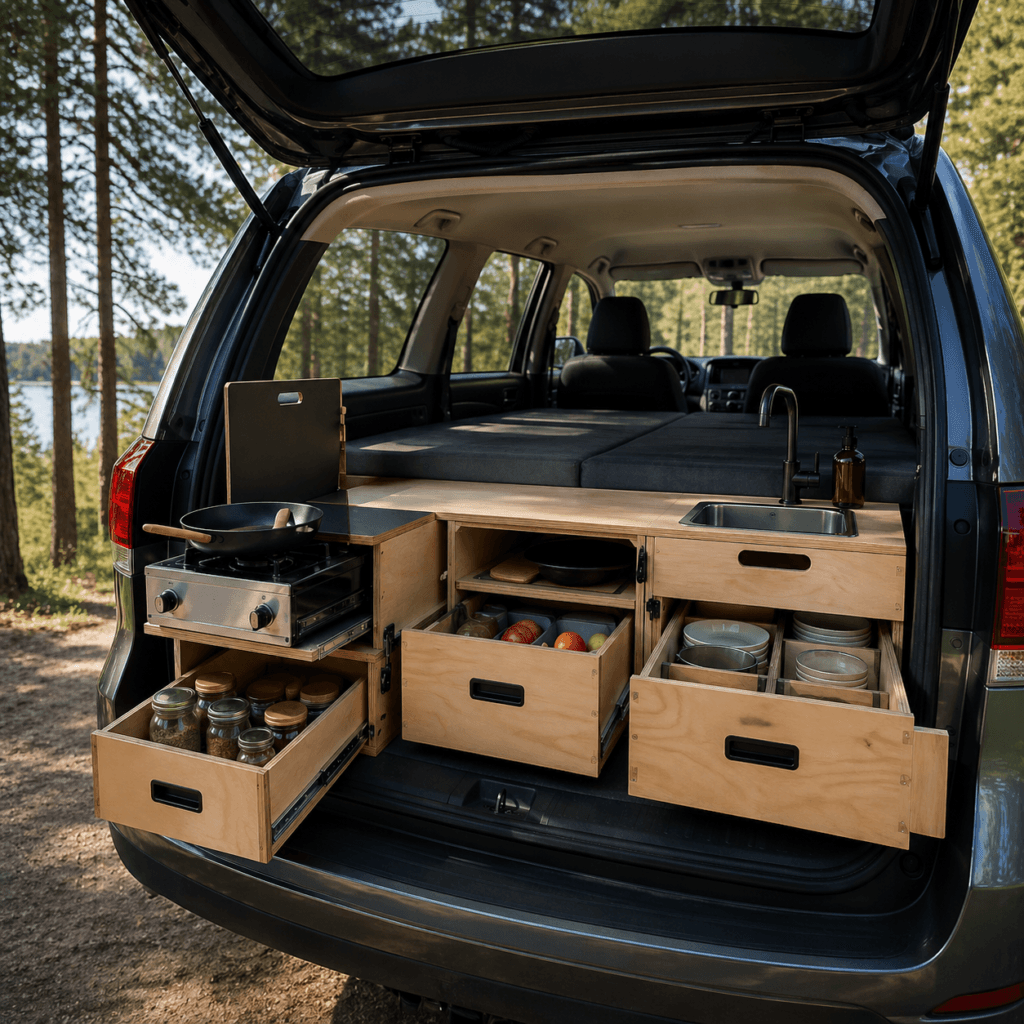

Buying or selling a caravan in 2025 isn’t just “I liked it – I bought it”; it’s a process that needs to be considered together with registration/plate, insurance, inspection, and (for motorhomes) tax dimensions. This comprehensive guide was prepared so that even someone with zero prior knowledge can carry out the process in line with current rules. For details on registration, titling, and insurance, be sure to check our “Caravan Registration, Insurance and Legal Requirements (2025)” article; for the registration flow and practical steps, see the “How to Register a Caravan? (2026)” guide.
1) Which type of caravan suits you? (O1/O2 travel trailer vs M1 motorhome)
A travel trailer (trailer) is a caravan with no engine of its own that is towed by another vehicle. By load weight it is classified as O1 (≤750 kg) and O2 (750-3500 kg). It’s advantageous from a tax standpoint, but is subject to registration, plate, and inspection requirements. A motorhome (M1 – special purpose), on the other hand, is a vehicle with its own engine, generally built with caravan equipment on a passenger or light commercial base. Taxation, insurance, and inspection rules for motor vehicles apply.
As a first step, clarify your use case (two people/short getaways, or four people/long routes), the season (do you camp in winter?), your budget, and your tow vehicle’s braked/unbraked trailer capacity. For most new users, an O1 travel trailer plus a suitable tow bar combination offers a sustainable starting point, while those who move constantly and want “everything in one vehicle” prefer a motorhome.
2) The 2025 registration-plate requirement for travel trailers
The notary registration and plate process is now a basic requirement for O1/O2 travel trailers. Registration is carried out via ARTES records along with the invoice and conformity/type-approval certificate; a plate printing request is created. Registration matters not just to “avoid a penalty,” but is also critical for insurance, inspection, resale, and protecting your rights in the event of an accident.
For the step-by-step registration flow, required documents, common mistakes, and practical tips, see the detailed guide: How to register a caravan? (2026). Our article summarizing the registration-insurance-plate trio under one roof: Caravan registration, insurance and legal requirements (2025).
Registration & Insurance 2025 Guide.
3) Inspection periods and planning
The general rule for trailers/travel trailers: inspection at the end of the first year, then every year. For motorhomes, be ready for an annual inspection routine as well, depending on vehicle type. Book your appointment early and avoid getting caught by the late fee. Before inspection, check headlights/brake lights/turn signals, coupling equipment (coupling head, safety cable), tire tread depth, and mass/weight distribution yourself.
4) Driving license and speed limits (summary)
- License: A B-class license is generally sufficient for O1 (≤750 kg) combinations. BE is required for O2 and/or combinations where the combined maximum laden mass exceeds 3,500 kg.
- Speed: Speed limits for trailer combinations are lower than for the vehicle alone (in practice, highway 80 km/h; divided road 70 km/h; two-way road 60 km/h are typically applied). Traffic signs and local regulations take priority.
5) Insurance: What is/isn’t mandatory
For a motorhome, compulsory traffic insurance is mandatory; comprehensive (kasko) coverage is strongly recommended. For a travel trailer, traffic insurance is not separately mandatory in most scenarios; coverage is generally provided through the tow vehicle’s policy. Still, trailer comprehensive coverage and additional coverage like theft/fire/natural disaster provide realistic risk management. Be sure to ask about policy clauses, coverage while the trailer is attached versus parked separately, and the valuation method.
To see the insurance and legal side on one page: Caravan registration, insurance and legal requirements (2025).
6) Taxes and cost items (2025)
- Motorhome – Special Consumption Tax (OTV): Taxed as a “motorized caravan.” Whether bought new or converted from a 0-5-year-old base vehicle, the OTV calculation is the backbone of the budget.
- Motorhome – Motor Vehicle Tax (MTV): An annual tax is paid based on engine displacement.
- Travel trailer: No OTV/MTV; however, there are registration-title-plate and inspection fees, plus tow bar items (product + installation + project + entry on the title).
- Maintenance & equipment: Include heating system, energy (battery, BMS, solar panel), water/wastewater, ventilation, safety, and periodic maintenance costs in the “total cost of ownership.”
- Purchase price (caravan or base vehicle + conversion)
- OTV + MTV for a motorhome (if applicable)
- Registration/title/plate (mandatory for travel trailers too)
- Inspection (annual planning) + late-fee risks
- Insurance (traffic, comprehensive, trailer-specific coverage)
- Tow bar (product + installation + project + entry on title)
- Equipment upgrades and periodic maintenance
7) Tow bar: Selection, installation, and entry on the title
If you’re going to use a travel trailer, your vehicle needs an ECE R55/E-certified tow bar fitted; after authorized installation, a TSE project/engineering report must be done and it must be entered on the title. Otherwise, you may face both administrative penalties and insurance issues in the event of an accident.
For sources summarizing the link between these steps and the official registration process, and the role of conformity certificates:
Registration & Insurance 2025 Guide and
Registration steps.
8) Buying (buyer) – step by step
- Clarify your needs: Number of people, route, season, load and weight plan. Check your tow vehicle’s braked/unbraked trailer capacity.
- Document check:
- Travel trailer: Type-approval/conformity, chassis (VIN), ARTES record, and documents ready for notary registration.
- Motorhome: “M1 special purpose (caravan)” entry on the title, seat count, weights, and whether any conversion has been recorded.
- Inspection & technical condition: Last inspection date, defect report, tires/brakes, and electrical wiring.
- Insurance & coverage: Compulsory traffic + comprehensive for a motorhome; trailer comprehensive and additional coverage for a travel trailer. Details: Registration & Insurance 2025.
- Equipment tests: Lighting, electrical socket (7/13 pin), coupling/safety cable, reversing/stability.
- Purchase and registration: Notary sale → registration → plate printing request. For required documents and the flow, see:
Registration guide.
9) Selling (seller) – step by step
- Prepare the documents: Invoice/title, conformity certificate, TSE project documents, inspection report.
- Technical transparency: Share observations about the axle, coupling, brakes, electrical wiring, and sealing with the buyer.
- Notary and transfer: Make sure the ARTES flow is complete for O1/O2; clarify the registration and plate process with the buyer.
10) Frequently Asked Questions
I have an O1 travel trailer – can I use it without a plate?
No. As of 2025, registration and a plate are mandatory for travel trailers. For the flow and documents:
Registration guide.
How often is a trailer inspected?
General rule: at the end of the first year, then every year. Check the lights, coupling equipment, and tires before inspection.
How does tax work for a motorhome?
OTV is calculated as a “motorized caravan”; MTV is paid annually based on engine displacement. Budget for these items from the start when deciding to buy or convert.
Is there tax on a travel trailer?
No OTV/MTV; but there are registration-plate-inspection and tow bar process/fees. Details:
Registration & Insurance 2025.
Is insurance mandatory?
Compulsory traffic insurance is mandatory for a motorhome; comprehensive coverage is recommended. Traffic insurance isn’t separately mandatory for a travel trailer, but trailer comprehensive coverage and additional coverage are valuable for real risks.
Note: This content is for general informational purposes. For regional practices, regulatory updates, and special circumstances, consult official sources and authorized institutions.