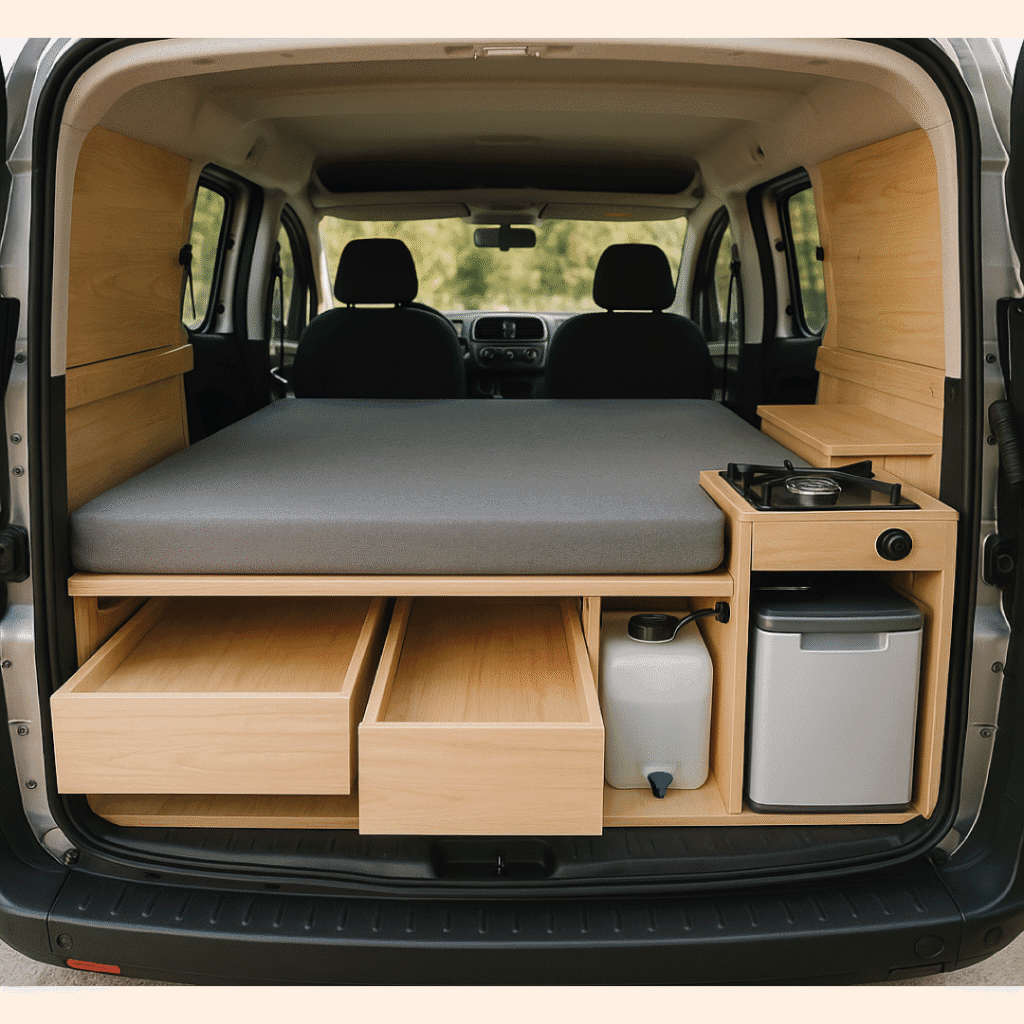
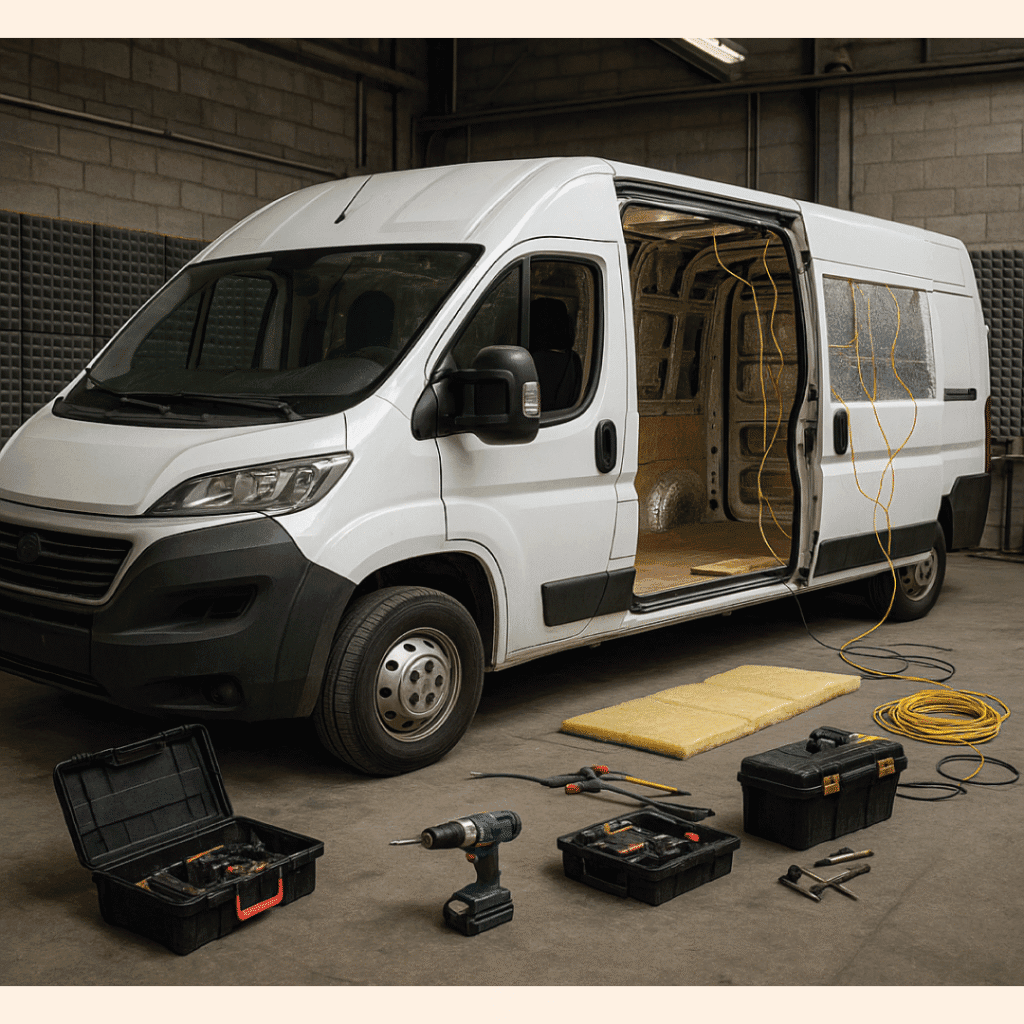
Converting a panel van into a camper opens the door to free travel; but without proper planning, comfort and safety get compromised. Carpentry, electrical or plumbing knowledge alone isn’t enough. Even if you’re thinking of handling the process yourself, knowing the critical points below and insisting on them in practice makes a big difference. Leaving the build to professionals guarantees both regulatory compliance and long-term durability.
Thermal and Sound Insulation: The Foundation of Comfort
Panel vans leave the factory built for hauling cargo; thermal and sound insulation is close to nonexistent. Extreme summer heat, cold in winter, and noise in rain and at high speed become a problem. When insulation is skipped, even air conditioning units fail to deliver the expected performance.
What to expect and request: Multi-layer thermal insulation with closed-cell insulation boards, mineral wool or rubber-based materials; vibration- and sound-absorbing panels on interior surfaces; a proper vapor barrier application that reduces condensation.
Electrical System: Safe, Scalable, Up to Standard
A “one battery & a few outlets” approach falls short once the fridge, lighting, water pump, fan, heater and inverter come into play. The wrong cable gauge, unfused lines or poor connections carry a fire risk.
What to expect and request: A battery bank (AGM/LiFePO4) sized to your needs list, a properly rated solar panel and MPPT regulator, a standards-compliant fuse/distribution panel, adequately gauged cabling, grounding/chassis bonding, and load balancing. Ask for the project to be handed over as a wiring diagram.
Ventilation and Windows: Healthy Indoor Air
Moisture, mold and bad odors mostly stem from inadequate ventilation. In projects that focus only on furniture, the roof fan and opening windows are often forgotten; staying inside in summer heat becomes difficult.
What to expect and request: A roof ventilation fan (intake/exhaust direction), watertight cutting and installation for opening windows, and if needed, integration of a portable air conditioner or heat pump. Anti-corrosion (anti-rust) protection is essential on any cut surfaces.
Weight Distribution: Handling and Braking Distance
Unbalanced load distribution compromises driving safety; the vehicle can lean side to side, braking distance increases, and tires wear unevenly. A common mistake is piling heavy components like the water tank and battery on one side.
What to expect and request: Heavy components positioned close to the axles, evenly and low; the center of mass preserved in cabinet and equipment layout; load calculations and drawings handed over to you.
Water and Waste Systems: Hygiene and Regulations
If a fresh water tank is installed but a grey (waste) water solution is neglected, sink/shower water ends up going straight to the ground, which is unhygienic and creates legal problems. Freezing risks in winter must also be factored in.
What to expect and request: Fresh water & grey water tanks, a drain valve, properly sized hoses and clamps, bypass and maintenance points; frost protection; sealed connections; safe installation and ventilation for a chemical or cassette toilet.
Storage and Ergonomics: A Place for Everything
Inadequate storage creates significant clutter on long trips. Doors popping open while driving, drawers coming off their rails, and loose connections are common issues.
What to expect and request: Under-seat and overhead storage areas, locking rail mechanisms, vibration-resistant fasteners, quick-release mechanisms for bed/seating conversion, and safety stoppers.
Legal Process and Insurance: No Surprises
Even after the conversion is finished, the registration may still show the vehicle as a “panel van.” If the inspection and registration update isn’t done, serious problems can arise during traffic checks and in the event of an accident; insurance may not cover the damage.
What to expect and request: Conversion plans drawn up by a licensed engineer, the vehicle registered as a “caravan/camper,” inspection procedures completed, and the policy updated to reflect the new status. Ask for all documents and certificates at handover.
DIY or Professional?
Even with basic hands-on skills, critical systems like electrical and gas require expertise. Leaving the project to professionals is an advantage in terms of safety, regulatory compliance and longevity. If you want to go it alone, add the standards in this article to a written contract and request them from your supplier; don’t forget to ask for a wiring diagram and materials list.
Quick Checklist for Handover
- Have insulation layers and sound panels been applied? (photographic proof)
- Is the wiring diagram documented, along with fuse ratings and cable gauges?
- Has a watertightness test been done on the roof fan and windows?
- Is the water/grey water line, connections and drain system leak-free?
- Do weight distribution and mounting comply with driving safety?
- Do storage components have locking and vibration resistance?
- Are the conversion plans, inspection and registration update complete?
Final word: A caravan isn’t just a vehicle; it’s a safe living space. Insist on these details that affect comfort and safety; leave the build to professionals, and manage the process with knowledge.
Frequently Asked Questions
Why is insulation so important in a camper conversion?
Insulation balances the indoor temperature and reduces condensation and noise. Without proper insulation, it’s hard to get good performance out of air conditioning units.
What’s the most common mistake in the electrical wiring?
Inadequate cable gauge and unfused circuits. These mistakes increase the risk of overheating and fire. Standards-compliant fuses, a distribution panel and gauge selection are required.
Why should the registration and insurance be updated?
If the registration doesn’t reflect the “caravan/camper” designation, legal and financial problems can arise during inspections and in the event of an accident. A conversion plan, inspection and policy update are mandatory.
Can I do it myself?
You can, if you have the necessary equipment and sufficient technical skill. But if you don’t, the right approach is to hand the work to qualified people and add the standards in this article to the contract and handover documents.