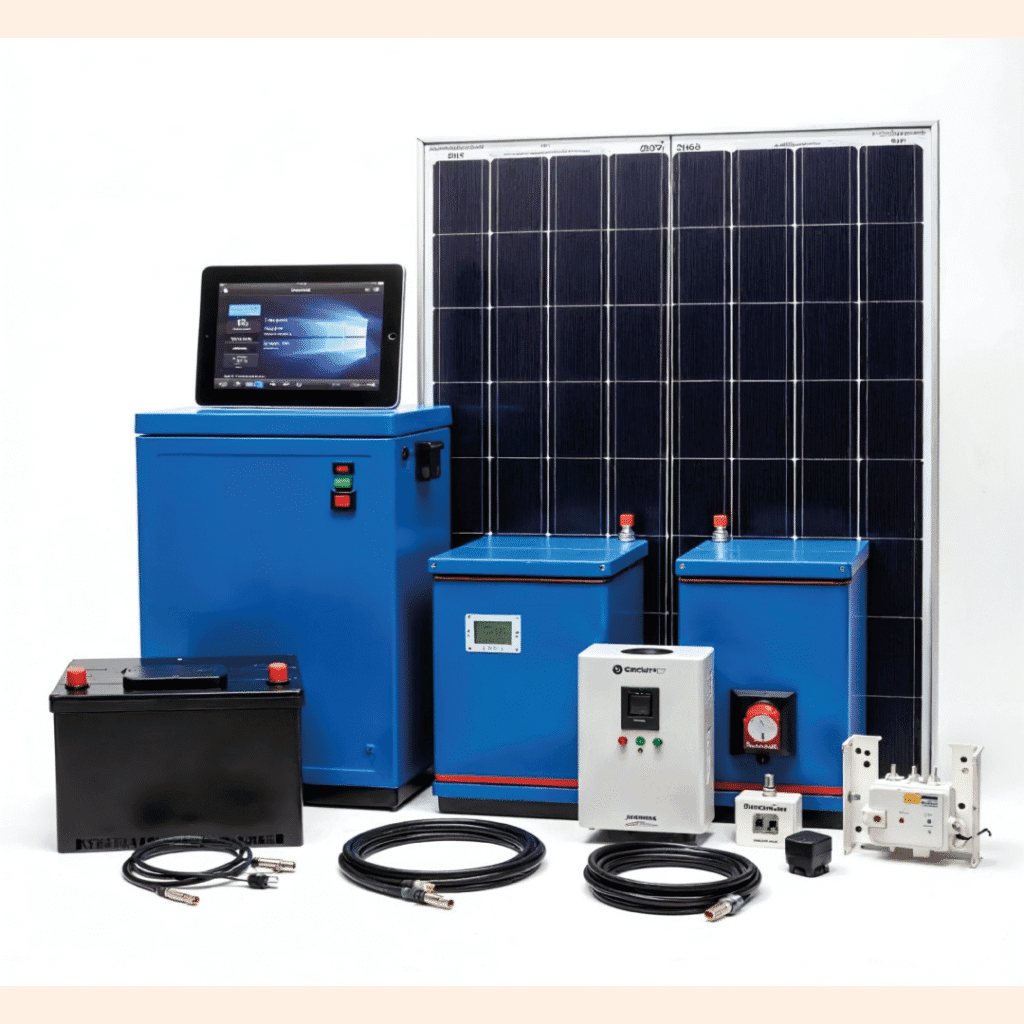
Lighting, the fridge, phone/laptop charging, even the coffee machine in a caravan — they all depend on a safe, well-planned electrical system. In this guide, in a way even beginners can easily apply, we’ve gathered the equipment that should be in a “good electrical setup” and some practical selection tips.
Note: Choosing a battery is a topic on its own. If you’d like to learn more about batteries, check out our Caravan Battery Types article.
1) Batteries (the caravan’s “power bank”)
Stores electricity. As capacity grows, so does the time you can go without a plug. Common types:
- Gel: Affordable and durable; heavy, and can be limited under high current.
- AGM: Delivers high current better; good price/performance balance.
- LiFePO₄ (Lithium): Lightweight, long-lasting, fast charging; higher cost.
Starting recommendation: For fridge + lighting + charging, most users start with the 100-200Ah range. For power-hungry devices like coffee makers/hair dryers, capacity and inverter power should be increased.
2) Inverter (12V → 220V)
Converts the battery’s 12V energy into the 220V that household-type devices need.
- Modified sine wave: Economical; can cause interference/heating in sensitive electronics.
- Pure sine wave: Closest quality to household mains; ideal for a coffee machine, TV, laptop.
Tip: For resistive loads (water heater/hair dryer), choose an inverter that matches the device’s nominal and surge (instantaneous peak) values.
3) Charging Systems (Solar, Alternator, Mains)
- Solar panel + MPPT/PWM regulator: MPPT is generally more efficient; choose panel power based on your consumption.
- DC-DC charger (alternator): Charges the battery with the correct profile while driving.
- 230V mains charger: Plug in at a campsite for safe charging.
A solid combo: Solar + DC-DC + Mains. This gives you flexibility on the road, at the campsite, and off-grid.
4) Fuses and the Distribution Panel
Protects the system and you in the event of a short circuit/overcurrent. The battery output, inverter input, regulator line and each 12V load should be fused at the proper amperage; all of them should be gathered in an organized panel.
Safety: Place a main fuse as close to the battery as possible. Don’t forget to add a residual-current device (RCD) for the 230V line. Use flame-retardant cable and solid lugs/terminals.
5) Cables and Connection Equipment
- Gauge: Thickness suited to the current (a thin cable heats up).
- Connections: Keep things tidy with lugs, terminals, cable conduit and clamps.
- Corrosion: In damp environments, protect connections with an insulating coating.
6) Voltmeter / Battery Monitor
At minimum, track your voltage; if possible, use a shunt-based monitor to see instantaneous current, consumption and remaining capacity. That ends the “will I run out of power?” stress.
7) Small but Critical Equipment
- USB outlets, 12V cigarette-lighter sockets
- LED lighting
- A spare fuse, cable and connector kit
- Residual-current device/earthing for the 230V line
8) Quick Shopping List (Example)
| Component | Role | Tip |
|---|---|---|
| Battery (100-200Ah) | Storage | Based on Gel/AGM/LiFePO₄ use |
| Inverter (pure sine) | 12V → 220V | Check nominal + surge values |
| MPPT regulator | Solar charging | Current capacity matched to panel power |
| DC-DC charger | Alternator charging | Profile suited to battery chemistry |
| 230V charger | Mains charging | Prefer a LiFePO₄-supported model |
| Fuses + panel | Protection/organization | Main fuse close to battery output |
| Cables & lugs | Safe transmission | Gauge should match the current |
| Battery monitor | Tracking | Shunt-based models are more accurate |
If you’d like to calculate the battery and solar panel capacity you need, check out our Caravan Electrical Calculator: Battery, Inverter and Solar Panel Capacity Sizing article.
9) Frequently Asked Questions
Is starting with a single battery enough?
Yes, for light use. If you have devices like a coffee maker/hair dryer, increase capacity and inverter power.
Is a solar panel a must?
A big advantage if you’ll be off-grid. Not mandatory if you’ll charge from the mains often, but still recommended.
Will a modified sine wave inverter do the job?
Yes for simple devices; it can cause issues with sensitive electronics. Pure sine is safer in the long run.
Summary: A solid electrical setup = the right battery + multi-source charging (solar/DC-DC/mains) + a pure sine inverter + proper fusing and wiring + clear monitoring. With this combination, you’ll be comfortable in all four seasons.