One of the most fundamental dilemmas when choosing a motorhome is drivetrain type: front-wheel drive (FWD) or rear-wheel drive (RWD)? Both systems have strengths in different conditions. Below you’ll find a clear look at the pros and cons, use-case scenarios, and a quick decision test.
The Difference in Brief
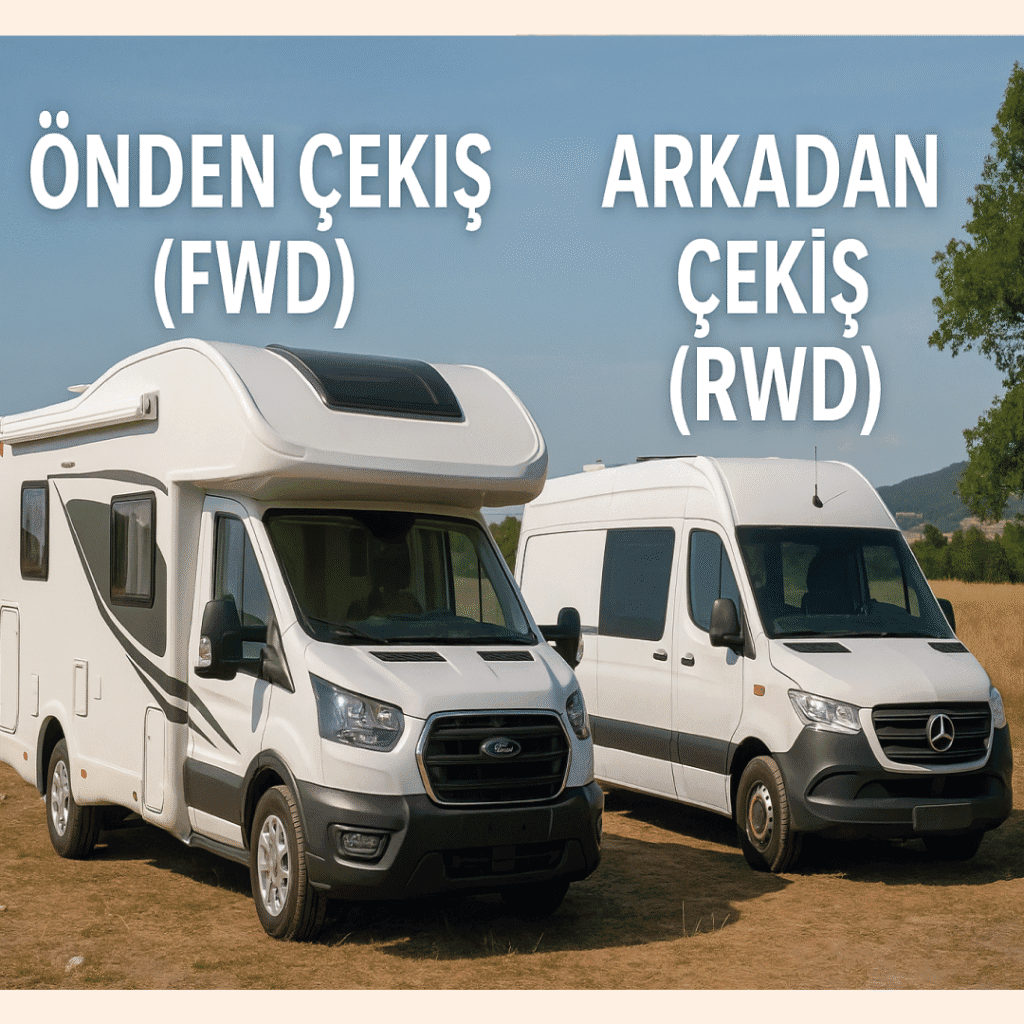
- Front-wheel drive (FWD): Engine power goes to the front wheels. Generally more economical, lighter and offers higher interior flexibility.
- Rear-wheel drive (RWD): Power is at the rear wheels. Strong in terms of hill/towing performance and stability under load; preferred for heavy use.
Front-Wheel Drive — Pros / Cons
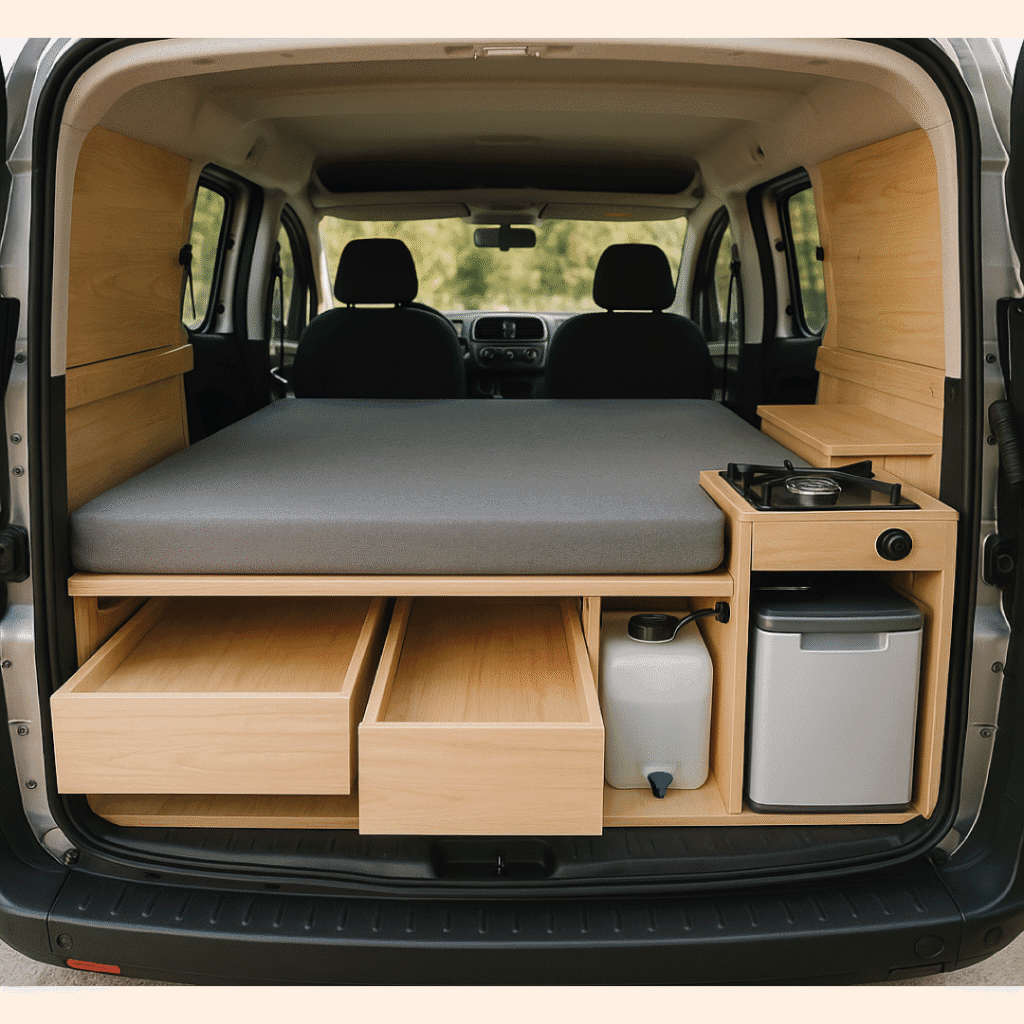
Pros: Lower purchase and maintenance cost; a lower floor and roomier living space since there’s no driveshaft tunnel; predictable road holding on wet/curvy roads; practicality for city use.
Cons: Higher chance of wheel spin on very steep hills and loose ground (mud/wet grass); torque limits on the front wheels can be felt under heavy load.
Rear-Wheel Drive — Pros / Cons
Pros: Better pull-away on hills and under load; stability in towing/hauling tasks thanks to weight distribution; higher payload capacity with long-chassis and dual-wheel options.
Cons: Floor height and driveshaft tunnel can reduce interior layout flexibility; purchase/maintenance cost and unladen weight can be higher; the rear end can be prone to sliding on wet ground (especially when unladen).
Which Use Case Fits Better?
- City use + short getaways, fuel/tax sensitivity: FWD
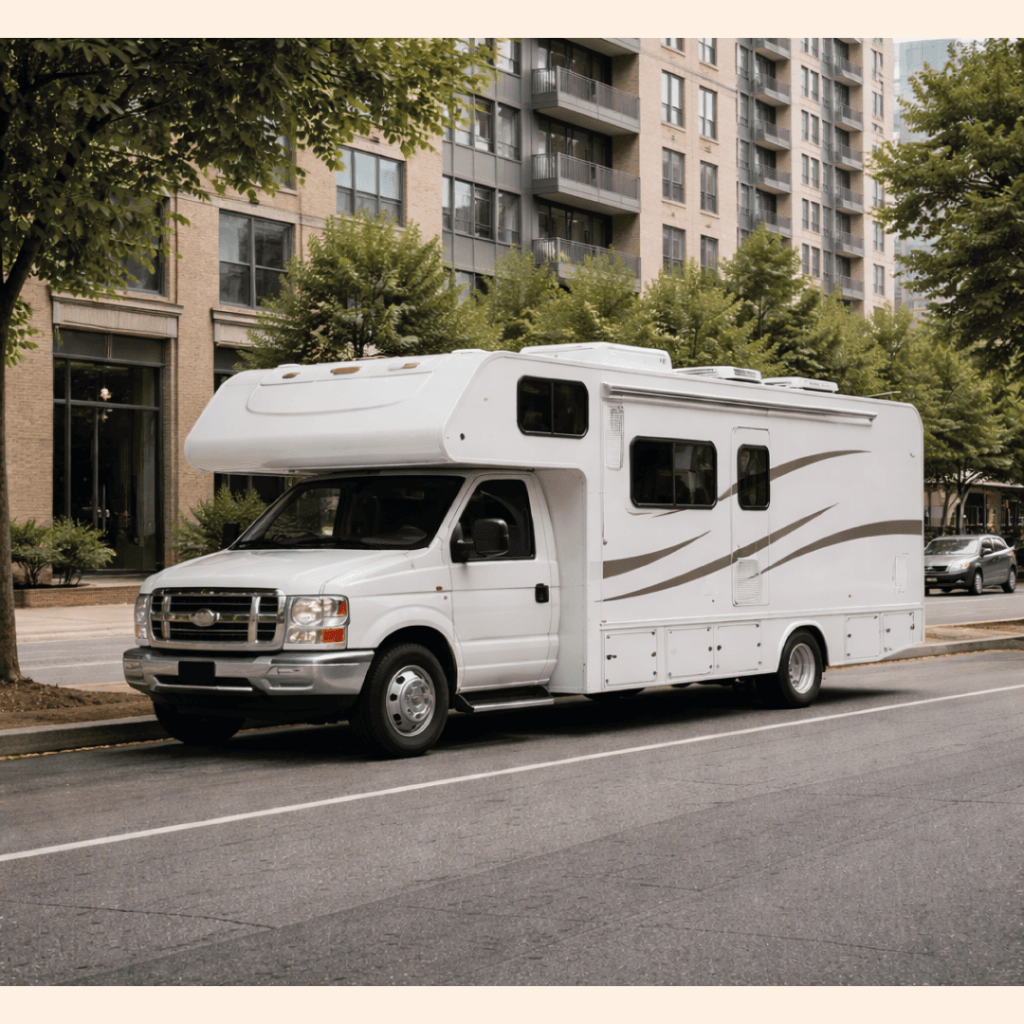
- Long chassis, high payload, towing platform: RWD
- Low floor, roomy interior, transverse bed/under-floor storage: FWD
- Mountain roads, frequent hills, rough terrain (loaded driving): RWD
- Extra traction in snow/mud: RWD or (if available) an AWD/4×4 variant
Summary Comparison
| Topic | Front-Wheel Drive (FWD) | Rear-Wheel Drive (RWD) |
|---|---|---|
| Cost / Weight | Lighter, generally more economical | Slightly heavier, cost can be higher |
| Interior | No driveshaft tunnel; low floor, roomy volume | May have a driveshaft tunnel; less layout flexibility |
| Hills / Load | Sufficient for normal use | Stronger under heavy load and steep hills |
| Handling Character | Predictable, controlled in city and wet conditions | Rear end can be twitchy when unladen; balanced when loaded |
| Use Case | Daily/city, tour-focused, economical travel | Long trips, mountain routes, towing/hauling, heavy loads |
Quick Decision Test
Answer the questions; see the recommendation below.
Summary: If you want city/tour-focused, economical travel and a roomy interior, front-wheel drive is the better fit; if hill, load and long-chassis requirements dominate, rear-wheel drive is more appropriate.
Frequently Asked Questions
Which drivetrain uses less fuel?
Front-wheel drive is generally lighter and mechanically simpler, giving a consumption advantage; driving style and route are also decisive.
Which is better in snow?
Tire choice and driving technique are critical. A loaded RWD can have an advantage pulling away; AWD/4×4 and winter tires are ideal where possible.
Which is preferable for interior height and a flat floor?
Since there’s no driveshaft tunnel and the floor can be lower, front-wheel-drive platforms are more flexible for interior layout.
What about when towing a caravan or trailer?
RWD’s weight distribution and rear-wheel traction are generally more balanced for towing/hauling tasks.
Is there a difference in maintenance cost?
The drivetrain is simpler on FWD; RWD has extra parts like the driveshaft and differential. Actual cost varies by make/model and use.