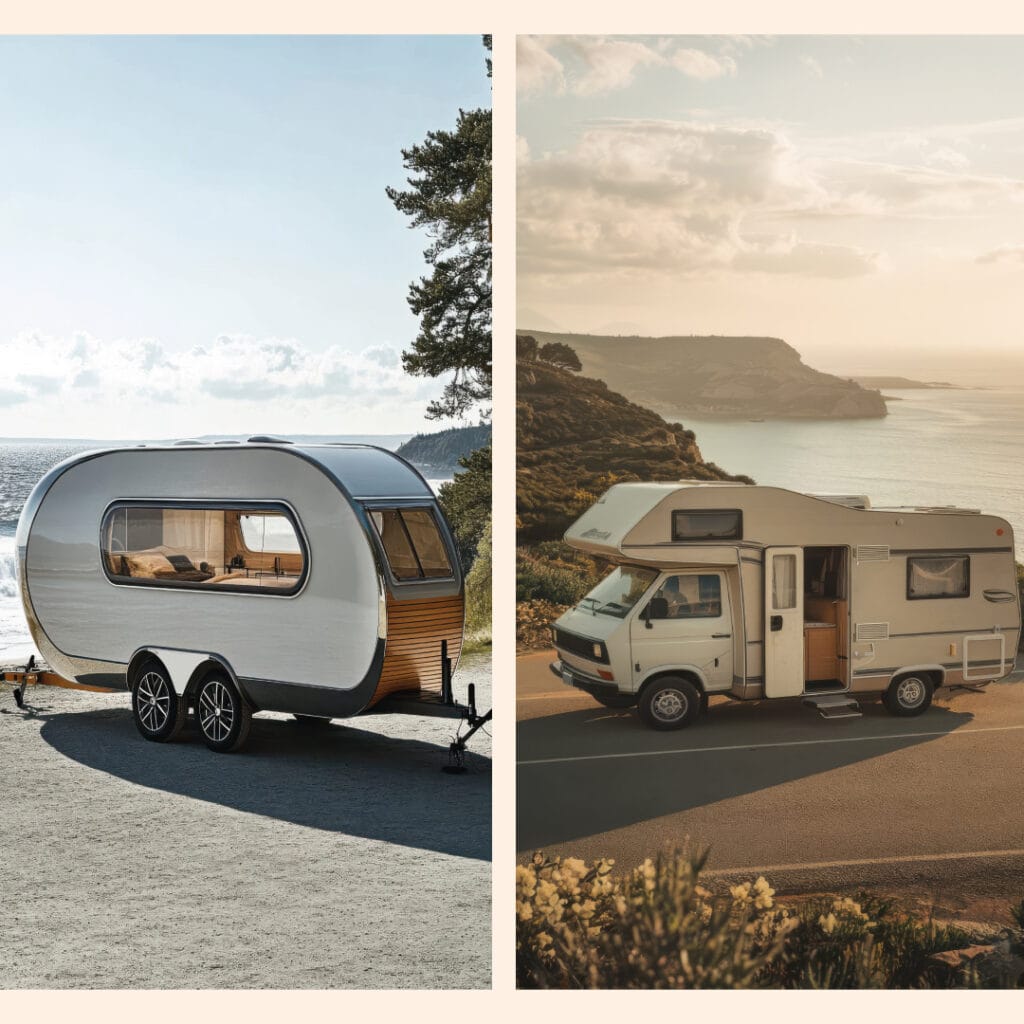

Few things ruin a caravan trip faster than waking up shivering in the middle of the night. Your heating system choice directly determines which seasons and conditions your caravan can actually handle. There are three main options: gas heaters, electric heaters, and diesel parking heaters. Each has a different upfront cost, running cost, and ideal use case. This guide compares all three with real prices and availability in the Turkish market.
Gas Heaters: The Classic, Widespread Solution
Most European caravans come factory-fitted with a gas heater: a sealed system fed by an LPG cylinder that draws fresh air from outside and vents combustion gases through an exhaust. In Turkey, Truma is the most common brand — the Truma S2200 is sold directly on Trendyol and is the standard heater in most travel trailers and motorhomes. Truma’s Boiler B10, which combines electric and gas heating for both space and water heating, is also available on Trendyol.
The advantage of gas heaters is that they can run without mains electricity or a large battery bank as long as the LPG cylinder has gas — appealing for off-grid campers. The downside is the need to refill or swap the LPG cylinder periodically, and because combustion happens in an enclosed space, ventilation and carbon monoxide safety must be taken seriously.
Electric Heaters: No Installation, Grid-Dependent
220V ceramic fan heaters are the simplest and cheapest entry point into caravan heating. Models like the Evo3 3kW ceramic fan heater require no installation — just plug them in. The trade-off is that you need mains power (a campsite electric hookup); off-grid, you’d need a serious inverter and battery bank to run one, which usually isn’t practical for a 3kW load.
Brands like Dometic, Truma, Eberspächer and Whale also make caravan-specific electric heating and water-heating units with panel controls. These integrated systems run quieter and safer than portable fan heaters, but installation costs are higher too.
Diesel Parking Heaters: Turkey’s Conversion Favorite
In Turkey’s caravan/van conversion community, diesel parking heaters are the most popular heating method by far. Webasto and Eberspächer make units that draw from the vehicle’s own diesel tank (or a separate fuel tank) and deliver 0.9-2.0 kW of heat output on very low battery draw (roughly 14-29 watts). Consuming around 0.12-0.24 liters of diesel per hour, these units can run far longer without interruption than a gas heater, with no LPG cylinder swaps to worry about.
Pricing is competitive in the Turkish market: karavanmalzemecim.com lists 2-year-warranty units starting from 3,999.90 TL, while Bluetooth-enabled 12-24-220V “equivalent” models listed on Akakçe run around 8,750 TL. Genuine Webasto/Eberspächer installation service costs around 4,950 TL for a travel trailer and 9,850 TL for a motorhome, per AGUS‘s price list.
Comparison: Which One, When?
If you camp seasonally for short trips and your caravan already has a factory gas heater, using what you have makes the most sense before investing in anything new. If you regularly stay at campsites with electric hookups, a cheap, installation-free electric fan heater will do the job. If you do off-grid, extended winter camping or a van/caravan conversion, a diesel parking heater is the smarter investment thanks to its fuel efficiency and battery-friendly operation — especially for winter camping.
Safety: A Carbon Monoxide Detector Is Non-Negotiable
Whichever heating type you choose, if it’s combustion-based (gas or diesel), keep a carbon monoxide (CO) detector in your caravan. CO is colorless and odorless, so it’s impossible to notice on your own — a heater malfunction overnight can be fatal. A caravan-specific 12V CO detector like the CBE BMTCO, or a general-purpose Brennenstuhl detector, is sufficient. Never fully block ventilation openings while the heater is running.
Energy Consumption and Annual Cost Comparison
Roughly comparing running costs: an 11 kg LPG cylinder typically lasts a handful of nights with a gas heater, and refilling it requires some logistics — LPG isn’t always easy to find while traveling. Electric heater cost depends entirely on the campsite’s electricity fee; many sites include it in the nightly rate, so users may not notice extra cost, but it’s impractical off-grid. Diesel heaters, thanks to both fuel and low battery draw (14-29 watts), offer the most predictable running cost — a night of heating typically costs the equivalent of a small amount of diesel, making it one of the most economical options long-term.
Upfront investment flips the ranking: electric fan heaters can be bought for a small amount, while diesel parking heater systems (unit + installation) require an investment in the 8,000-15,000 TL range. That’s why a diesel heater pays for itself faster for caravan owners who keep their rig long-term and camp regularly in winter; for a few weeks of summer use each year, that investment is usually unnecessary.
Installation and Maintenance
Gas heaters usually come factory-installed; retrofitting one requires an experienced gas technician — a faulty gas connection is a serious safety risk. Electric fan heaters need no installation at all, just plug and play, though integrated electric heating systems (Truma, Dometic, etc.) still require professional fitting. Diesel parking heaters have the most complex install, needing a fuel line, exhaust outlet, outside air intake, and electrical connection — always have this done by an authorized service center or an experienced conversion specialist, which is why the 4,950-9,850 TL installation fees above should be budgeted on top of the unit price.
On maintenance, gas systems need an annual burner and gas-line check. Diesel heaters, especially when run on lower-quality fuel, can build up soot in the combustion chamber; manufacturers recommend at least one service/cleaning per year. Electric systems have almost no mechanical wear, making them the lowest-maintenance option.
Smart Thermostats and Remote Control
Newer diesel heater models support Bluetooth app control for turning the unit on/off and adjusting temperature — you can start heating a few minutes before you arrive at the campsite and find the caravan already warm. Truma’s higher-end gas heater models feature a digital thermostat panel that automatically maintains the target temperature, avoiding unnecessary fuel/gas use. Most electric fan heaters use a simple mechanical thermostat, though more advanced models offer remote control too.
Heating Needs Across Turkey’s Regions
Turkey’s geography spans very different climate zones, so heating needs vary by region. Along the Black Sea coast, winters are relatively mild but humid; a heater with a drying effect (like a diesel heater’s dry blown air) helps prevent mold in these conditions. In Central and Eastern Anatolia, winter temperatures regularly drop below freezing; for winter camping in these regions, a diesel parking heater is nearly essential, since a single LPG cylinder burns through very quickly. Along the Mediterranean and Aegean coasts, winters are generally mild, so a light electric or gas heater is usually enough.
Choosing a Heater by Caravan Size
For a small travel trailer or van conversion (15-20 m² interior), around 2 kW is usually enough — both the Truma S2200 gas model and the Eberspächer D2L (2.2 kW) diesel model fall in this category. Larger motorhomes or double-deck caravans may need more; in that case, either a higher-capacity single unit (Eberspächer D4L, 4 kW) or a dual-zone system that independently heats the sleeping and living areas is worth considering. Checking the manufacturer’s stated “heatable volume” (m³) against your caravan’s actual interior volume avoids the common problem of underpowered heating.
Frequently Asked Questions
Will a diesel heater drain the vehicle’s fuel tank? At 0.12-0.24 liters per hour, one night of use typically consumes a small fraction of the tank; for extended winter use, a separate fuel tank is a common choice.
Can an electric heater run off a generator? Yes, with a generator or a strong inverter+battery bank rated for at least 3kW output, but this is usually less efficient than a diesel heater.
Is a diesel heater very noisy? Modern diesel heaters, especially “new generation” models, are noticeably quieter than older units, though they’re still not as silent as an electric fan heater — a faint combustion sound is normal.
How do I check a heating system when buying a used caravan? Run it for a few minutes and check for abnormal smells (burnt plastic, strong gas odor) or noises, and ask for service history — fuel line leaks in diesel heaters in particular can be easy to miss.
Conclusion: Which System Should You Choose?
There’s no single “best” heating system — the right choice depends on how and where you camp. For short, seasonal summer trips, your existing gas heater or a cheap electric fan heater is enough. For regular winter camping in Central Anatolia or at higher altitude, a diesel parking heater pays for itself quickly thanks to fuel efficiency and battery-friendly operation, despite the higher upfront cost. Whichever you choose, don’t skip a carbon monoxide detector — a small investment that can save a life.
Last checked: 19 July 2026. Prices are current list prices from Trendyol, Akakçe, karavanmalzemecim.com, and AGUS, and are subject to change.