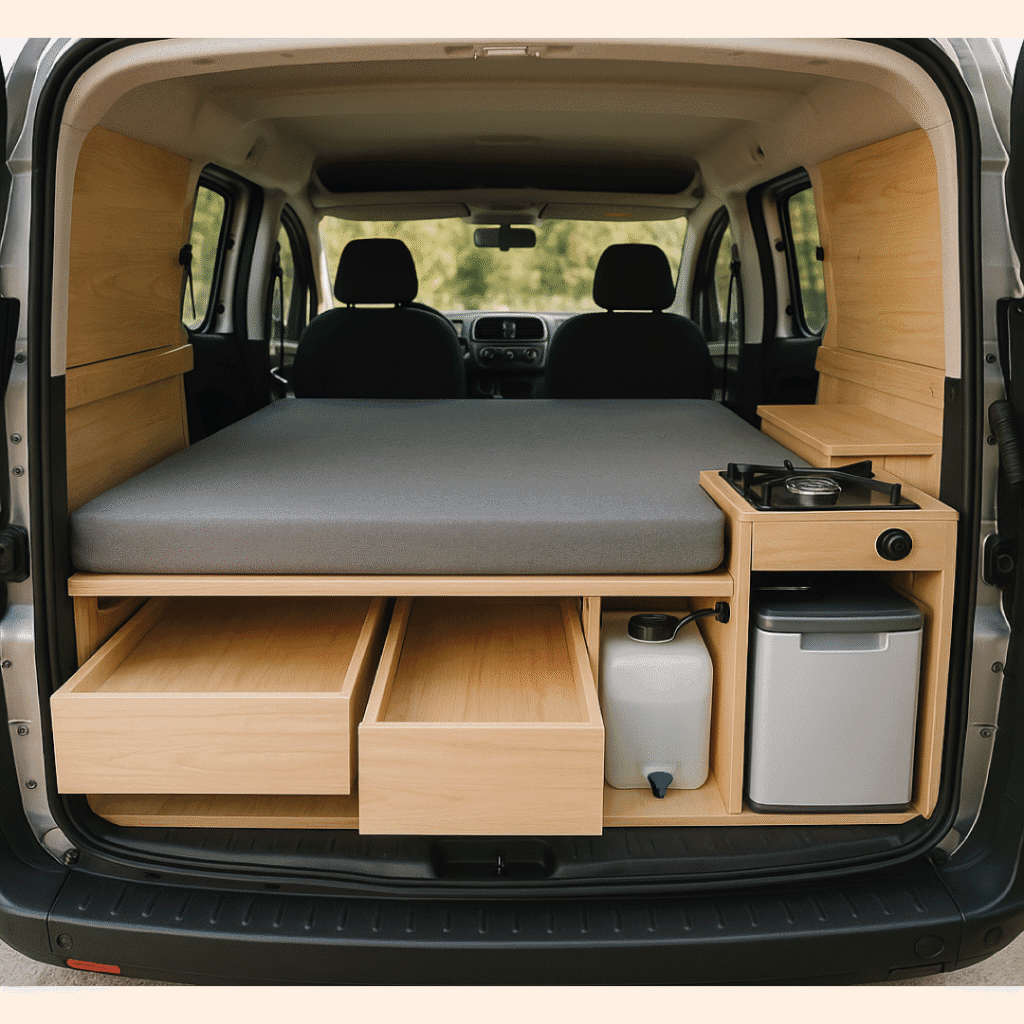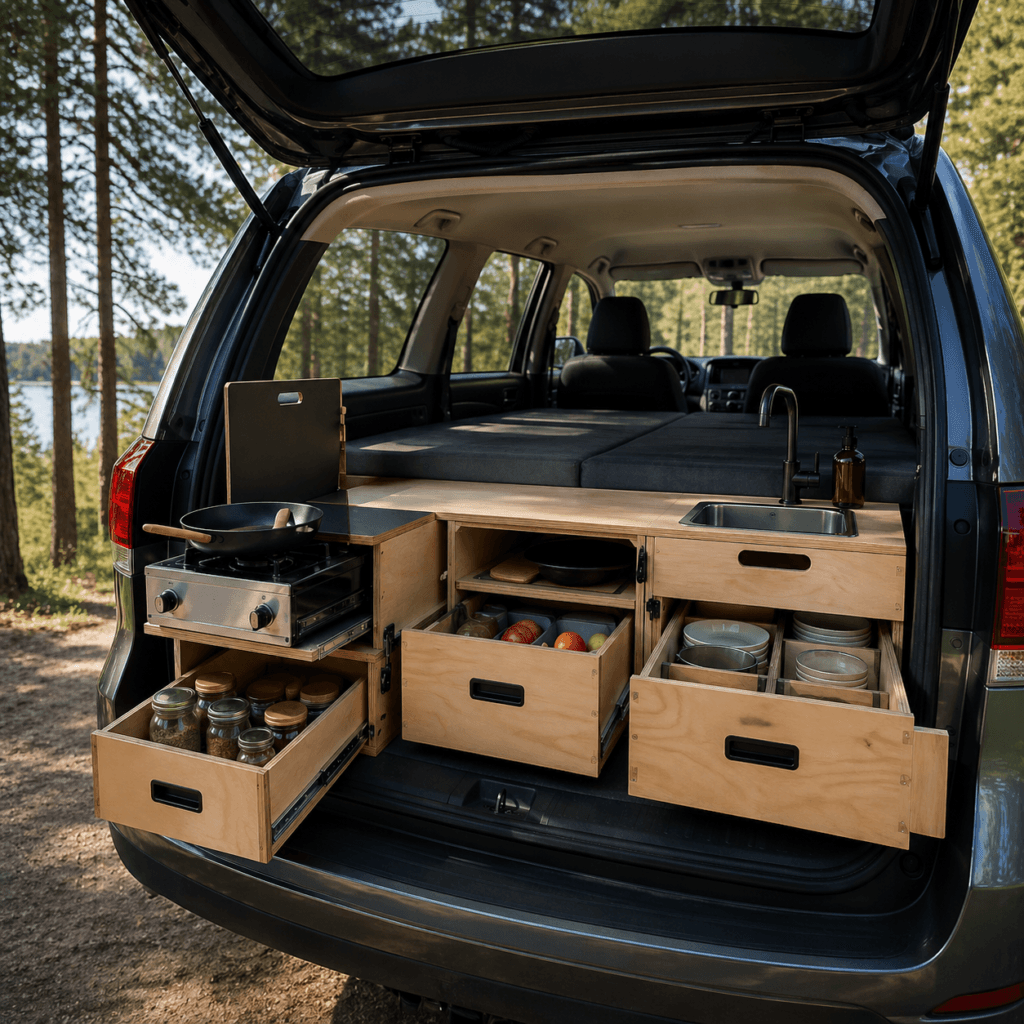
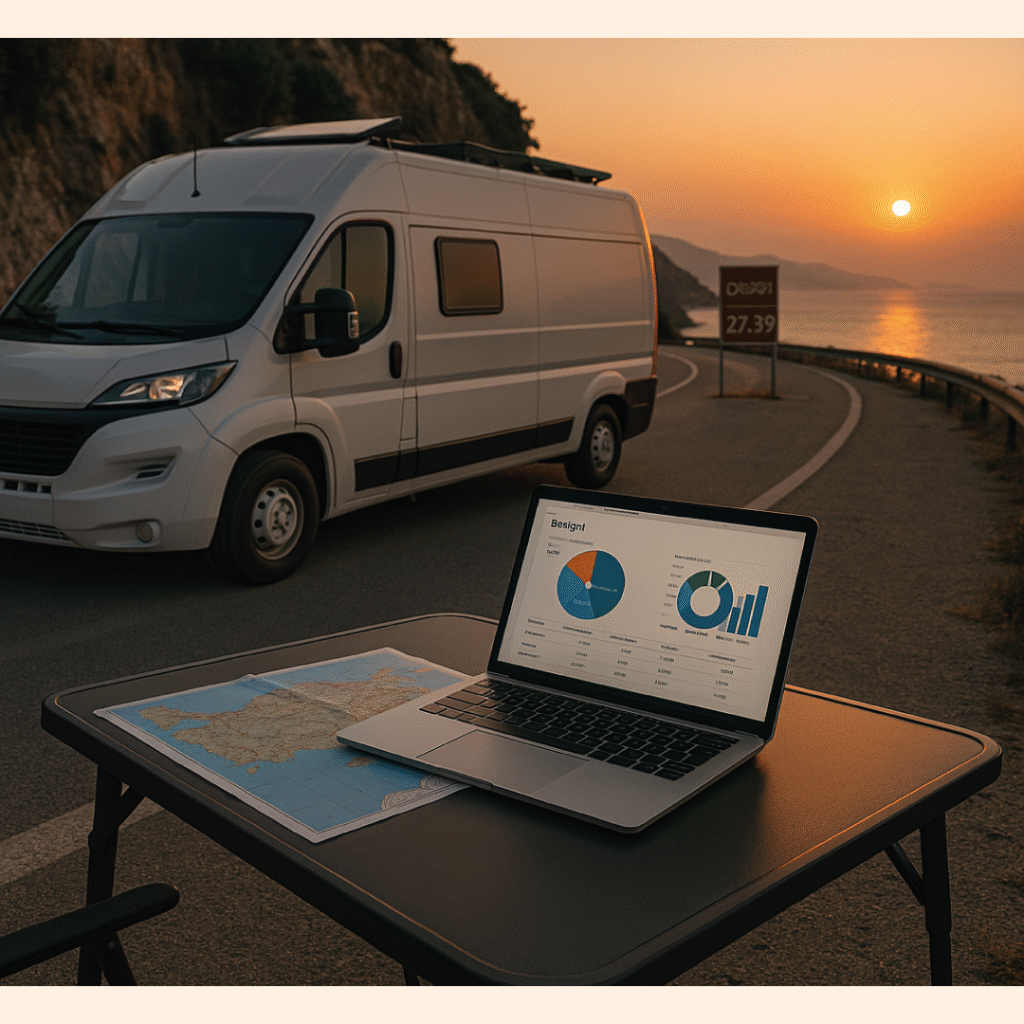
“Living in a caravan would actually be really cheap,” people think, scrolling through vanlife videos on Instagram — and everyone ends up asking the same question: what does it actually cost? In this guide, we break down the real, itemized cost of living long-term in a caravan under Turkish conditions, covering fuel, accommodation, food, maintenance, insurance, taxes, internet, and unexpected expenses.
The numbers here obviously won’t apply one-to-one to everyone, but they give a clear framework based on scenarios like a single person, a couple, and an occasionally-working digital nomad. The goal is to strip away the “romantic vanlife” filter and show you what real life on the road actually looks like.
1. You Can’t Calculate Cost Without Defining Your Vanlife Scenario
First, you need to ask yourself the following questions:
- Will you be living alone, as a couple, or do you have kids?
- Will the caravan be your full-time home, or are you on the road half the month?
- Are you the type who moves from city to city constantly, or do you set up camp in one region for 1–2 months?
- Do you work (remotely, outside an office) or are you living off savings?
To give examples in this article, we’ll use three main profiles:
- Minimalist Solo → a single person who doesn’t move often, low consumption.
- Vanlife Couple → two people, regular travel plus partial remote-work use.
- Digital Nomad → works remotely, uses a stronger internet + power system.
Now let’s go item by item.
2. Fuel Costs: Vanlife’s Biggest Variable
In Turkey, fuel price and how many kilometers you drive directly shape your budget. The basic logic:
- Heavy, tall caravan → more fuel
- Constant movement → more fuel
- Mountain roads, windy highways → more fuel
For an example panel-van conversion:
- Average consumption: 8–10 L/100 km (diesel, driven steadily)
- Monthly km:
- Minimalist → 500–800 km
- Vanlife Couple → 1,000–1,500 km
- Digital Nomad → similar depending on plans, sometimes less (if staying in one region for a long time)
Rounding it out: fuel is the most volatile line item for vanlife in Turkey. If your plan is “jump from city to city, wake up on a different coastline every week,” a large chunk of your budget goes straight into the tank.
3. Accommodation Costs: Free Spots vs. Campsites
In theory, anywhere can be home when you live in a caravan; but in practice there are three options:
- Free wild spots (forest, mountain, quiet coastline, etc.)
- Urban / parking-lot-style overnighting
- Paid campsites and caravan parks
3.1 Free Spots
Many parts of Turkey still have free, quiet, scenic spots you can find. However:
- You need to balance safety against isolation
- Muddy roads, snow, and wind are a risk in winter
- You need to manage your own trash, water, and toilet needs
In exchange, you can significantly lower your monthly accommodation costs.
3.2 Paid Campsites
Campsite prices vary a lot, but in general:
- A caravan + 2 people per night tends to fall within a certain price range
- Electricity, showers, toilets, and internet are usually included
- Prices rise in season, and even more so in popular areas
If you’re living full-time vanlife and staying 10–15 nights a month at campsites, that opens up a serious line item in your monthly budget.
Conversely, if you only check into a campsite 2–3 nights a month for a “shower – laundry – full charge” and free camp the rest of the time, your costs drop considerably.
4. Food & Grocery Costs: Is Vanlife Cheap Eating?
Here’s the magic of a caravan:
Every meal you’d eat out, you can make in your caravan’s kitchen for half the price, sometimes a third. But of course, that depends on what you eat.
4.1 Mostly Home-Cooked Meals
- Breakfast: home-style (eggs, cheese, bread)
- Lunch: simple sandwich, salad
- Dinner: pasta, vegetables, legumes, chicken, etc.
With this model, a single person’s monthly grocery spend ends up similar to someone living a normal life on land — only the eating-out line item shrinks.
4.2 Eating Out + Café Use
If you’re a digital nomad who works from cafés often:
- Coffee, snacks, mid-meals
- A few dinners out per week
items like these quickly add up to large numbers.
Here, vanlife starts to mean not “cheapness” but more flexibility and a change of scenery.
5. Insurance, Tax, and Official Costs
These vary depending on the type of vehicle, but generally include:
- Mandatory traffic insurance
- Comprehensive insurance (optional but recommended)
- Motor vehicle tax
- Vehicle inspection
Because these costs are annual rather than monthly, people often overlook them. But once you divide the annual total by 12, a fixed “vehicle cost” line item emerges that you need to add to your vanlife budget.
6. Maintenance & Repairs: Not Just the Engine, the Caravan Fittings Too
With full-time or heavy use, it’s not just the engine and transmission that wear down — everything inside the caravan does too:
- Heater (diesel, electric, or gas)
- Water pump, filters
- Solar panel connections, cables
- Fridge, inverter, chargers
- Door hinges, latches, drawers
So on top of classic “vehicle maintenance,” there’s also a “tiny house maintenance” list. Setting aside an annual budget for this shrinks a lot of headaches down the road.
7. Internet, Phone, and Digital Costs
In the vanlife version of life, almost everyone shares the same headache: internet.
Especially for remote workers:
- Dual SIM cards (two carriers)
- High-data packages
- A modem or mobile router
- Extra Wi-Fi fees in some places
become a fixed monthly line item.
For someone who only travels on weekends this isn’t a big deal, but for a full-time digital nomad, it’s entirely possible for the communications budget to approach what you’d pay in rent.
8. Laundry, Showers, and Personal Care Costs
Even if your caravan has a shower, in some situations you may:
- Want to use a campsite shower
- Want a hammam / spa / daily shower service in town
- Need a self-service laundromat or campsite washing machines
This means a small but regular expense a few times a month. Especially in winter, heating water, drying out wet areas, and showering regularly in the caravan can be harder than expected; that’s why an “external shower – laundry” line item shows up in most vanlife budgets.
9. Unexpected Costs: The Real Face of Vanlife
The most honest part is this:
No matter how much you plan, there are always “surprise costs” in vanlife. For example:
- A tire blows out in some small town, you have to replace it
- You went off-road and damaged the exhaust or the sump
- A water leak develops in the caravan, requiring furniture/insulation repair
- The heater breaks down, requiring parts/service
Setting aside a monthly “invisible cushion” for these makes a huge difference in your stress levels.
10. Summary: Is Vanlife Really Cheaper?
The answer: it depends on how you live.
- If you’re minimalist, don’t travel much, mostly free camp, and build a life around home-cooked meals →
you can live on a lower budget than rent + transport + eating out in a city. - If you’re a digital nomad constantly racking up kilometers, eating and drinking somewhere different every night, with heavy café use →
the “vanlife is cheap” myth largely falls apart.
Vanlife often turns out to be less about “spending less money” and more about spending money on different priorities (scenery, freedom, experience). Still, with a solid budget plan, you’ll be shaken far less by surprises.
11. Frequently Asked Questions
Is living in a caravan always cheaper than renting a home?
Not always. While it eliminates rent, your fuel, maintenance, and travel costs can increase. How much you move around and your standard of living determine the outcome.
Do you absolutely need a huge budget for vanlife?
No. You can start with a modest budget; however, you should always set aside a reserve fund for emergencies and unexpected repairs.
How much difference does vanlife as a couple make compared to going solo?
Fuel and vehicle costs are shared between two people, which is an advantage; however, food, campsite, and personal expenses increase. The total cost per person usually ends up more favorable than going solo.
Does it make sense to work remotely from a caravan as a digital nomad?
It can make sense, but it requires a strong internet plan, adequate power infrastructure, and a quiet workspace. This raises both your upfront investment and your monthly communication costs.
What’s the single biggest cost item for vanlife in Turkey?
Usually fuel and how often you travel. The less you move around, and the more you rely on free campsites and home cooking, the lower your overall vanlife budget.
Related Guides
- Caravan weight distribution and weighing guide — learn how excess load affects both safety and fuel consumption
Related Articles
- International Caravan Travel: Customs, Insurance, and Vignette Guide