One of the most critical parts of comfortable caravan living is the water system. A well-designed water line delivers a safe, hygienic, and sustainable setup for showering, cooking, hand-washing, cleaning, toilet use, and hot water. In this guide, we walk step by step through the fresh water tanks, grey water tanks, waste water systems, water pumps, flow switches, hoses, filters, and connections used in caravans, based on 2026 standards.
This article is written as an engineering-grounded but user-friendly resource, useful both for people building their own caravan and for those who bought a ready-made caravan and want to upgrade its system.
1. Components of a Caravan Water System
A caravan water system is essentially made up of:
- Fresh water tank
- Grey water tank (sink + shower waste water)
- Waste water drainage system
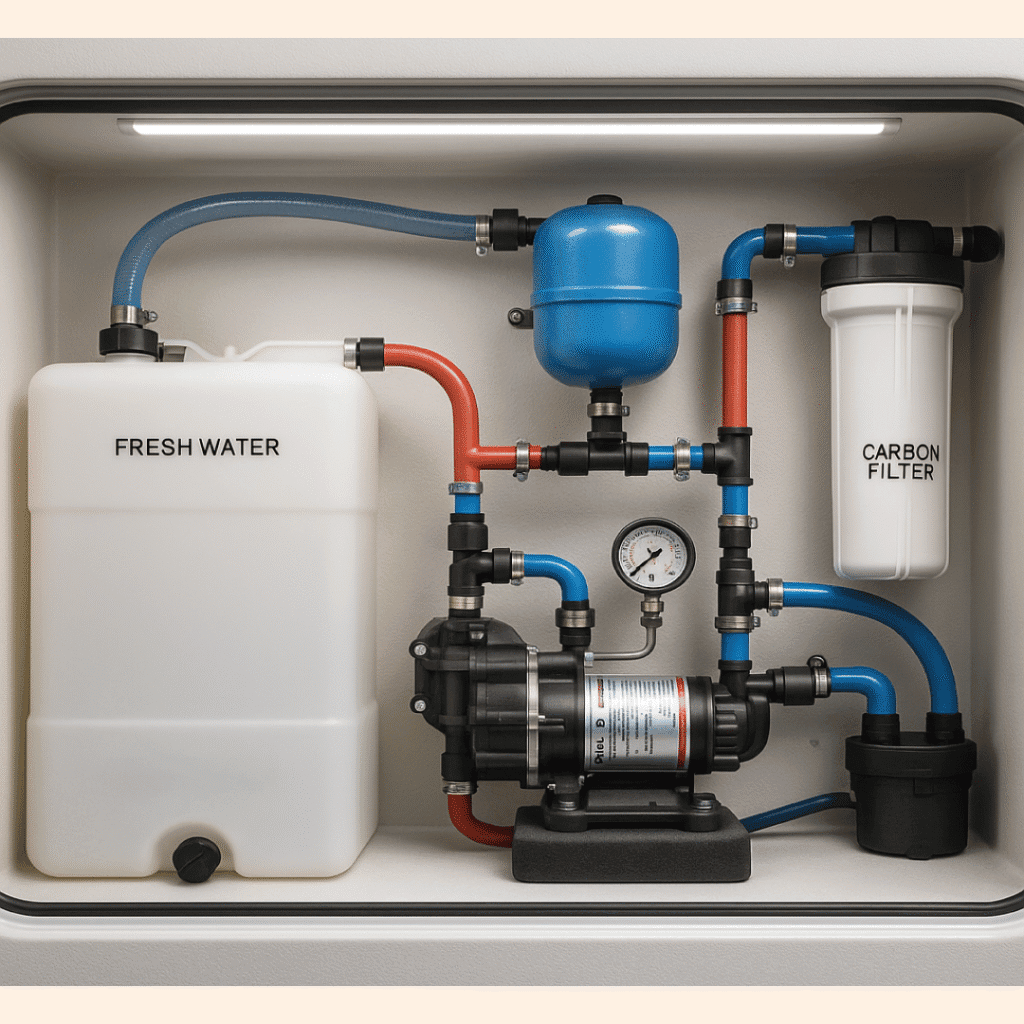
- 12V water pump
- Expansion tank (optional but recommended)
- Water filter (carbon, sediment, metal filter, inline filter)
- Hot water system (optional: electric, diesel, or gas)
- Faucets, hoses, clamps, and connection fittings
The heart of the system is the 12V diaphragm pump. This pump pressurizes water drawn from the fresh water tank and sends it to every line inside the caravan.
2. Fresh Water Tank
How much fresh water you’ll need in your caravan depends entirely on your lifestyle. Typical figures are:
- Solo traveler → 40–60 liters
- Couple → 60–90 liters
- Family (3–4 people) → 90–150 liters
2.1 Tank Location
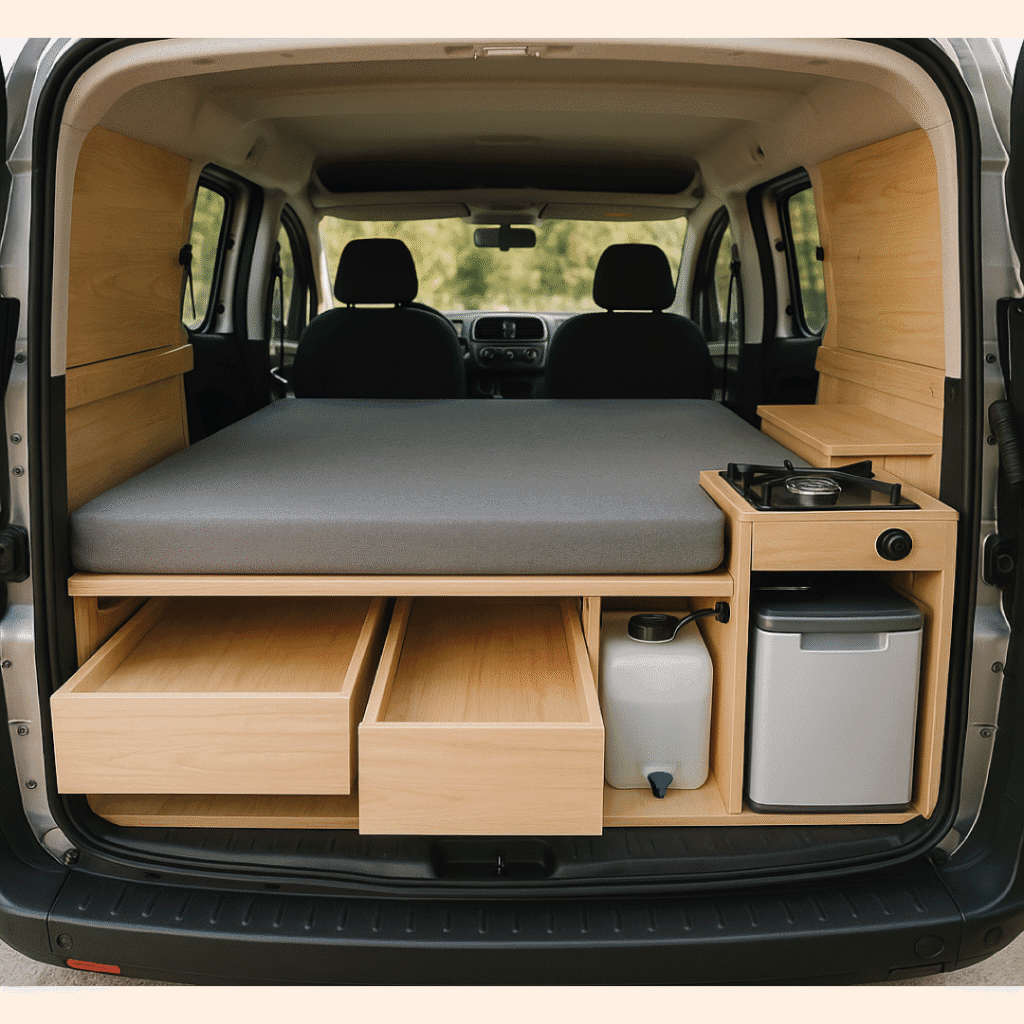
The best spots for a fresh water tank are:
- Under furniture above the rear wheel arch
- Under the bed
- Inside a side panel
Recommendation: if you’re aiming for four-season use, the fresh water tank must be located indoors. Tanks mounted outside freeze in winter.
2.2 Tank Material
- Food-grade plastic: the most common and healthiest solution.
- Rigid polyethylene tanks: durable and long-lasting.
- Flexible water bladders: save space but can develop odor over the long term.
2.3 Fill Caps and Air Venting
To avoid overflow while filling, the tank must always have an air vent hose. The fill cap should also be lockable from the outside.
3. Grey Water Tank (Waste Water)
The tank that collects waste from the sink and shower is called the grey water tank. Its size depends on how often you use the sink and shower. Typical figures:
- Small caravan → 20–30 liters
- Medium caravan → 30–50 liters
- Large caravan → 50–80 liters
3.1 Grey Water Tank Location
The grey water tank is usually mounted underneath the chassis. When installing it:
- The tank shouldn’t be exposed to stones or impacts from outside.
- It should be insulated against the risk of freezing.
- The drain valve should be easy to reach.
3.2 Odor Problems
To prevent odor from developing in the grey water line:
- Use an S-trap or a Hepvo valve.
- Empty the tank regularly.
- You can add an odor filter to the sink drain.
4. Water Pump
Caravans generally use 12V diaphragm pumps. The most popular brands are Shurflo and Fiamma Aqua 8.
4.1 Pump Capacity
- 7–10 liters/minute → ideal for small caravans
- 10–12 liters/minute → standard caravans
- Over 11 liters/minute → for shower-heavy use
4.2 Why Do You Need an Expansion Tank?
An expansion tank gives you:
- A quieter-running pump
- More stable pressure
- A longer pump lifespan
5. Filters
You should always add a filter to your water line. The best setup uses three stages:
- 1) Sediment filter (traps larger particles)
- 2) Carbon filter (removes odor, taste, and chlorine)
- 3) Micron filter (final stage)
For users who want a simpler setup, a single inline carbon filter can be enough.
6. Hoses and Connections
Since water leaks pose a serious risk in a caravan, the quality of hoses and connections matters a great deal.
- PEX pipe → the most professional and reliable option
- Spiral hose → easy to install; choose odor-free types
- Quick-connect fittings → easy to assemble and disassemble
7. Hot Water Systems
There are three main ways to get hot water in a caravan:
- Gas water heaters (e.g. Truma)
- Diesel water heaters (e.g. Webasto Dual Top)
- Electric water heater (220V)
For continuous off-grid use, resistive electric heaters aren’t very efficient.
8. Preventing Leaks
- Use clamps on every hose connection.
- Check tank outlets for dripping.
- You can add a leak sensor under the faucet.
- There should always be a filter before the pump.
9. Frequently Asked Questions
Is a grey water tank mandatory?
It isn’t legally required as a rule, but it should always be included to prevent environmental pollution when camping in nature and at campsites.
Flexible water bladder or a rigid tank?
A bladder works fine for short-term use; for long-term use, a rigid polyethylene tank is always the safer choice.
Why does the pump keep cycling on constantly?
It could be a leak somewhere, a loose connection, or a missing expansion tank.
Should you add chlorine to the fresh water tank?
Very low concentrations can be used, but a carbon filter plus regular cleaning is generally the healthier solution.