When people set off with a caravan, most focus on interior design, comfort, and equipment. Yet on the safety side, the most critical issue is weight limits and correct weight distribution. Excess load, or load placed in the wrong spot, lengthens braking distance, upsets road holding, increases stress on tires and suspension, and can lead to serious fines at roadside checks.
In this guide, we walk step by step through tonnage limits, axle loads, and the weighbridge process for towed caravans and motorhomes. The goal is to help you stay within legal limits while using your caravan safely and comfortably.
Basic Weight Concepts in Caravans
Without a clear grasp of these weight-related terms, it’s impossible to track tonnage or make sense of what a weighbridge reading actually means. Let’s start by clarifying the terms you’ll hear most often.
Kerb weight
Kerb weight is the weight of the caravan or vehicle with no load at all, according to the manufacturer’s data. For towed caravans, it’s usually printed clearly in kilograms on the chassis plate and the registration document. This figure typically includes standard equipment and some fluids (for example, a certain portion of the water tank), but it does not include anything the user loads in.
Gross vehicle weight (GVW / MTPLM)
Gross vehicle weight is the legal upper limit shown on the registration document — the point beyond which “this vehicle or caravan may not go.” For a towed caravan, it represents the maximum total weight the trailer can carry; for a motorhome, it represents the combined total of vehicle, passengers, cargo, fuel, water, and everything else.
Payload capacity
Payload capacity is the single most important figure, since it shows how much you can actually load. It’s calculated with a simple formula:
Payload capacity = Gross vehicle weight – Kerb weight
This difference covers the total of passengers, luggage, water, fuel, bikes, motorcycles, camping gear, and accessories you can add to your caravan. In most caravans this margin is smaller than people expect — which is why every kilogram counts.
Axle weight
Each axle has a maximum load it’s allowed to carry. You may see separate figures on the registration document or in the manufacturer’s manual, such as “front axle maximum load” and “rear axle maximum load.” Even if your total weight is within the legal limit, exceeding the limit on a single axle still creates a risky situation.
Weight Distribution in Towed Caravans
In towed caravans, it’s not just total weight that matters — how the load is distributed across the axle and the tow hitch is just as critical. Uneven distribution can cause the trailer to sway, cause skidding under braking, or cause the rear of the tow vehicle to sag.
Nose weight
Nose weight is the portion of the caravan’s weight transferred onto the tow vehicle. The generally accepted range is roughly 7–10% of the caravan’s total weight resting on the hitch. That said, the maximum vertical load stated in the tow vehicle’s owner’s manual should always be the governing figure.
- When nose weight is too low, the caravan becomes more prone to swaying and losing the road.
- When nose weight is too high, the rear of the tow vehicle sags, the downward force on the front wheels drops, and steering control weakens.
Interior layout and center of gravity
In a towed caravan, the goal is to keep the center of gravity as close to the axle as possible and as low as possible. That means:
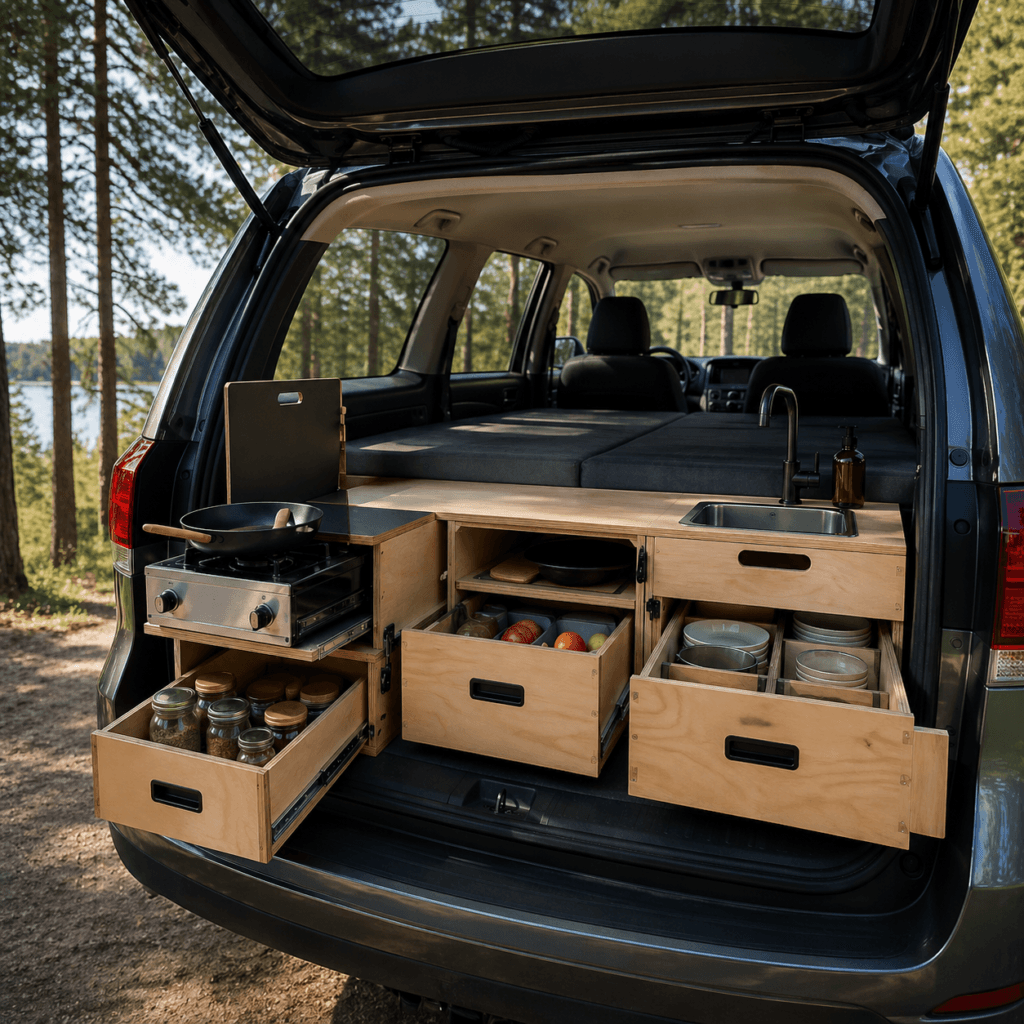
- Place the heaviest items (battery, water canister, tool bag, canned goods, camp stove, etc.) in the middle of the caravan, close to the axle.
- Avoid letting weight pile up excessively at the front or rear; doing so throws off the nose weight and increases the caravan’s risk of swaying.
- Keep the distribution as balanced as possible between the left and right sides; load stacked on one side creates instability in corners.
The difference between single-axle and twin-axle caravans
Single-axle caravans are more sensitive even to small weight-distribution errors — poor placement directly changes how the caravan handles. Twin-axle caravans offer a more stable ride, but that doesn’t mean axle and total weight limits stop mattering. In both cases, you need to stick to the figures stated on the registration document.
Weight Management in Motorhomes
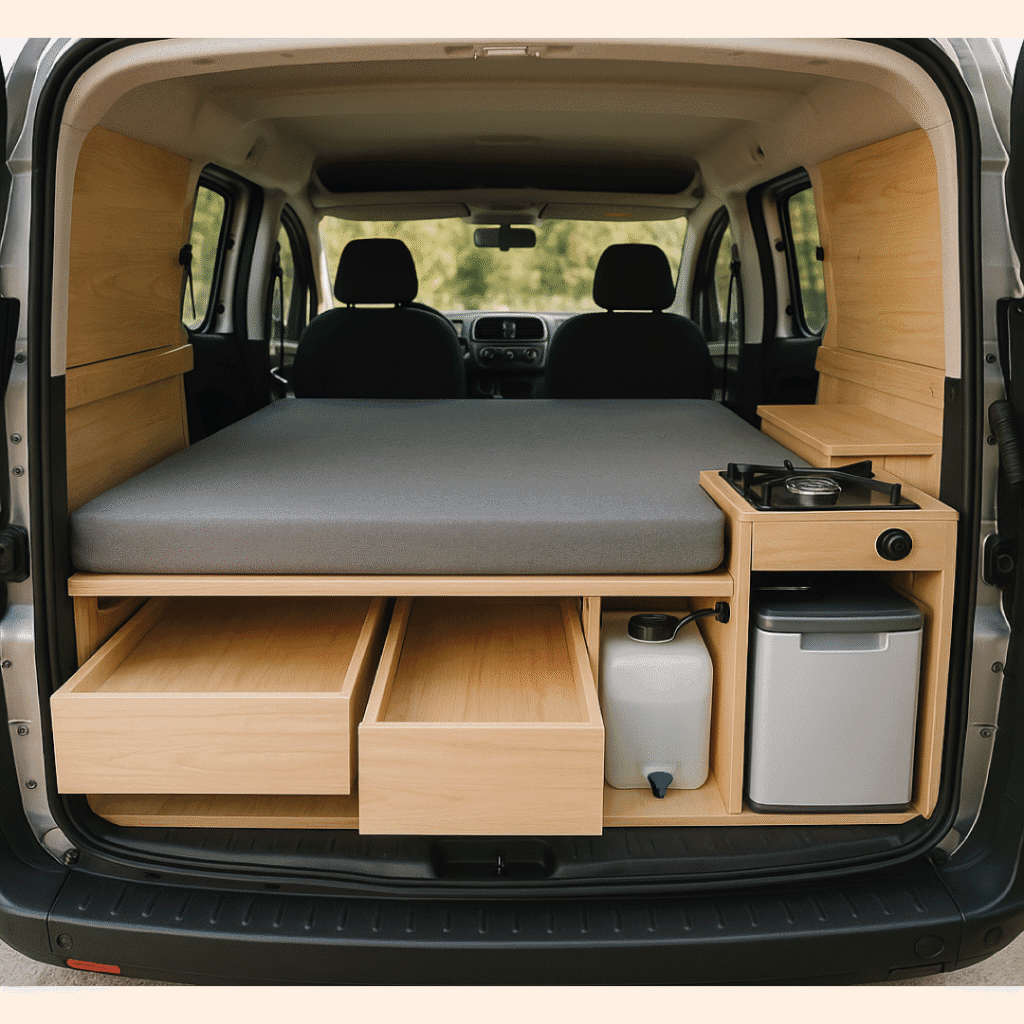
In motorhomes, the entire load rests on the base vehicle’s front and rear axles. A common mistake in van or truck-chassis conversions is piling all the furniture and storage weight onto the rear axle.
Front and rear axle balance
The engine is usually up front, so the front axle carries a higher load when the vehicle is empty. During conversion, positioning the kitchen module, cabinets, bed, fresh and grey water tanks, batteries, and bike or motorcycle racks toward the rear can quickly push the rear axle past its limit.
The registration document usually lists both the total gross vehicle weight and separate maximum load figures for the front and rear axles. Requesting an axle-by-axle measurement at the weighbridge, rather than just checking the total, gives you a much clearer picture.
Roof load and center of gravity
Equipment like solar panels, a roof air conditioner, a roof rack, or a kayak or cargo basket sits on the roof and raises the center of gravity. This increases rollover risk, especially on roads with crosswinds or during sudden maneuvers.
Where possible, keep heavy equipment low and close to the chassis, and reserve the roof for light, aerodynamic items. Avoiding unnecessary roof loads pays off both in safety and in fuel consumption.
How to Get Your Caravan Weighed at a Weighbridge
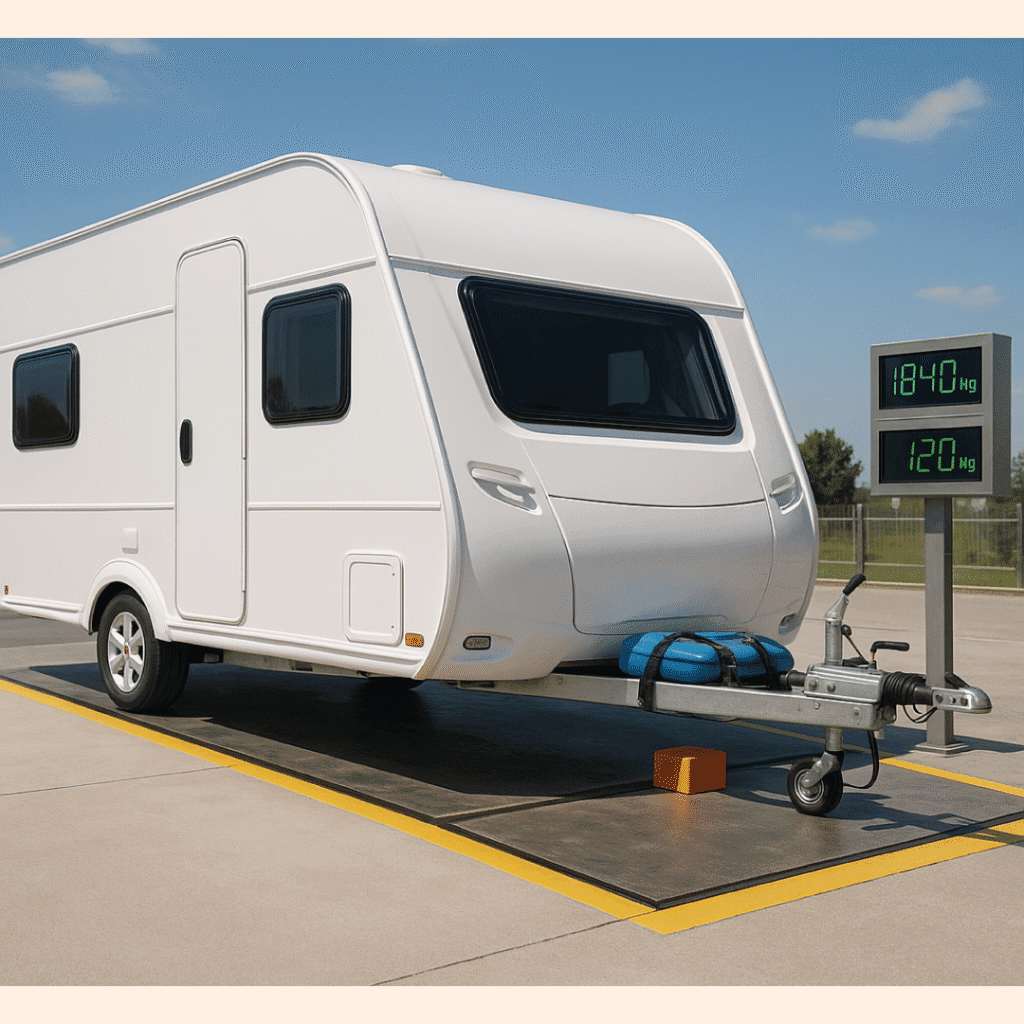
The only reliable checkpoint for weight management is regularly visiting a weighbridge and seeing the real numbers. Relying on the manufacturer’s plate alone usually isn’t enough, because every accessory and every load added afterward changes the total weight.
The weighing process, step by step
- Load your caravan with the actual load you’ll be using on a real trip: water tanks, luggage, food, clothing, bikes, and so on.
- Head to the nearest authorized weighbridge and request both the total weight and, if possible, an axle-by-axle measurement.
- Weigh the tow vehicle alone first, then weigh the whole rig with the caravan attached. The difference between the two readings gives you the caravan-plus-nose-weight figure.
- Compare the total weight against the gross vehicle weight on the registration document, and compare the axle readings against the axle limits stated there too.
- If a figure comes out close to or over the limit, review your load distribution and the list of items you’re carrying.
Interpreting the results
Say, for example, the registration document lists a gross vehicle weight of 3,500 kg, and the weighbridge shows 3,440 kg. On paper you’re within the legal limit, but your margin is very thin once you factor in maneuvers or extra passengers. In practice, staying a bit under the limit is always the safer choice.
Practical Tips for Improving Weight Distribution
- Instead of constantly adding “just in case” items to the vehicle, do a luggage detox at the end of every season.
- In a towed caravan, place heavy items close to the axle and as low to the floor as possible.
- In a motorhome, position fresh and grey water tanks between the axles, toward the middle, whenever possible.
- Before adding a heavy accessory like a bike, motorcycle, or scooter rack to the rear carrier, always calculate the resulting rear axle load.
- Make it a habit to re-weigh your caravan after every major modification (a new air conditioner, an extra battery, an additional water tank, etc.).
Sound weight management is one of the most fundamental responsibilities in caravanning, both legally and for safety. As long as you respect tonnage and axle limits, load your caravan thoughtfully, and check its weight regularly, you’ll have a far safer and more enjoyable experience on long trips.
Frequently Asked Questions
Do I have to get my caravan weighed every year?
There’s no legal requirement to weigh it every year, but in practice, visiting a weighbridge after major modifications and at regular intervals is highly beneficial for safety.
What happens if I go slightly over the total weight limit?
Even small overages lengthen braking distance, add extra stress to tires and suspension, and can lead to a fine if caught at a checkpoint. It’s better to aim for a margin under the limit — even just a few dozen kilograms — rather than staying slightly over it.
How can I measure nose weight at home?
A simple measurement can be done with a dedicated nose-weight gauge, or with a sturdy scale and support fixtures. That said, the most reliable approach is to let professional equipment measure it at a weighbridge.
Is fitting a motorcycle or scooter carrier dangerous?
A properly engineered carrier that’s registered on the vehicle documents isn’t dangerous by itself, but it can raise rear axle load very quickly. Get a weighbridge measurement both before and after installation.
Is it better to fill the water tanks completely or keep them at a low level?
For short trips, filling the tanks for comfort usually isn’t a problem, but carrying unnecessary water on long trips adds weight and affects load distribution. It’s more efficient to plan around refill points along your route and carry only as much water as you need.